
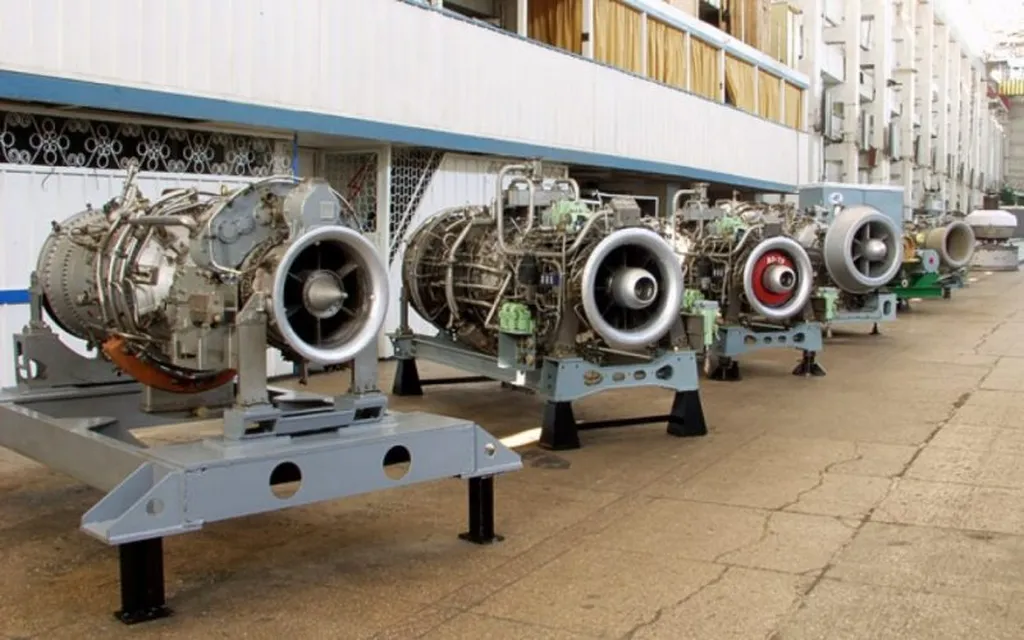
In the world of marine propulsion, efficiency and reliability are paramount. A recent study published in the Polish Maritime Research journal, titled “Evaluation of the Thermal Condition of Marine Gas Turbine Components via Telemetric Measurements,” sheds light on a novel approach to monitoring and improving the thermal state of marine gas turbine plants (MGTPs). The research, led by Serhiy Serbin from the Admiral Makarov National University of Shipbuilding in Mykolaiv, Ukraine, focuses on the use of a telemetric measurement system (TMS) to assess the temperatures of turbine rotor components, particularly in the high-pressure turbine (HPT).
So, what’s the big deal? Well, the study highlights a technique called pre-swirl, where cooling air is directed towards the rotor’s rotation. This method reduces the relative air temperature supplied by the high-pressure compressor (HPC) through the nozzle guide vanes (NGV) and a twisting grid (TG) inside the rotor blades (RB) of the HPT. The result? A more efficient cooling system that can handle higher gas flow temperatures at the inlet to the HPT’s first stage.
Serhiy Serbin explains, “The results obtained demonstrate new opportunities for monitoring the thermal condition of turbine components during the modernisation of MGTPs.” This is a significant finding, as it opens up avenues for improving the overall efficiency of marine gas turbine systems.
For maritime professionals, this research presents several commercial impacts and opportunities. Firstly, the enhanced monitoring capabilities offered by the TMS can lead to better predictive maintenance, reducing downtime and repair costs. Secondly, the improved efficiency of the cooling system can translate to better fuel economy and reduced emissions, which is a growing concern in the maritime industry.
Moreover, the ability to increase the gas flow temperature at the inlet to the HPT’s first stage can lead to more powerful and efficient marine gas turbines. This could be a game-changer for sectors like cruise shipping, naval vessels, and offshore support, where power and efficiency are critical.
In the words of Serhiy Serbin, “This approach contributes to improving the overall efficiency of the system.” And indeed, the potential benefits are substantial. As the maritime industry continues to evolve, such innovations will be crucial in meeting the demands for greater efficiency, reliability, and sustainability.
So, while the study may be published in the Polish Maritime Research journal, its implications are global. It’s a testament to the power of research and innovation in driving the maritime industry forward. And for those in the field, it’s a call to action to explore and adopt these new technologies and techniques. After all, in the vast and challenging world of the seas, every advantage counts.