
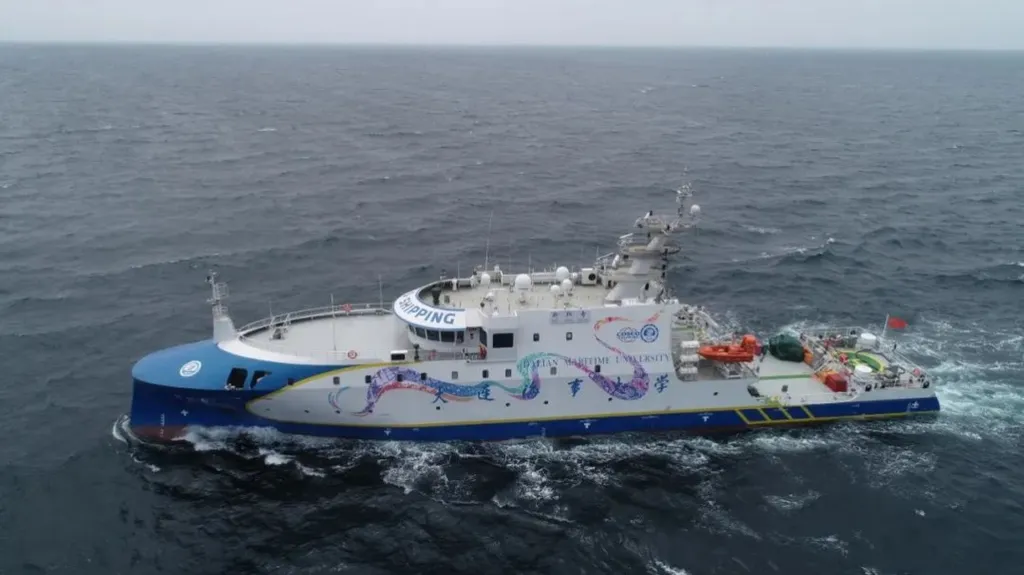
In the vast ocean of data that modern technology generates, distinguishing fine details can be as challenging as spotting a specific fish in a shoal. This is particularly true in the field of fine-grained visual classification (FGVC), where the goal is to differentiate between subcategories within the same broader category. Imagine trying to tell apart different models of ships or types of marine life from images—it’s no easy feat. But a recent study led by Peipei Zhao from the School of Computer Science and Technology at Xidian University in Xi’an, China, might just make this task a whole lot easier.
Zhao and her team have developed a novel approach called the multi-scale attention network (MSANet), which is designed to capture both large and small regions of an image at the same time. This is a significant departure from previous methods that typically focus on large-scale attention blocks, ignoring the smaller, more subtle details that can be crucial for fine-grained classification. “To distinguish subcategories, it is important to exploit small local regions,” Zhao explains. The MSANet introduces a multi-scale attention layer (MSAL) that generates multiple groups within each feature map, allowing it to capture both global features and local subtle features.
So, what does this mean for the maritime sector? The implications are substantial. For instance, in maritime surveillance, the ability to accurately classify different types of vessels or even different models of the same type of vessel can be crucial for security and operational efficiency. Similarly, in marine biology, distinguishing between different species or sub-species of marine life can aid in conservation efforts and ecological research.
The MSANet’s feature fusion strategy integrates global and local features, providing a more comprehensive understanding of the image. This could be particularly useful in automated systems for monitoring shipping lanes, identifying illegal fishing activities, or even in underwater exploration where distinguishing between different types of marine life is essential.
Zhao’s work, published in the Journal of Information and Intelligence (translated from Chinese as “Information and Intelligence”), demonstrates competitive performance across several datasets, including Caltech-UCSD Birds-200-2011 (CUB), FGVC-Aircraft (AIR), and Stanford Cars (Cars). This suggests that the MSANet could be a valuable tool in a wide range of applications, including those within the maritime industry.
As technology continues to advance, the ability to extract fine-grained details from visual data will become increasingly important. Zhao’s research represents a significant step forward in this area, offering new opportunities for innovation and improvement in maritime and other sectors.