
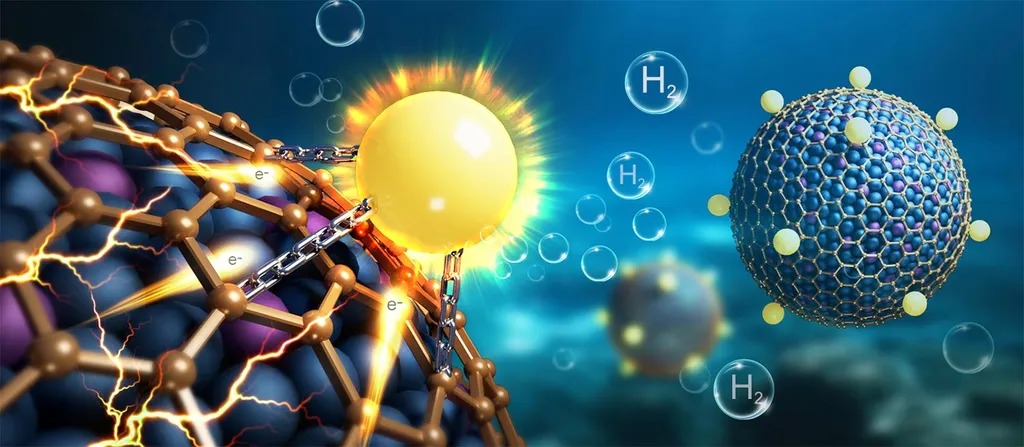
In a breakthrough that could reshape the maritime industry’s approach to sustainable fuel production, researchers have developed a novel method for creating high-quality syngas, a crucial component in the production of synthetic fuels. The study, led by Jing-Lin Liu from Dalian Maritime University in China, was recently published in the International Journal of Fluid Engineering, which translates to the International Journal of Fluid Mechanics.
The research focuses on a process called bi-reforming, which involves reacting methane (CH4), carbon dioxide (CO2), and water (H2O) to produce syngas. The team used a gliding arc-based warm plasma catalytic reactor, a technology that provides optimal conditions for activating CO2. The key finding? The combination of warm plasma and a conventional catalyst (referred to as the WPC case) outperformed both the warm plasma alone (WP case) and the conventional catalyst alone (CC case).
So, what does this mean for the maritime industry? Syngas is a vital ingredient in the production of synthetic fuels, which can be a more environmentally friendly alternative to traditional fossil fuels. The ability to produce high-quality syngas with a H2/CO ratio of 2, as demonstrated in this study, could lead to more efficient and sustainable fuel production processes.
The study found that in the WPC case, “CH4, CO2, and H2O react at the ideal stoichiometric ratio of CH4/CO2/H2O = 3/1/2,” resulting in similar conversions of approximately 89% for all three reactants and an energy efficiency of 71%. This is a significant improvement over the WP case alone.
For maritime professionals, this research opens up opportunities for more sustainable fuel options. As the industry continues to grapple with the challenges of decarbonization, innovations like this could play a crucial role in reducing the environmental impact of shipping.
Moreover, the commercial implications are substantial. The ability to produce high-quality syngas more efficiently could lead to cost savings and increased competitiveness for companies investing in this technology. It’s a win-win for both the environment and the bottom line.
In the words of the researchers, the WPC case “can overcome the disadvantages of both the WP and CC cases,” paving the way for more efficient and sustainable fuel production. As the maritime industry looks towards a greener future, this research offers a promising path forward.
So, while the details of the study might be complex, the message is clear: innovation in fuel production is not only possible but also within reach. And for the maritime industry, that’s a beacon of hope in the journey towards sustainability.