
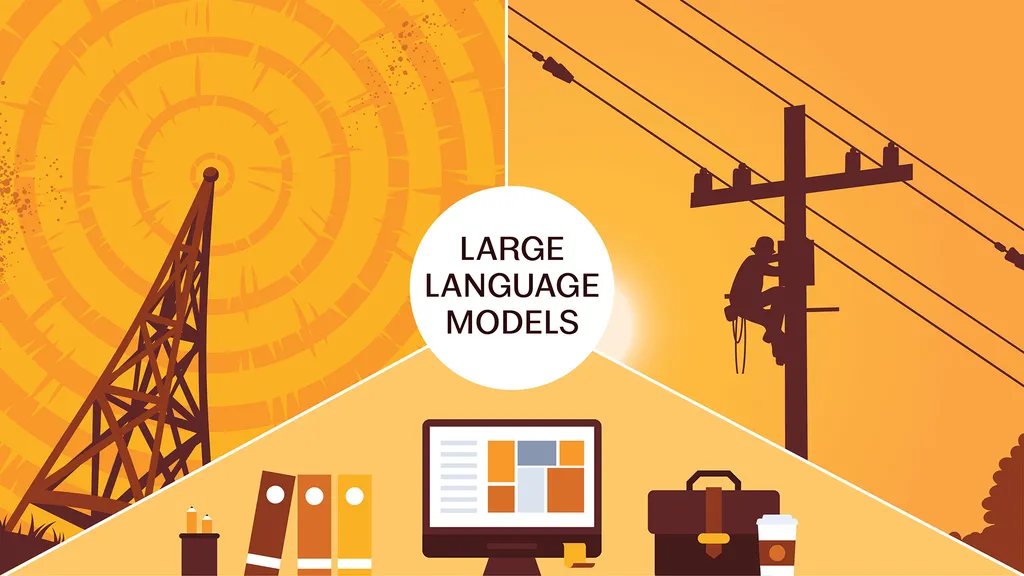
Researchers from the Department of Electrical Engineering at the University of Engineering and Technology, Lahore, Pakistan, have conducted a comprehensive literature review on the emerging applications of Large Language Models (LLMs) in power system engineering. The study, led by Muhammad Sarwar and co-authored by Muhammad Rizwan, Mubushra Aziz, and Abdul Rehman Sudais, systematically analyzes recent research published between 2020 and 2025 to explore how LLMs are being integrated into various aspects of power system operations, planning, and management.
The review covers key application areas including fault diagnosis, load forecasting, cybersecurity, control and optimization, system planning, simulation, and knowledge management. The researchers found that LLMs show promising potential in enhancing power system operations through their advanced natural language processing and reasoning capabilities. For instance, in fault diagnosis, LLMs can analyze vast amounts of textual data from maintenance logs and sensor outputs to identify patterns and predict potential failures. In load forecasting, these models can process and interpret complex data sets to improve the accuracy of demand predictions, which is crucial for efficient grid management.
However, the study also highlights significant challenges in the practical implementation of LLMs in power systems. One major hurdle is the limited availability of domain-specific training data, which is essential for training models to understand the nuances of power system operations. Concerns about reliability and safety in critical infrastructure are also paramount, as any errors or misinterpretations by LLMs could have severe consequences. Additionally, the need for enhanced explainability is critical, as stakeholders require clear and understandable insights to make informed decisions.
The researchers also identified emerging trends in the field, such as the development of power system-specific LLMs and hybrid approaches that combine LLMs with traditional power engineering methods. These trends suggest a growing recognition of the potential benefits of LLMs, coupled with a cautious approach to their integration. The study emphasizes the importance of developing specialized architectures tailored to the unique requirements of power systems, as well as improved security frameworks to protect against cyber threats.
Furthermore, the review underscores the need for enhanced integration of LLMs with existing power system tools. This integration can facilitate more seamless and effective use of these advanced models in real-world applications. The researchers suggest that future research should focus on these areas to overcome current limitations and fully realize the potential of LLMs in power system engineering.
In conclusion, the comprehensive literature review provides power system researchers and practitioners with a detailed overview of the current state of LLM applications in the field. It outlines future pathways for research and development, highlighting the need for specialized architectures, improved security frameworks, and better integration with existing tools. By addressing these challenges and leveraging the strengths of LLMs, the power system industry can move towards more efficient, reliable, and secure operations. Read the original research paper here.