
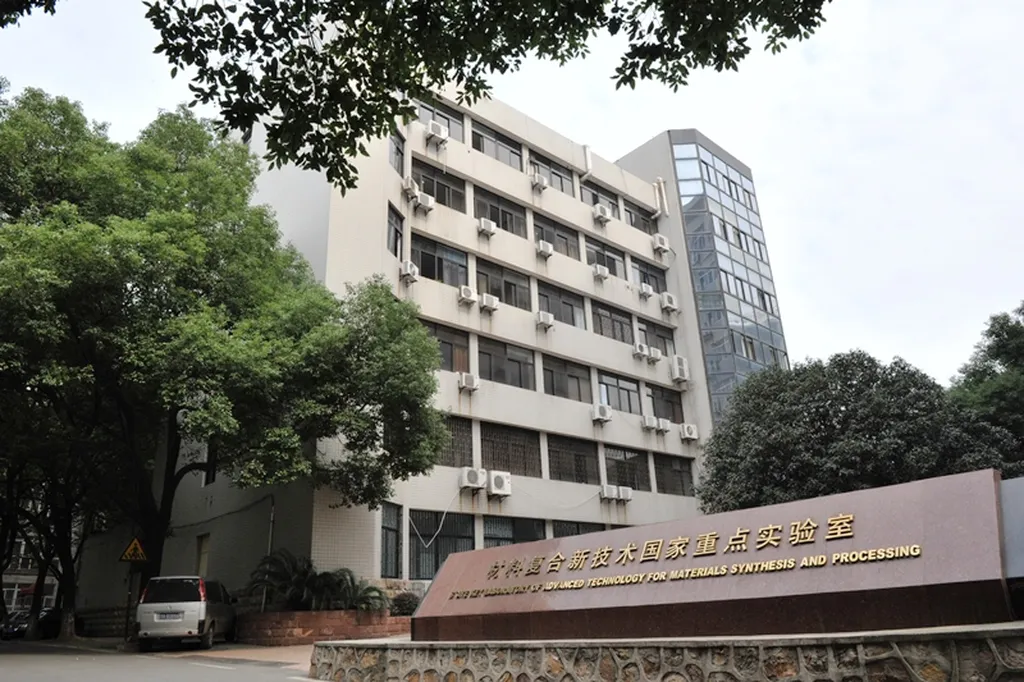
In the world of maritime technology, where reliability and safety are paramount, a groundbreaking study led by Jing V. Wang from the State Key Laboratory of Maritime Technology and Safety at Wuhan University of Technology has caught the attention of industry professionals. The research, published in the journal ‘iScience’ (which translates to ‘Natural Science’), focuses on improving the accuracy of State of Health (SOH) estimation for lithium-ion batteries, a critical component in many maritime applications.
So, what’s the big deal? Well, SOH estimation is like a health check-up for batteries. It tells us how much life is left in them, ensuring they perform safely and efficiently. But here’s the catch: you can’t just measure SOH directly. Traditional methods rely on external features or models, often leading to complex and not-so-accurate predictions. That’s where Wang’s research comes in.
The study proposes a novel approach that combines battery mechanism models with deep learning. Imagine it like this: you’re trying to predict the weather. You could just look at the sky (external features), or you could use a weather model that incorporates physical laws (physics-inspired). The latter is more accurate, right? That’s the idea here.
Wang and their team used thermodynamic parameters from an electrochemical fractional-order model (a fancy way of saying they considered the physical laws governing battery behavior) and fed them into a long short-term memory (LSTM) network. This network is a type of deep learning algorithm that’s particularly good at learning from sequential data, like the performance of a battery over time.
The results? Impressive. The LSTM network outperformed four other machine learning methods, achieving an average root-mean-square error of just 0.70% and a minimum error of 0.21% across eight validation batteries. Moreover, using thermodynamic parameters improved estimation accuracy by a whopping 3.36 times compared to traditional features like incremental capacity curves and ohmic resistance.
So, what does this mean for the maritime sector? Well, accurate SOH estimation is crucial for battery management in maritime applications. It ensures that batteries are used efficiently, reducing costs and environmental impact. It also enhances safety, as accurate SOH estimates can prevent battery failures.
As Wang puts it, “This approach integrates physical modeling with data-driven methods, enabling high-precision battery management.” This could lead to more reliable and safer maritime technologies, from electric ships to underwater drones.
Moreover, the method’s high precision could open up new opportunities for commercial applications. For instance, it could be used to develop advanced battery management systems for maritime vessels, or to optimize the use of battery-powered equipment in ports and harbors.
In conclusion, Wang’s research is a significant step forward in battery technology, with promising implications for the maritime sector. It’s a testament to the power of combining physical models with deep learning, and a shining example of how cutting-edge research can drive innovation in maritime technology.