
In the vast and bustling waters of the Indonesian sea, a silent battle is being waged against illegal, unreported, and unregulated (IUU) fishing and transshipment. These illicit activities not only undermine state sovereignty but also threaten the delicate balance of marine ecosystems and the livelihoods of those who depend on them. Enter Natalia Damastuti, a computer science expert from Universitas Narotama Surabaya, who has developed a novel system to combat these infringements, published in the Journal of Eta Maritime Science, which translates to the Journal of Marine Science.
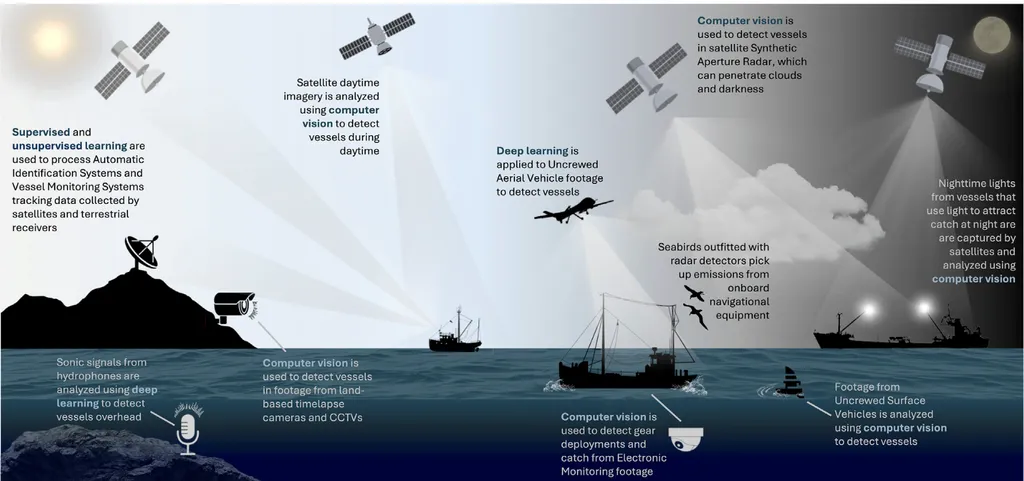
Damastuti’s system is a sophisticated tool designed to identify IUU fishing and transshipment activities using a method called fuzzy type 2 (SLF-type-2). This might sound complex, but at its core, it’s about making sense of the vast amounts of data generated by the Automatic Identification System (AIS) that ships use to communicate their position, course, and speed.
The system works by processing dynamic data inputs from AIS, which are then fed into three subsystems: a selector subsystem, an IUU transshipment decision maker, and an IUU fishing decision maker. Think of it as a high-tech detective, sifting through the data to spot suspicious activities.
The results are promising. In tests involving the generation of ship motion pattern data and the validation of ship data, the system successfully identified IUU activities with an accuracy rate ranging from 75.5% to 85.0377%. “The constructed identification system successfully identified IUU fishing and IUU transshipment actions,” Damastuti stated, highlighting the potential of this technology to bolster maritime security.
So, what does this mean for the maritime industry? For starters, it offers a powerful tool to combat IUU activities, which are estimated to cost the global economy billions of dollars annually. By identifying these activities more accurately, the system can help enforce regulations, protect marine resources, and ensure fair competition.
Moreover, the system can provide valuable insights for maritime professionals, from fishermen to port authorities. For instance, it can help fishermen avoid areas where IUU activities are prevalent, ensuring they operate within the law and contribute to sustainable fishing practices. Port authorities, on the other hand, can use the system to monitor and regulate the ships entering their ports, ensuring they are not involved in illicit activities.
The commercial opportunities are vast. Companies specializing in maritime technology can leverage this system to develop new products and services, catering to the growing demand for sustainable and responsible maritime practices. Additionally, the system can be integrated into existing maritime management systems, enhancing their capabilities and providing a competitive edge.
In the words of Damastuti, “This study designs an IUU fishing and transshipment identification system using the fuzzy type 2 (SLF-type-2) method.” This is not just a scientific breakthrough; it’s a step towards a more secure, sustainable, and prosperous maritime future. And with the system’s promising results, it’s a future that’s well within our reach.