
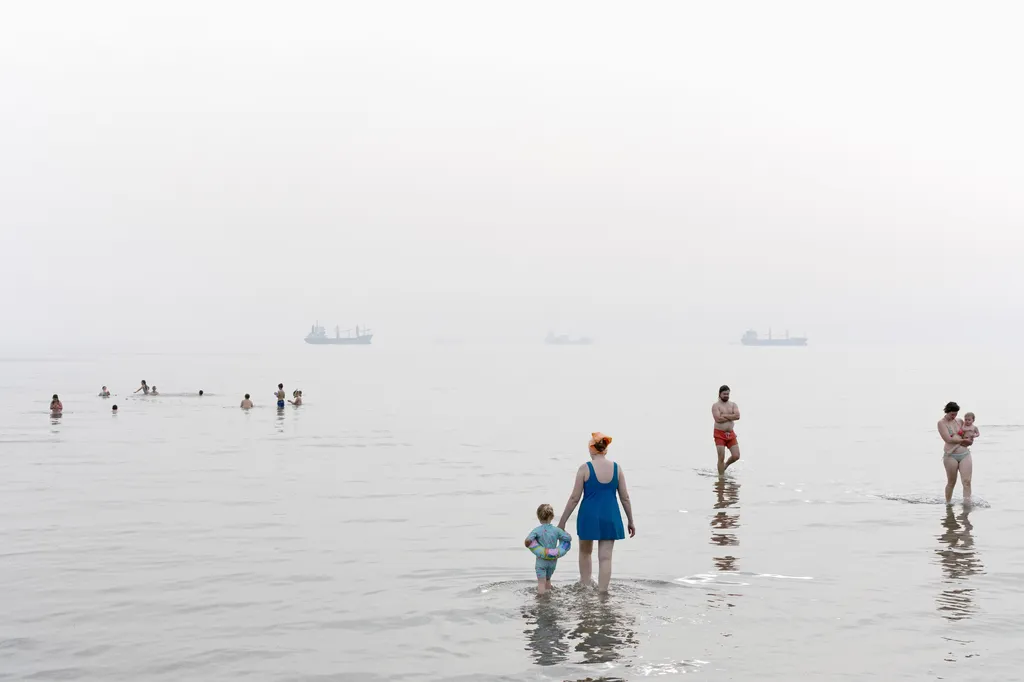
In the bustling, often overlooked world beneath the waves, a unique research project is making a splash. Komuna Maro, an arts-based research initiative, is diving deep into the networks of marine communities, technologies, and infrastructures in the northern Adriatic Sea. The project, explored in a recent article published in the journal ‘Ocean and Society’ (Ocean and Društvo in Croatian), is led by Ana Jeinić from the Institute of Architecture and Design at TU Wien in Austria.
Jeinić and her team are tackling some big questions. They’re asking how we can understand the ocean as a material lifeworld without ignoring the political and economic realities that shape it. As Jeinić puts it, “We’re trying to establish a logical connection between the exploitation of workers in maritime economies and the devastation of non-human marine life.”
The project is a response to what historian Jason W. Moore terms the Capitalocene, a period where both human and non-human inhabitants of marine and coastal regions are deeply embedded in capitalist socio-ecological processes. In simpler terms, it’s about understanding how capitalism shapes our oceans and vice versa.
For maritime professionals, this research could open up new avenues for sustainable practices. By understanding the complex networks at play, industries can better navigate the challenges posed by climate change, overfishing, and pollution. It’s not just about survival; it’s about thriving in a changing world.
Jeinić emphasizes the importance of generating popular, critical, transdisciplinary, and transcultural forms of knowledge. This is where the commercial opportunities lie. By fostering a shared understanding of our oceans, industries can collaborate more effectively, innovate, and adapt to the challenges ahead.
The project also highlights the role of artistic research in addressing these complex issues. As Jeinić notes, “We’re calling for a (re)invention of an ’emancipatory oceanic internationalism,’ rather than a retreat into localized and fragmented knowledge systems.” This internationalism could pave the way for global collaborations and shared solutions.
In essence, Komuna Maro is more than just a research project. It’s a call to action, a beacon for maritime sectors to come together, share knowledge, and shape a sustainable future for our oceans. As published in ‘Ocean and Society’, it’s a reminder that our oceans are not just a resource to be exploited, but a complex, interconnected lifeworld that demands our respect and understanding.