
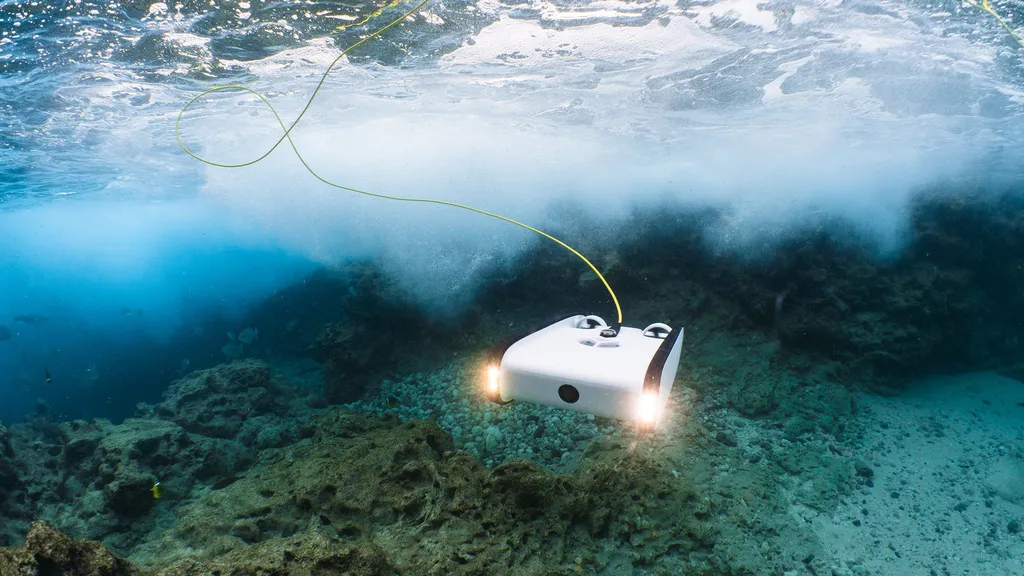
Researchers at the Bio-Inspired Robotics Laboratory of the Scuola Superiore Sant’Anna in Italy have developed an open-source toolkit designed to revolutionize underwater robotics. The team, led by Marcello Calisti and including Giacomo Picardi, Saverio Iacoponi, Matias Carandell, Jorge Aguirregomezcorta, Mrudul Chellapurath, Joaquin del Rio, and Iacopo Aguzzi, aims to address the pressing need for accessible, modular hardware in underwater manipulation and actuation systems.
The development of underwater robotics has been hampered by high costs, proprietary designs, and a lack of modular, research-oriented hardware. While open-source initiatives have made strides in vehicle construction and control software, a significant gap remains for joint-actuated systems, particularly those requiring waterproof, feedback-enabled actuation. This gap has led to lengthy development cycles, limited reproducibility, and challenges in transitioning laboratory prototypes to field-ready platforms.
The researchers introduce an open, cost-effective hardware and software toolkit to bridge this gap. The toolkit includes a depth-rated Underwater Robotic Joint (URJ) with early leakage detection, compact control and power management electronics, and a ROS2-based software stack for sensing and multi-mode actuation. All CAD models, fabrication files, PCB sources, firmware, and ROS2 packages are openly released, enabling local manufacturing, modification, and community-driven improvement.
The toolkit has undergone extensive laboratory testing and multiple field deployments, demonstrating reliable operation up to 40 meters depth across diverse applications. These include a 3-DoF underwater manipulator, a tendon-driven soft gripper, and an underactuated sediment sampler. The results validate the robustness, versatility, and reusability of the toolkit for real marine environments.
By providing a fully open, field-tested platform, this work aims to lower the barrier to entry for underwater manipulation research, improve reproducibility, and accelerate innovation in underwater field robotics. The toolkit’s open nature encourages collaboration and community-driven improvements, potentially leading to rapid advancements in the field.
This research has significant implications for marine science, environmental monitoring, and subsea industrial operations. The availability of cost-effective, modular hardware could democratize access to advanced underwater robotics, enabling more research groups to develop and deploy innovative solutions. The toolkit’s versatility and reliability make it a valuable resource for both academic research and practical applications in the marine sector. Read the original research paper here.