
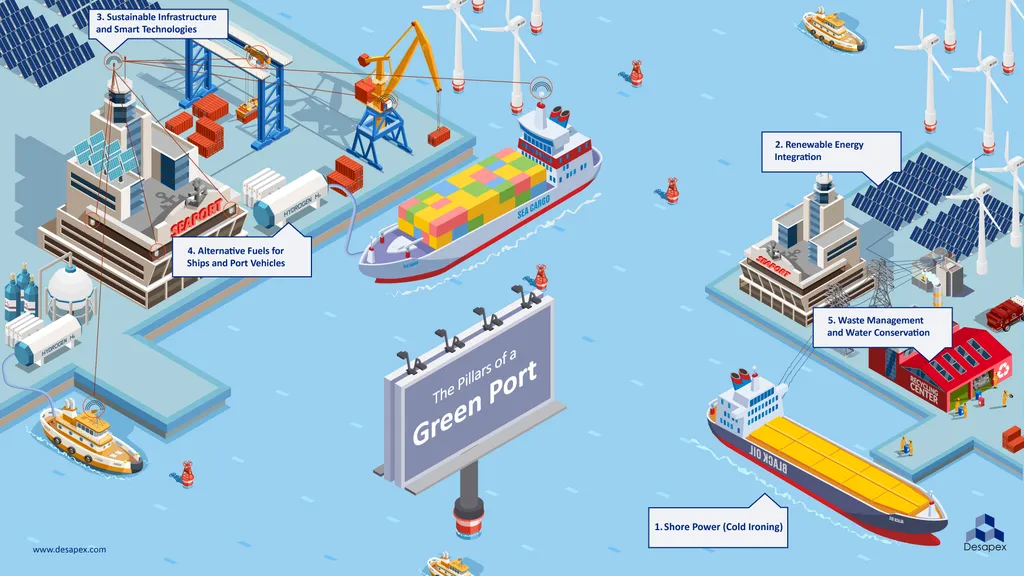
In the ever-evolving landscape of maritime logistics, a recent study published in the BIO Web of Conferences, which translates to the International Conference on Biological Sciences, sheds light on how seasoned maritime professionals view the integration of renewable energy systems with smart port technologies to optimize agricultural supply chains. The research, led by Winarno Winarno from the Maritime Institute at Sekolah Tinggi Ilmu Pelayaran Jakarta, interviewed ten maritime professionals with Port and Shipping Management education and a decade of industry experience. The findings offer a nuanced perspective on the technical feasibility, implementation challenges, and educational needs for this transformative shift.
The study reveals that these professionals have a sophisticated understanding of the potential of renewable energy integration. They recognize the benefits, such as reduced carbon emissions and operational costs, but also acknowledge the complexity of implementation. “The integration of renewable energy into smart ports is not just about installing new technologies; it’s about rethinking our entire operational framework,” one participant noted. This sentiment underscores the need for a holistic approach that balances transformation goals with operational reliability.
One of the most compelling findings is the unanimous agreement among participants that educational systems need urgent transformation. The current curriculum, they argue, does not adequately prepare the next generation of maritime professionals for the rapid advancements in smart port technologies and renewable energy systems. “We need to start integrating these topics into our educational programs now to ensure that our workforce is ready for the future,” another participant emphasized.
From a commercial perspective, the integration of renewable energy and smart technologies presents significant opportunities. Optimized agricultural supply chains can lead to reduced costs, improved efficiency, and enhanced food security. Smart ports equipped with renewable energy systems can attract environmentally conscious clients and comply with increasingly stringent environmental regulations. This shift could also open up new markets and partnerships, particularly in regions prioritizing sustainability.
However, the path to this future is not without challenges. Participants highlighted the need for phased implementation approaches that allow for gradual adaptation and risk management. They also stressed the importance of workforce development, ensuring that current and future employees are equipped with the necessary skills to navigate this transition.
In summary, the study by Winarno Winarno offers valuable insights into the potential and challenges of integrating renewable energy systems with smart port technologies for agricultural supply chain optimization. It underscores the need for a comprehensive approach that encompasses technological innovation, educational reform, and workforce development. As the maritime industry continues to evolve, these findings provide a roadmap for stakeholders to navigate the complexities of this transformative journey.