
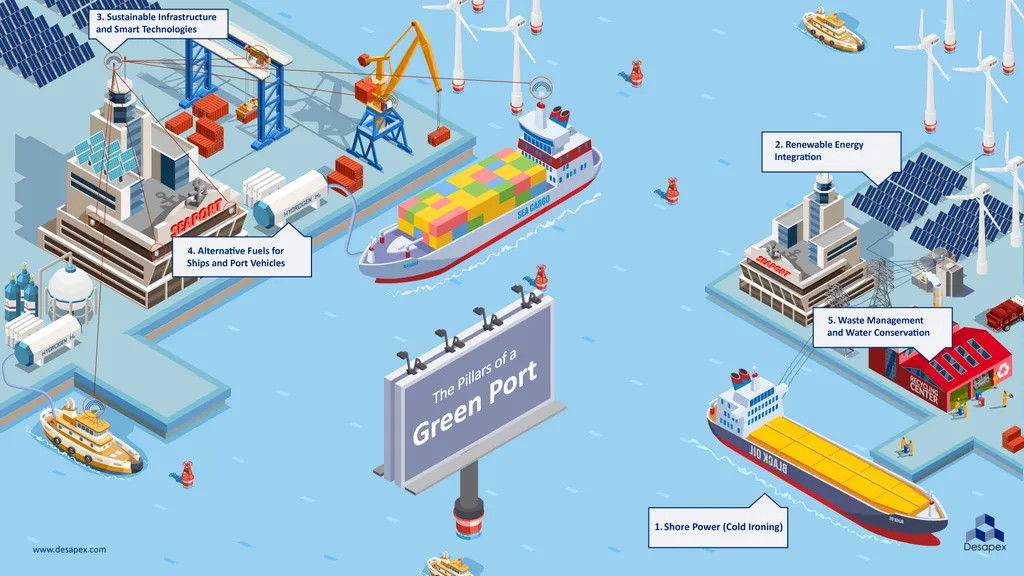
In a recent study published in the BIO Web of Conferences, which translates to the Biology and Interdisciplinary Oceanography Web of Conferences, maritime professionals with a decade of industry experience under their belts were interviewed about the integration of urban agriculture and renewable energy systems in smart port cities. The research, led by Simanjuntak Marudut Bernadtua from the Maritime Institute at Sekolah Tinggi Ilmu Pelayaran Jakarta, challenges some common assumptions about the limitations of technical education in the maritime sector.
The study reveals that maritime professionals are quite capable of understanding and embracing sustainable technology integration. This might come as a surprise to some, given the traditional, technical focus of maritime education. However, the research shows that the strengths of maritime education—systematic thinking and operational planning—actually facilitate innovative approaches to sustainable port development.
“Maritime professionals are not just technically skilled; they are also strategic thinkers,” Bernadtua noted. “This combination is crucial for the complex task of integrating urban agriculture and renewable energy systems into port cities.”
The study also highlights that while current maritime programs provide excellent analytical foundations, they don’t adequately prepare graduates for the collaborative leadership that sustainable development requires. This is a significant finding, as it suggests that enhancing rather than replacing current education could be the key to fostering the interdisciplinary collaboration and community engagement needed for sustainable port development.
From a commercial perspective, the integration of urban agriculture and renewable energy systems in smart port cities presents numerous opportunities. For instance, ports could become hubs for sustainable food production and distribution, reducing the carbon footprint of the supply chain. Similarly, renewable energy systems could provide a stable and sustainable power source for port operations, reducing energy costs and enhancing resilience.
Moreover, the study’s findings could drive demand for new types of maritime education programs that focus on sustainable development, creating opportunities for educational institutions and training providers. It could also spur innovation in maritime technology, as professionals seek to develop new tools and systems for sustainable port management.
In essence, the study suggests that the maritime sector is well-positioned to lead the way in sustainable coastal development, provided that education and training evolve to meet the demands of this new era. As Bernadtua puts it, “The future of maritime is not just about technical excellence; it’s about holistic, sustainable development.”