
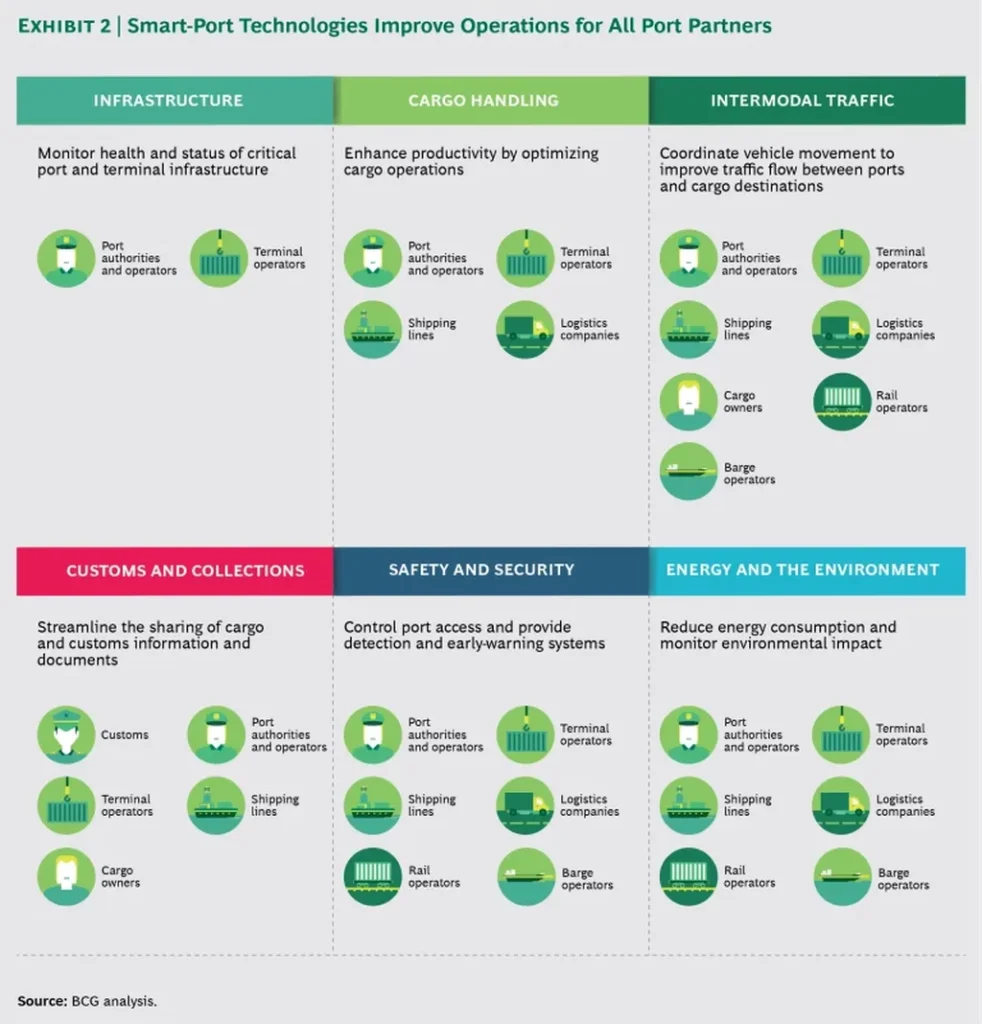
In the ever-evolving landscape of maritime industry, a recent study published in the E3S Web of Conferences, which translates to Environmental, Energy, and Sustainable Science Web of Conferences, sheds light on the delicate balance between environmental responsibility and social sustainability in the development of smart ports. Led by Maruf Irma Rachmawati from the Faculty of Law at Universitas Pasundan, the research offers a comprehensive look at how ports are navigating the transition towards greener models, and the challenges they face in integrating environmental stewardship with social equity.
The study, a systematic literature review following PRISMA guidelines, analyzed 45 high-quality articles published between 2021 and 2025. It revealed that while 77.8% of the studies showed integration of environmental responsibility, only 44.4% considered social sustainability, and 71.1% had multi-stakeholder coordination mechanisms in place. This disparity highlights a significant gap between corporate environmental commitments and their systematic socio-environmental implementation.
“Sustainability often remains policy-driven rather than organizationally embedded,” Rachmawati noted, pointing out that there’s a disconnect between corporate responsibility rhetoric and community engagement practice. She emphasized that institutional barriers, rather than technical challenges, are the primary constraints in this transition.
So, what does this mean for the maritime industry? The shift towards smart ports presents both challenges and opportunities. On one hand, there’s a pressing need for ports to move beyond compliance-based environmental responsibility and adopt a more integrated approach to socio-environmental governance. This includes stakeholder participation, social justice, and environmental stewardship.
On the other hand, this transition opens up new avenues for innovation and collaboration. Rachmawati’s research underscores the importance of interdisciplinary collaboration, bridging corporate environmental strategy, community engagement, and social sustainability. This could lead to the development of new technologies, policies, and practices that not only benefit the environment but also foster social equity and economic growth.
For maritime professionals, this means staying informed about the latest developments in smart port technology and sustainability practices. It also means engaging with stakeholders, from local communities to international organizations, to ensure that environmental and social goals are aligned and mutually reinforcing.
In conclusion, the journey towards smart, sustainable ports is complex and multifaceted. But as Rachmawati’s research shows, it’s a journey worth taking, with significant benefits for the environment, society, and the maritime industry as a whole.