
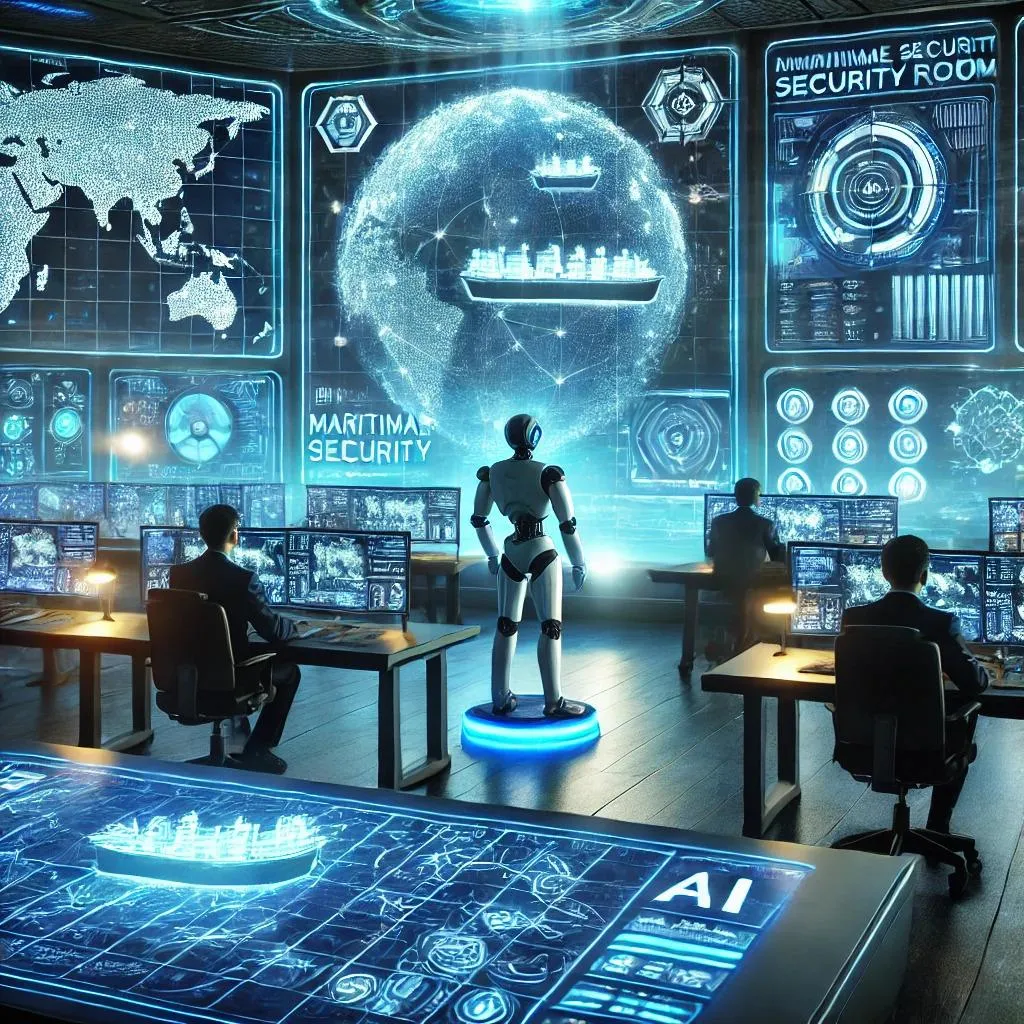
In a significant stride towards enhancing industrial safety, a recent study published in the journal ‘Systems and Soft Computing’ has introduced a novel approach to improve the decision-making accuracy of robots in human-robot collaborative environments. The research, led by MHM Ali from the Department of Mechanical Engineering at the Arab Academy for Science, Technology and Maritime Transport in Cairo, Egypt, focuses on Speed and Separation Monitoring (SSM) as outlined in the ISO/TS 15066 safety standard.
The study proposes an enhancement approach that integrates Machine Learning (ML) and Artificial Intelligence (AI) to enable robots to make more informed decisions. By utilizing data from an active depth camera that tracks operators’ hand movements and measures distances, the developed algorithm allows robots to determine protective separation distances (PSD) and dynamic separation distances (DSDs). This innovation is particularly relevant to the maritime sector, where human-robot collaboration is increasingly becoming a norm in various operations.
The research team developed a test rig to determine the necessary separation distances across four zones for safe pick-and-place applications. The results demonstrated that the defined thresholds not only enhance safety but also improve operational efficiency. As MHM Ali explains, “The developed algorithm enables the robot to make decisions based on protective separation distance (PSD) and dynamic separation distances (DSDs). This creates a suitable collaborative environment for the operator, and makes the task easier to perform.”
The implications of this research are far-reaching for the maritime industry. As vessels become more automated and robots take on more complex tasks, ensuring the safety of human operators is paramount. The integration of ML and AI in robotic decision-making processes can significantly reduce the risk of accidents and improve the overall efficiency of maritime operations.
Moreover, the use of machine vision in this context opens up new opportunities for the maritime sector. By leveraging advanced imaging technologies, robots can perform tasks with greater precision and safety, particularly in environments where human access is limited or hazardous. This could include tasks such as inspection, maintenance, and repair of underwater structures, as well as cargo handling and other logistical operations.
The study’s findings also highlight the potential for enhanced human-robot collaboration in other industrial sectors. As MHM Ali notes, “This approach integrates Machine Learning (ML), Artificial Intelligence (AI), for decision-making using data extracted from an active depth camera, which tracks operators’ hand movements and measures distances on line.” This level of integration can lead to more seamless and efficient collaboration between humans and robots, ultimately driving productivity and safety across various industries.
In conclusion, the research published in ‘Systems and Soft Computing’ represents a significant advancement in the field of human-robot collaboration. By enhancing the decision-making capabilities of robots through the integration of ML and AI, the maritime industry can look forward to safer and more efficient operations. As the technology continues to evolve, the potential applications and benefits for the maritime sector are vast and promising.