
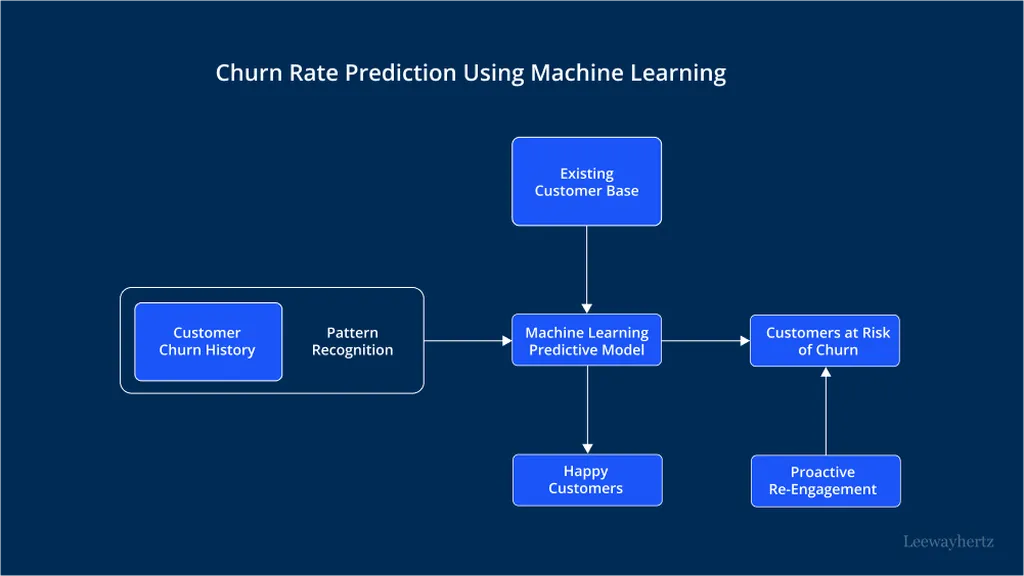
In the bustling world of telecommunications, keeping customers from jumping ship is a constant challenge. But what if AI could help predict which customers are most likely to churn, allowing companies to take proactive steps to retain them? That’s the question addressed by a recent study published in the journal Scientific Reports, led by Mohamed G. Abdelhady from the Madina Higher Institute for Administration and Technology.
The study proposes an AI-driven framework integrated within Customer Relationship Management (CRM) systems to identify high-risk customers. Using a Random Forest classifier on a publicly available telecom dataset, the model achieved an impressive accuracy of 95.13% and an AUC of 0.89. To tackle the issue of class imbalance, techniques like SMOTE and class weighting were employed. Comparative experiments with other models like XGBoost, SVM, and ANN confirmed the robustness of the proposed model.
So, what does this mean for the maritime industry? While the study focuses on telecommunications, the principles of predictive analytics and customer retention can be applied to various sectors, including maritime. For instance, shipping companies could use similar AI models to predict which clients are at risk of switching to competitors. By identifying these clients early, companies can take targeted actions to improve customer satisfaction and loyalty.
Feature importance analysis from the study revealed that total day minutes, total day charge, and customer service calls were the most influential predictors of churn. In the maritime context, these could translate to factors like frequency of service use, cost of services, and the quality of customer support. By focusing on these key areas, maritime companies can enhance their customer retention strategies.
“Linking explainable AI insights to CRM operationalization provides actionable strategies for proactive customer engagement and retention,” said Abdelhady. This approach not only helps in retaining customers but also in building long-term relationships, which is crucial for any business, including those in the maritime sector.
The study contributes significantly to the field by demonstrating the effectiveness of AI in predictive customer churn modeling. It offers a framework that can be adapted and implemented by various industries to improve customer relationship management. For maritime professionals, this research highlights the potential of AI and predictive analytics in enhancing customer retention and driving business growth.
In summary, the study by Abdelhady and his team shows that AI can be a powerful tool in predicting customer churn and improving retention strategies. By leveraging these insights, maritime companies can better understand their customers’ needs and take proactive steps to keep them satisfied and loyal. The study was published in Scientific Reports, which is translated to English as “Reports of Science”.