
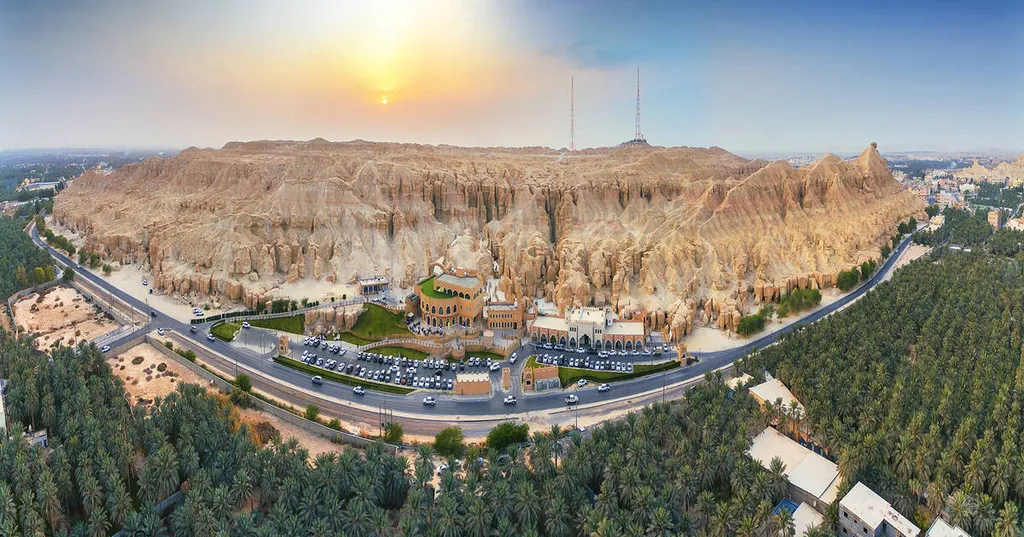
In the heart of the Arabian Peninsula, the region of Al Ahsa, once known as Hajar, has long been a bustling hub of crafts and industries, thanks to its strategic location and rich cultural heritage. A recent study published in the *Scientific Journal of King Faisal University: Humanities and Management Sciences* (Scientific Journal of King Faisal University: Humanities and Management Sciences) delves into the historical significance of these industries, shedding light on their economic impact and potential opportunities for maritime sectors.
Lead author Abdelhalim Ali Ramadan, whose affiliation is not specified, explores how Al Ahsa’s geographical position as a commercial crossroads between the Arab Gulf, Sind, India, Iraq, and the Levant fostered a diverse range of crafts and industries. The study highlights the region’s prosperity, driven by the production of woven and embroidered textiles, metal tools, woodwork, and maritime industries.
Ramadan notes, “Al Ahsa was well-known for weaving, embroidering and embroidering abayas and cloaks, making metal tools, such as making pampering and making tools for pounding and grinding coffee, as well as wood industries based on palm grove and their wicker; further, making cages and baskets and others to fulfil the needs of the residents of the region.”
The study underscores the economic benefits of these industries, which provided raw materials and tools for local communities. The maritime industries, in particular, played a crucial role in trade and commerce, connecting Al Ahsa with other regions and facilitating the exchange of goods.
For maritime professionals, the study offers valuable insights into the historical context of trade routes and the types of goods that were transported. Understanding these historical patterns can provide a foundation for exploring new commercial opportunities and strengthening existing trade relationships.
Ramadan emphasizes the enduring legacy of these industries, stating, “The crafts have been a safety and richness for the homeland and the citizen, and provided them with the requirements of the various tools they needs in life.”
As the maritime industry continues to evolve, the lessons from Al Ahsa’s past can inform strategies for sustainable development and economic growth. By leveraging the region’s rich heritage and strategic location, maritime professionals can tap into new markets and forge stronger connections with global trading partners.
In conclusion, the study by Abdelhalim Ali Ramadan provides a comprehensive overview of the historical significance of crafts and industries in Al Ahsa, highlighting their economic impact and potential opportunities for maritime sectors. By understanding the region’s past, maritime professionals can navigate the complexities of the present and chart a course for a prosperous future.