
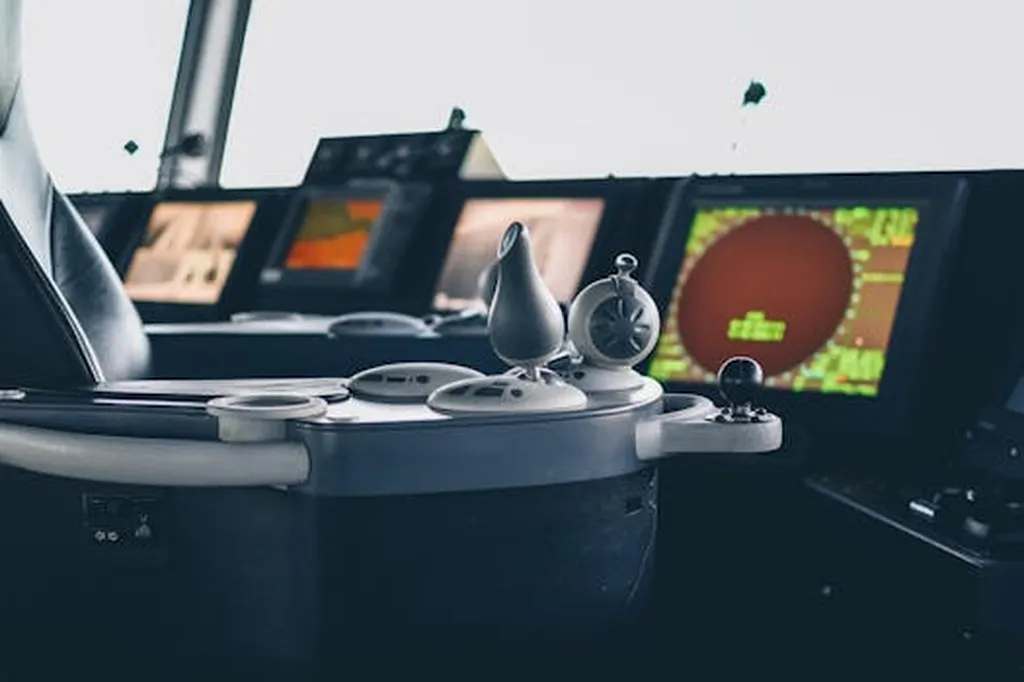
In a significant stride towards enhancing maritime electromechanical systems, Victor Busher from the National University “Odessa Maritime Academy” has developed a digital twin for a separately excited DC motor using advanced artificial neural networks. This research, published in the journal ‘Energies’ (which translates to ‘Energies’ in English), promises to revolutionize the way we model, control, and maintain electric drives in the maritime sector.
So, what’s the big deal? Well, imagine being able to simulate and test the performance of a DC motor under various conditions without ever touching the physical motor. That’s precisely what Busher’s digital twin offers. By using a type of neural network called NARX (nonlinear autoregressive with exogenous inputs), he’s created a model that can accurately predict the motor’s behavior under different loads and speeds.
Busher explains, “The optimal solution was based on a separation into two distinct NARX artificial neural networks with cross-connections for the two main machine variables: one for modeling the armature current and another for modeling the angular speed.” This approach, he argues, aligns with the physical understanding of the motor as an object where electromagnetic energy is converted into thermal and mechanical energy and vice versa.
The implications for the maritime industry are substantial. Maritime professionals often grapple with the challenges of maintaining and optimizing electric drives in harsh and unpredictable environments. With a digital twin, they can test different control strategies, tune controllers, and predict the motor’s behavior under various load conditions. This can lead to improved efficiency, reduced downtime, and significant cost savings.
Moreover, the research highlights the importance of generating comprehensive test signals for training the neural network model. Busher found that training with a sequence of step changes and linear variations across the entire operating range of armature current and speed provided higher accuracy compared to training with random or uniform signals. This insight could guide future efforts to develop more accurate and reliable digital twins for other maritime electromechanical systems.
In a nutshell, Busher’s work represents a significant step forward in the digitalization of maritime electromechanical systems. By harnessing the power of artificial neural networks, maritime professionals can look forward to more efficient, reliable, and cost-effective electric drives. As the maritime industry continues to embrace digital transformation, such innovations will undoubtedly play a pivotal role in shaping its future.