
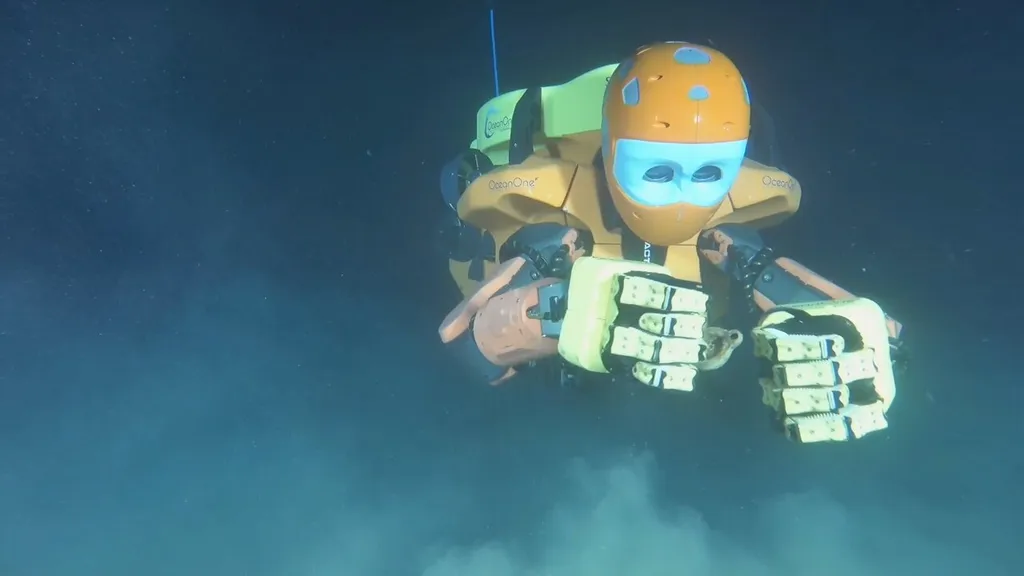
Researchers from the University of Technology Sydney have developed a new framework for underwater robotics that promises to revolutionize navigation in challenging aquatic environments. The team, led by Hao Wei and including Peiji Wang, Qianhao Wang, Tong Qin, Fei Gao, and Yulin Si, has introduced FAR-AVIO, a Schur-Complement based acoustic-visual-inertial odometry system designed to enhance the accuracy and reliability of underwater robot navigation.
Underwater environments present unique challenges to visual-inertial odometry systems. Light attenuation, marine snow, and turbidity can degrade visual data, while weakly exciting motions reduce the effectiveness of inertial measurements. These factors often lead to frequent tracking failures and compromised state estimation over long-term operations. Traditional tightly coupled acoustic-visual-inertial fusion methods, which integrate acoustic Doppler Velocity Log (DVL) with visual-inertial measurements, offer improved accuracy but are computationally intensive. This makes them unsuitable for real-time deployment on resource-constrained platforms.
FAR-AVIO addresses these challenges by embedding a Schur complement formulation into an Extended Kalman Filter (EKF). This approach enables joint pose-landmark optimization, balancing accuracy with computational efficiency. The system efficiently marginalizes landmark states, ensuring constant-time updates. One of the standout features of FAR-AVIO is its Adaptive Weight Adjustment and Reliability Evaluation (AWARE) module. This online sensor health module continuously assesses the reliability of visual, inertial, and DVL measurements, adaptively regulating their sigma weights to maintain optimal performance.
Additionally, FAR-AVIO incorporates an efficient online calibration scheme that jointly estimates DVL-IMU extrinsics without requiring dedicated calibration maneuvers. This feature simplifies the deployment process and enhances the system’s practicality. The researchers conducted numerical simulations and real-world underwater experiments, demonstrating that FAR-AVIO outperforms state-of-the-art underwater SLAM baselines in both localization accuracy and computational efficiency. This makes it suitable for robust operation on low-power embedded platforms.
The practical applications of FAR-AVIO are significant for the marine sector. Enhanced navigation capabilities for underwater robots can improve the efficiency and effectiveness of various marine operations, including underwater exploration, environmental monitoring, and infrastructure inspection. By providing more accurate and reliable state estimation, FAR-AVIO can support the development of autonomous underwater vehicles (AUVs) that can operate in challenging environments with minimal human intervention.
The researchers have released their implementation as open-source software, making it accessible to the broader scientific and industrial communities. This open-source approach encourages collaboration and further development, potentially accelerating advancements in underwater robotics and navigation technologies. As the marine sector continues to evolve, innovations like FAR-AVIO will play a crucial role in overcoming the unique challenges posed by underwater environments, paving the way for more sophisticated and reliable autonomous systems. Read the original research paper here.