
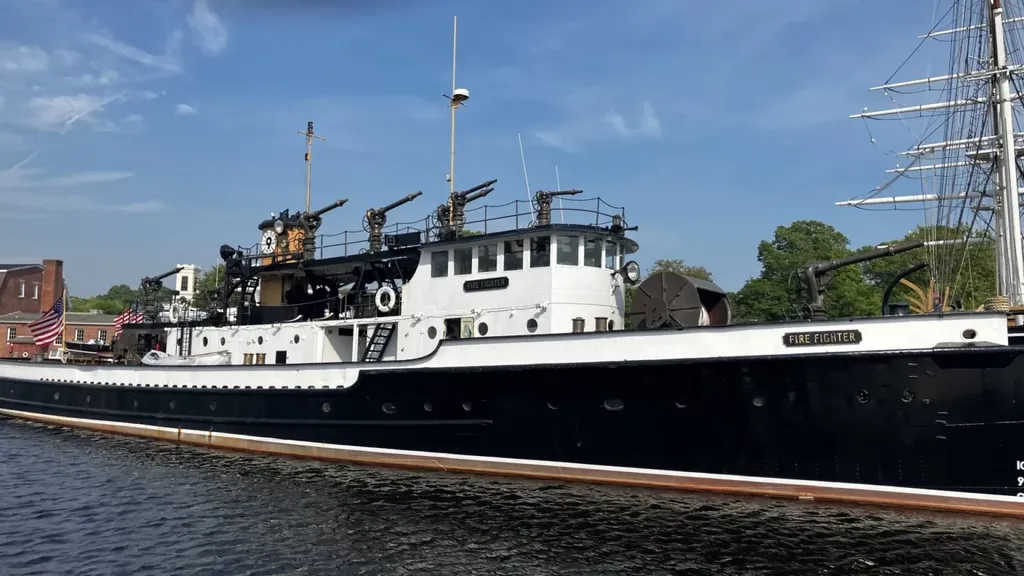
In the bustling waters of Tanjung Perak, a port nestled in the Madura Strait just north of Surabaya, East Java, a critical piece of research is making waves. Aldrin Ferdiansyah, from the Institut Teknologi Adhi Tama Surabaya’s Shipbuilding Program, has been hard at work designing a fire and rescue boat tailored to the unique challenges of these waters. With a staggering number of ships passing through Tanjung Perak, the potential for accidents is high, and Ferdiansyah’s work aims to minimize the risks and impacts of such incidents.
So, what’s so special about this design? Well, Ferdiansyah has considered a range of factors to ensure the boat is up to the task. The vessel boasts a length of 7.5 meters, a width of 2 meters, and a height of 1.6 meters, with a draft of 0.5 meters. It’s designed to zip through the water at a speed of 8 knots, thanks to a specific speed of 157rpm. But the real star of the show is the water pump, which can deliver a flow rate of 199 meters per minute, or 3.316 meters per second. That’s some serious firepower, quite literally.
Ferdiansyah explains, “The shipbuilding process involves several stages, from determining ship geometry to conducting resistance and stability analysis, and designing effective propulsion systems.” He emphasizes that the design must consider both the physical aspects and hydrodynamic performance, as well as the internal organization and function of the ship. Safety support facilities like life buoys, life jackets, and complete firefighter safety clothing are also crucial components.
From a commercial perspective, the implications of this research are significant. With the increasing number of ships passing through Tanjung Perak, the demand for efficient and effective fire and rescue services is on the rise. Ferdiansyah’s design could provide a much-needed boost to the maritime safety sector, offering a reliable solution for ship accidents and fires. Moreover, the research could open up opportunities for local shipbuilders and maritime service providers to collaborate and innovate, further strengthening the maritime industry in the region.
As Ferdiansyah’s work gains traction, it’s clear that the waters of Tanjung Perak are set to become safer and more secure. And with the publication of this research in the journal ‘Wave’ (translated from the Indonesian ‘Gelombang’), the maritime community is sure to take notice. So, here’s to safer seas and smoother sailing ahead!