
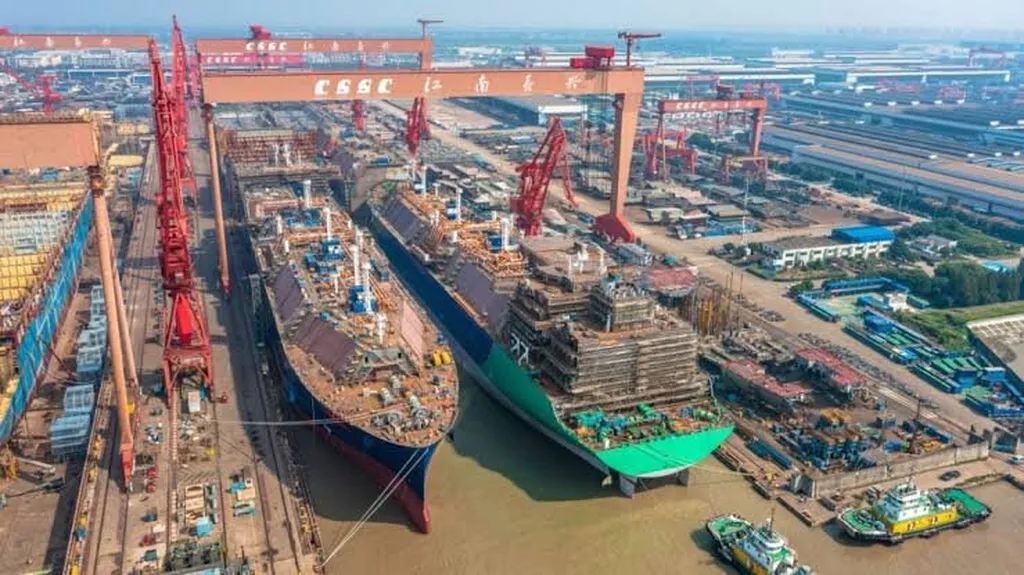
China’s shipbuilding dominance isn’t just about numbers—it’s a strategic play with global ripples. With 71% of all shipbuilding orders in 2024 and a naval fleet of 400 ships, China isn’t just leading; it’s redefining the rules. This isn’t just about building ships faster—it’s about building them smarter, leveraging state-backed policies, cutting-edge tech, and a workforce primed for precision.
China’s shipbuilding juggernaut is powered by a mix of government incentives, technological innovation, and a workforce that’s both skilled and stable. The country’s shipyards, dominated by state-owned enterprises like the China State Shipbuilding Corporation (CSSC), operate with military precision. CSSC’s 36 research institutes collaborate closely with naval personnel, universities, and foreign tech partners to push boundaries in both military and civilian shipbuilding. This isn’t just about churning out vessels—it’s about integrating smart manufacturing, automation, and digitization to boost efficiency and capacity.
The strategic vision behind China’s shipbuilding surge is evident in its long-term plans. Initiatives like the 2003 National Maritime Economic Development Plan and Made in China 2025 have cemented shipbuilding as a cornerstone of the economy. The results speak for themselves: China built the largest container ship by capacity, the “MSC Tessa,” in 2023, and is set to construct 18 massive LNG carriers for Qatar Energy. These aren’t just ships—they’re floating testaments to China’s ability to scale and innovate.
China’s influence extends beyond shipbuilding. With control over at least 110 commercial ports across 67 countries, Beijing is weaving a web of maritime dominance. The LOGINK logistics management platform, backed by the Chinese government, offers a centralized hub for logistics data, shipment tracking, and information exchange. This platform potentially grants China access to valuable shipping data, giving it an edge in global commerce.
The Military-Civil Fusion (MCF) approach further blurs the lines between military and civilian shipbuilding. By developing both types of vessels in the same shipyards, China leverages dual-use technologies to reduce costs, support infrastructure, and maintain a skilled workforce. This strategy ensures that commercial shipbuilding not only generates revenue but also supports naval production, creating a self-sustaining ecosystem.
China’s latest achievements, like the commissioning of its third aircraft carrier, the “Fujian,” equipped with electromagnetically-powered catapults (EMC) technology, underscore its rapid advancements. The “Fujian,” launched in 2022 and commissioned in 2025, is a testament to China’s ability to fast-track innovation. The Type-076 “Sichuan,” another amphibious assault ship with EMC technology, underscores this trend.
However, China’s dominance comes with risks. The global dependency on Chinese shipbuilding and maritime logistics raises concerns about supply chain resilience. The recent ban on rare earth minerals, over which China has a near monopoly, highlights how this dependency can be weaponized, disrupting global supply chains and undermining economic stability.
China’s shipbuilding prowess is a multifaceted strategy that combines state support, technological innovation, and strategic vision. As the world watches, the question isn’t just about who leads in shipbuilding, but how this dominance will shape global trade, military balance, and economic power dynamics in the years to come.