
In a groundbreaking development that could revolutionize medical diagnostics, researchers have introduced a novel approach to image-based data security and analysis. This isn’t just any old tech breakthrough; it’s a game-changer that could have ripples across various sectors, including maritime, where data integrity and security are paramount. At the helm of this innovation is Wessam M. Salama, a computer engineering professor at the Faculty of Engineering, Pharos University in Alexandria, Egypt.
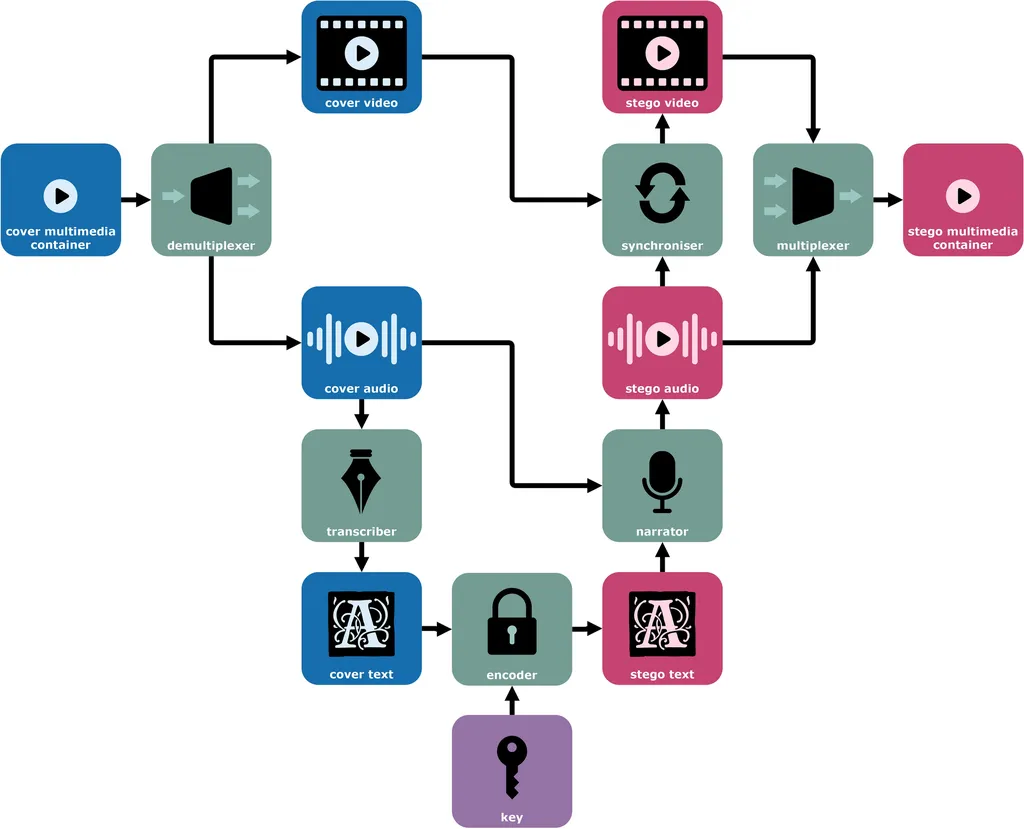
Salama and his team have developed a secure technique for coverless image steganography, a method of hiding data within images without altering the source images. This is no small feat, as it strengthens defenses against steganalysis attacks, which are used to detect hidden data in images. The team’s approach leverages a hybrid Generative Adversarial Network (GAN) with a Support Vector Machine (SVM), trained and validated on a Diffusion Weighted Imaging (DWI) dataset. The goal? To retain visually indistinguishable steganographic representations while boosting security.
But what does this mean for the maritime industry? Well, imagine the vast amounts of data transmitted daily—from satellite images to cargo manifests. Ensuring the integrity and security of this data is crucial. This new method could potentially be adapted to secure maritime communications, protecting sensitive information from prying eyes.
The team’s work also integrates several Deep Learning Models (DLMs), including EfficientNet-B4, DenseNet121, and Residual Network-18 (ResNet-18), with the Vision Transformer (ViT). This integration has led to impressive results. The ViT-GAN-SVM model, as it’s called, boasts a Peak Signal-to-Noise Ratio (PSNR) of 45.87 dB and a Structural Similarity Index (SSIM) of 0.98. In layman’s terms, this means the model can hide data in images without significantly affecting their quality.
But the real kicker is the model’s diagnostic accuracy. It achieves a staggering 99.78% accuracy, 99.85% sensitivity, 98.99% precision, and 99.85% F1-Score. As Salama puts it, “The ViT-GAN-SVM model performs much better than other introduced models in all diagnostic performance metrics, with increases ranging from 5.55% to 6.36%.” This level of accuracy could be a game-changer in medical diagnostics, and potentially in other fields requiring high precision data analysis.
The implications for the maritime sector are significant. From improving the accuracy of remote sensing data to enhancing the security of digital communications, the applications are vast. As the world becomes increasingly interconnected, the need for secure and accurate data transmission will only grow. This research, published in the journal ‘Scientific Reports’ (which translates to ‘Nature Scientific Reports’ in English), could be a stepping stone towards a more secure and efficient future for maritime operations.
In the words of Salama, “This shows that ViT-GAN-SVM is a superior choice for medical diagnostic tasks since it can correctly identify prostate cancer on the DWI prostate cancer dataset.” While the immediate application is in medical diagnostics, the underlying technology has the potential to be adapted for use in various industries, including maritime. The future is looking bright, and it’s all thanks to a team of innovative researchers led by Wessam M. Salama.