
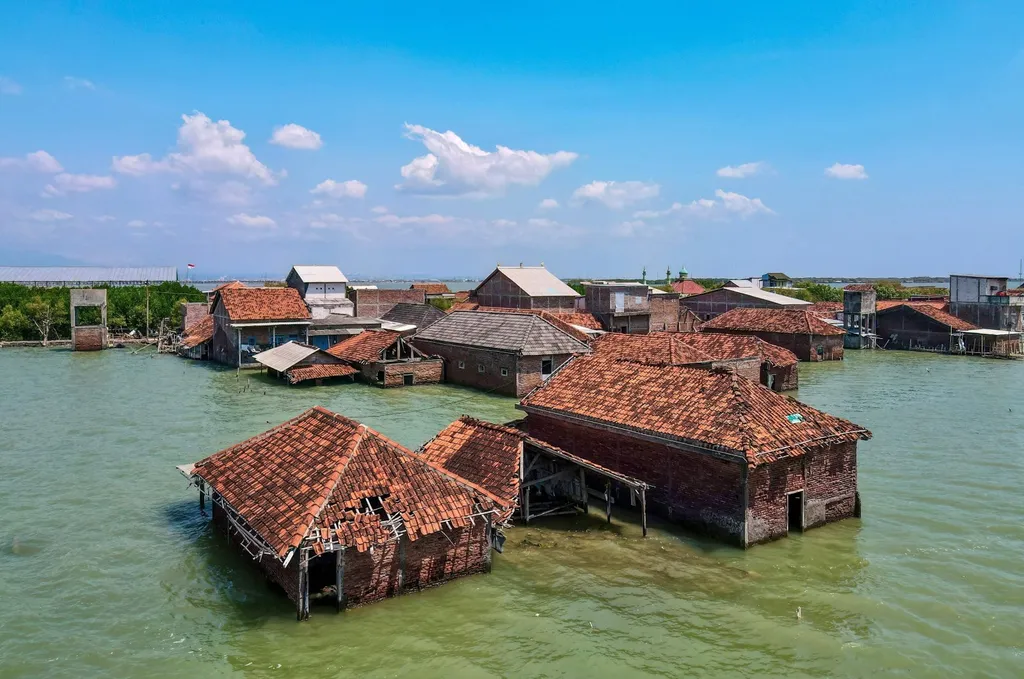
In the heart of Riau Province, Indonesia, a pressing environmental issue is making waves, and it’s not just the local fishermen who are taking notice. Erosion in the Sail Sub-Watershed, a critical area for both agriculture and maritime activities, is causing concern among scientists and industry professionals alike. A recent study, led by Rani Amalia Ramsof from the Department of Geological Engineering at Padjadjaran University, has shed light on the severity of the situation and proposed some practical solutions.
The study, published in the Journal of Geoscience, Engineering, Environment and Technology (JGEET), used the Revised Universal Soil Loss Equation (RUSLE) to assess the erosion risk in the Sail Sub-Watershed. This method takes into account factors like rainfall, soil type, slope, and land cover to predict erosion levels. The results were sobering. “The erosion hazard level in the Sail Sub-Watershed ranges from moderate to very severe,” Ramsof explained. “This is largely due to the use of open land and the lack of conservation efforts.”
So, what does this mean for the maritime sector? Well, erosion doesn’t just affect the land. Increased sedimentation can clog up waterways, making navigation more difficult and dangerous. It can also impact marine life, which in turn affects the fishing industry. Moreover, the increased flood risk can disrupt port operations and damage infrastructure.
But it’s not all doom and gloom. The study also provides some practical solutions. “As a land conservation effort, vegetative methods in the form of reforestation are recommended for open land,” Ramsof suggested. “While terrace walls or wet masonry are recommended for agricultural land and plantations.” These measures could not only help mitigate erosion but also create new opportunities for the maritime sector. For instance, reforestation efforts could lead to the development of eco-tourism, which could boost local economies and create new business opportunities.
Moreover, the study highlights the importance of sustainable land use practices. This could open up opportunities for maritime businesses to invest in sustainable practices and technologies. For example, businesses could invest in dredging technologies that minimize environmental impact or develop new navigation systems that can handle increased sedimentation.
In conclusion, the study by Ramsof and her team serves as a wake-up call for both the scientific and maritime communities. It highlights the urgent need for effective conservation measures and the potential opportunities that these measures could bring. As the maritime sector continues to evolve, it’s crucial that we consider the environmental impact of our activities and work towards a more sustainable future. After all, as Ramsof put it, “The health of our land is intrinsically linked to the health of our waters.”