
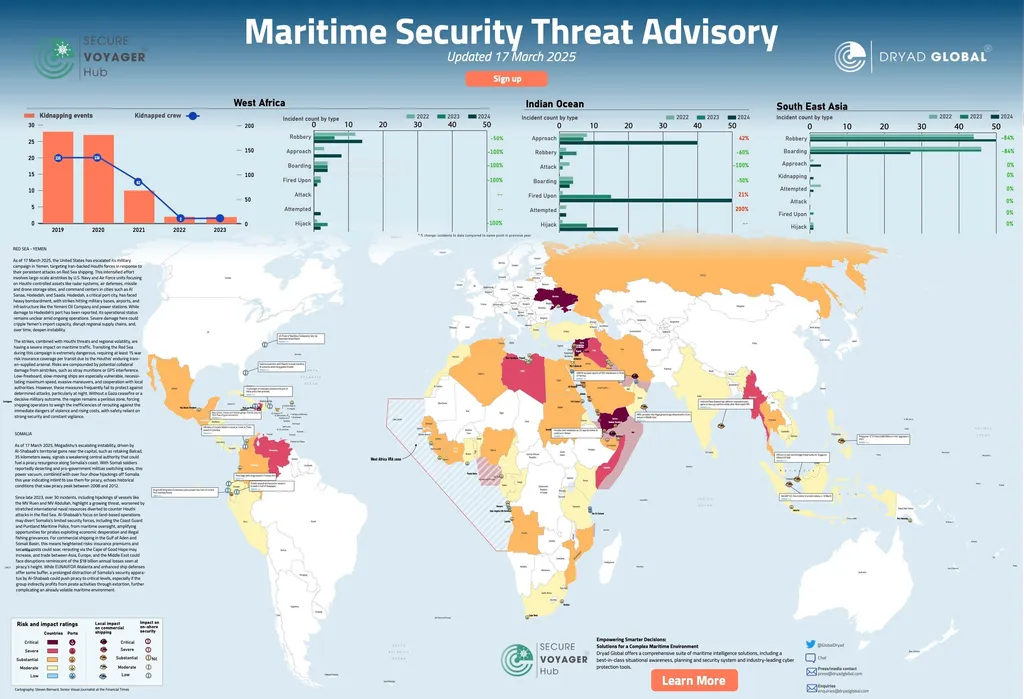
Maritime piracy, a scourge that has plagued the seas for centuries, is evolving in ways that demand urgent attention. From the lawless waters off Somalia to the digital realm of cyberattacks, the threat is no longer confined to traditional acts of piracy. The rise of cyber piracy has introduced a new layer of complexity, forcing the maritime industry to bolster its defenses and adapt to emerging threats.
The academic world has taken notice. Since 2009, there’s been a surge in publications on maritime piracy, reflecting a growing recognition of its global impact. A recent bibliometric analysis, conducted by a team of researchers, sheds light on the research landscape, highlighting key trends and gaps in our understanding of this persistent challenge.
The study, which analyzed data from the OpenAlex dataset, identified six key research clusters. These clusters reveal a focus on geographical and thematic concerns, such as the connections between regulatory frameworks and regional piracy issues. Journals like “Marine Policy” have emerged as significant contributors to this field, with influential articles addressing alternative navigation routes and historical perspectives on piracy.
The analysis also highlighted key authors, including Christian Bueger and Craig Germond, who have made notable contributions to the interdisciplinary dialogue on maritime piracy. Their work underscores the importance of considering geopolitical and socio-economic factors in our efforts to combat this global issue.
The study categorizes research topics into seven main areas, confirming the complexity of maritime piracy. It intersects with economics, law, and technology, and recent analyses point to the ongoing significance of regions like Africa and China in pirate activity. The emergence of cybersecurity issues, particularly in light of recent high-profile cyberattacks on maritime entities, is a growing concern.
Datasets play a vital role in piracy research. The International Maritime Bureau (IMB), the Piracy and Armed Robbery dataset, and the Anti-Shipping Activity Messages (ASAM) dataset are among the most utilized resources for historical attack analysis. Furthermore, Automatic Identification System (AIS) data is increasingly leveraged for real-time vessel monitoring and anomaly detection.
This comprehensive bibliometric review reveals maritime piracy as a multifaceted problem requiring insights from diverse academic fields. The identified trends and datasets lay a foundation for future research, emphasizing the need for interdisciplinary collaboration to address the evolving landscape of maritime security.
As the maritime industry continues to grapple with the challenges of piracy, both traditional and cyber, the findings of this study provide a valuable roadmap for future research. By providing a detailed methodology for replicating this study, the research sets the stage for ongoing exploration in a critical area of maritime studies.
In the words of the researchers, “This study aims to conduct a bibliometric analysis of the research landscape surrounding maritime piracy by examining various domains and trends.” It’s a call to action for the academic community to delve deeper into this complex issue, to innovate, and to collaborate in the pursuit of a safer, more secure maritime industry.