
Germany’s shipbuilding and marine equipment sector proved its mettle in 2025, demonstrating resilience and relevance despite geopolitical turbulence. The Association for Shipbuilding and Marine Technology (VSM) reported a year marked by robust order activity, renewed investor confidence, and a clear affirmation of German yards and suppliers as linchpins of Europe’s maritime industrial base.
Early in the year, the shipyards in Flensburg and Rendsburg found new owners within the maritime industry, just weeks after insolvency proceedings began. This rapid transition underscored a critical message: Germany needs every dock, slipway, and square meter of heavy-lift capacity it has. With naval, commercial, and specialized vessels all vying for yard slots, infrastructure utilization remains a core driver of market strength.
The demand was reflected in the numbers. VSM reported a historic record level of newbuild orders for Germany in 2025, highlighting a solid macroeconomic environment for shipbuilding and ship supply. The order intake spanned cruise ships, naval platforms, special-purpose vessels, and high-value marine systems—segments where German engineering and system integration remain highly competitive.
Corporate developments across the supply chain further underscored this momentum. Rebranding efforts, such as MAN Energy Solutions’ transition to “Everllence” and the capitalization of TKMS, were more than cosmetic. In TKMS’s case, the rebrand was followed by a successful IPO and rapid inclusion in Germany’s MDAX index, supported by a record order book and expansion plans tied to its additional site in Wismar. For VSM, these moves illustrate growing investor confidence in the long-term prospects of German naval and marine technology suppliers.
Naval shipbuilding was a consistent headline driver throughout 2025. Rheinmetall’s announced acquisition of NVL marked a major strategic shift, pairing ambitious growth plans with a stronger industrial footprint. At the same time, ongoing debates around the German Navy’s F126 frigate program highlighted both the complexity and the political visibility of large defense shipbuilding projects. While final outcomes remain pending, VSM notes that the level of industrial activity and discussion alone signals a sustained pipeline of work.
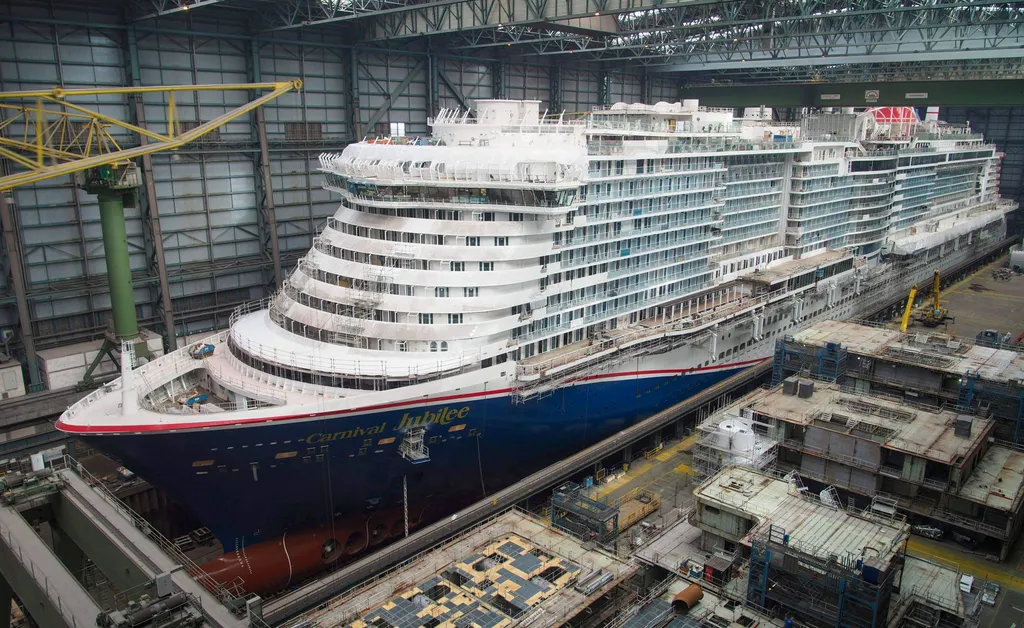
Another critical development came just before year’s end, when Germany’s federal government and the state of Lower Saxony announced a major order valued at approximately €10 billion for Meyer Werft. While VSM notes that the order will only formally enter its statistics in 2026, once the final construction contract is signed, the announcement alone marked a turning point for the Papenburg yard. After a period of restructuring, the project sets the stage for a return to growth and long-term investment.
Beyond Germany’s borders, 2025 was shaped by mounting geopolitical pressure. VSM points to persistent conflict in Eastern Europe, rising Chinese assertiveness, and shifting U.S. positions on global trade and security as defining forces. Yet from an industrial perspective, Germany’s shipbuilding sector has not lost technological ground. Unlike in some manufacturing segments, VSM does not see a clear technological lead by China in shipbuilding or marine technology. By contrast, the United States is now committing tens of billions of dollars to close perceived gaps—an effort that further underscores the strategic value of maritime industrial capacity.
Looking ahead to 2026, VSM’s outlook is cautiously optimistic. Business is strong, order books are full, and customers continue to value German engineering expertise. Key industry milestones—including the long-awaited National Maritime Conference and preparations for SMM 2026 in Hamburg—will provide platforms to translate that momentum into policy support and further investment.
“Germany needs every dock, every slipway and every square meter of heavy-lift capacity it has,” VSM emphasized, reinforcing the sector’s critical role in Europe’s maritime industrial landscape. As the industry moves forward, the focus will be on leveraging this momentum to secure long-term growth and innovation.