
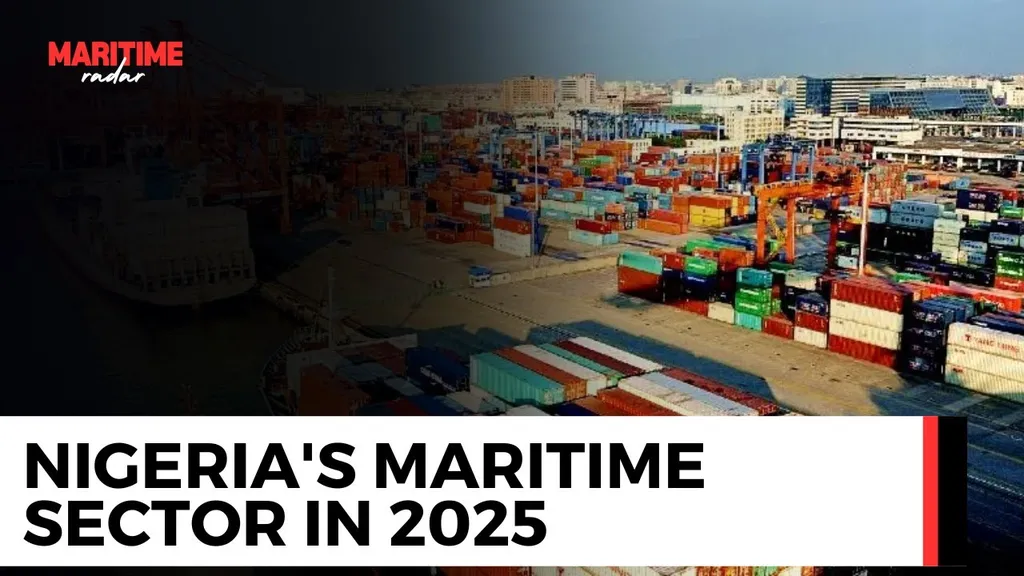
Nigeria’s maritime sector in 2025 recorded a watershed year of transformation, strategic reforms, and global recognition, demonstrating resilience despite structural challenges. With investments in port modernisation, digitalisation, human capital development, and fisheries, Nigeria positioned itself as a competitive continental maritime hub.
The year marked Nigeria’s return to global maritime prominence. In November 2025, Nigeria reclaimed a Category C seat at the International Maritime Organisation (IMO) Council for the 2026–2027 biennium after a 14-year absence, securing 116 votes and defeating Denmark, Kenya, and Bangladesh. Category C representation includes nations with special interests in maritime transport and navigation, ensuring Nigeria a platform to influence global maritime policies, from safety and environmental protection to trade facilitation and technical cooperation. Minister of Marine and Blue Economy, Adegboyega Oyetola, described the victory as a “landmark endorsement of renewed global confidence in Nigeria under President Bola Tinubu’s administration.” The seat strengthens Africa’s representation at IMO and enables Nigeria to advance Gulf of Guinea security priorities, including piracy suppression and maritime capacity-building initiatives.
Complementing this, the Nigeria Customs Service (NCS) Comptroller-General, Adewale Adeniyi, was elected Chairperson of the World Customs Organisation (WCO) Council in June 2025, the first Nigerian to lead the body since its inception in 1952. The WCO represents 187 customs administrations globally, and Adeniyi’s leadership validates Nigeria’s digitalisation and trade facilitation reforms, including the Authorised Economic Operator (AEO) programme, SAFE Framework implementation, and the $3.2 billion E-Customs Modernisation Project. His December 2025 chairing of the WCO Policy Commission session in Guatemala further advanced Nigeria’s role in shaping continental trade facilitation standards under the African Continental Free Trade Area (AfCFTA).
Port modernisation and infrastructure upgrades
The Nigerian Ports Authority (NPA) accelerated port modernisation programmes in 2025, with Dr. Abubakar Dantsoho’s election as Vice President (Africa) of the International Association of Ports and Harbours (IAPH) lending global recognition to Nigeria’s reforms. The authority undertook extensive dredging and channel expansion at Calabar, Warri, and Burutu ports, deployed six advanced scanners, including the FS6000 model for non-intrusive inspections, and implemented the Unified Customs Management System (UCMS), codenamed B’Odogwu. These initiatives were complemented by the full operationalisation of Dangote Refinery’s marine facilities, expected to attract over 600 vessels annually, and substantial capital investments at Eastern ports aimed at decongesting Lagos-based facilities. The strategic deployment of modern port technologies improved cargo handling, reduced turnaround times, and reinforced Nigeria’s capacity under AfCFTA to serve as a regional transshipment and logistics hub. The Lekki Deep Sea Port emerged as a game-changer, processing goods worth nearly $9.3 billion (N13.46 trillion) in the first nine months of 2025. Automation in container handling and cargo tracking, combined with a deeper draught accommodating ultra-large vessels, positioned Lekki as Nigeria’s second-largest port by trade value, surpassing Tin Can Island and Onne, with only Apapa maintaining higher throughput.
Digitalisation and regulatory reforms
Digital transformation extended beyond ports. The Nigerian Shippers’ Council (NSC) launched its Enterprise Content Management System (ECMS) in Abuja, unveiled by Secretary to the Government of the Federation, Senator George Akume, and Oyetola. ECMS introduced automated workflows, centralised digital records, real-time task tracking, and secure approvals, significantly reducing bureaucratic delays and enhancing port performance. This initiative aligned with broader sector reforms, including the rollout of inland dry ports and the resolution of chronic congestion at Apapa. Regulatory reforms also delivered economic impact. The NSC’s Alternative Dispute Resolution mechanism saved maritime stakeholders over N10 billion in 2025, handling between 300 and 400 cases. The Council advanced 14 Vehicle Transit Parks to mitigate driver fatigue, accelerated inland dry port projects in Funtua and Borno, and established Border Information Centres to capture informal trade and curb smuggling. The Nigerian Port Economic Regulatory Agency Bill, pending presidential assent, promises to replace the outdated 1978 decree, providing regulatory certainty for investors while strengthening the NSC’s mandate. The Nigeria Customs Service further enhanced trade facilitation through the National Single Window platform and the Authorised Economic Operator programme, reducing clearance timelines at Apapa and Tin Can ports from 21 days to 7–1