
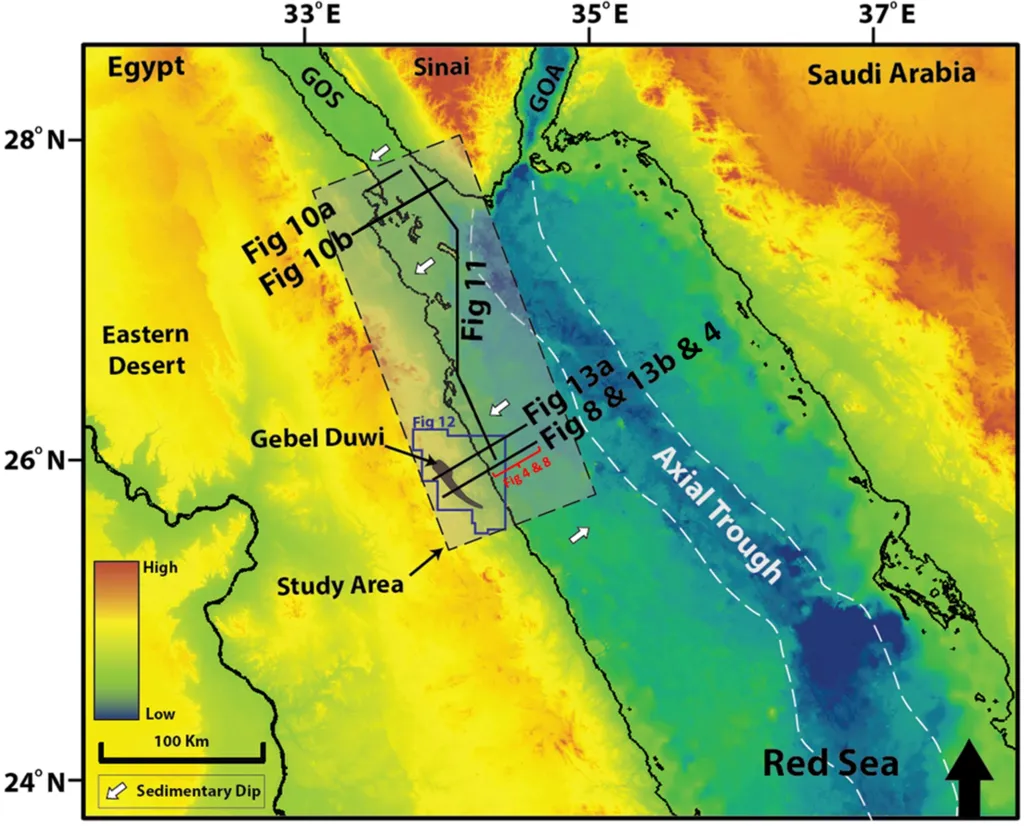
In the world of oil and gas, mature fields often present a conundrum: how to squeeze more out of what’s left without breaking the bank. Ghareb M. Hamada, a researcher from the Arab Academy for Science, Technology & Maritime Transport (AASTMT) in Alexandria, Egypt, has been tackling this very issue. His recent study, published in the Iraqi Journal of Chemical and Petroleum Engineering, offers a roadmap for optimizing hydrocarbon production in mature fields, with a focus on the Abu Rudeis oil field.
Hamada’s work centers around dynamic modeling, a technique that integrates production data, pressure surveys, and detailed subsurface studies to better understand reservoir behavior. By using this approach, Hamada and his team were able to pinpoint new development well placements, leading to significant increases in oil production.
So, what does this mean for the maritime sector? Well, for starters, it’s all about efficiency and cost-effectiveness. As Hamada puts it, “Opportunities that deliver high value yet have limited associated risks and costs are typically characterized in general by short payout periods and reinvestment of savings.” In other words, by using data-driven strategies and advanced technology, we can unlock residual potential from low-productivity or shut-in wells, maximizing asset value.
The study also highlights the importance of interdisciplinary collaboration. As Hamada notes, “These strategies can only be effectively implemented if inter-disciplinary teams work together to ensure that data is comprehensively analyzed and all solutions are formulated in line with these analyses.” This means bringing together experts from various fields to ensure that all bases are covered, leading to more informed and targeted decisions.
For maritime professionals, this research underscores the potential of technology and data in optimizing offshore operations. By leveraging dynamic modeling and other advanced techniques, we can improve field performance, enhance hydrocarbon recovery, and ultimately, extend the life of mature fields.
Moreover, the study’s findings could pave the way for similar projects in other mature fields, both onshore and offshore. As Hamada’s work demonstrates, there’s still plenty of life left in these fields, and with the right strategies and technologies, we can continue to reap their benefits.
In the end, it’s all about working smarter, not harder. And as Hamada’s research shows, the key to unlocking the full potential of mature fields lies in our ability to integrate data, collaborate across disciplines, and make well-informed decisions. So, let’s roll up our sleeves, dive into the data, and get to work. The future of offshore oil and gas is looking brighter than ever.