
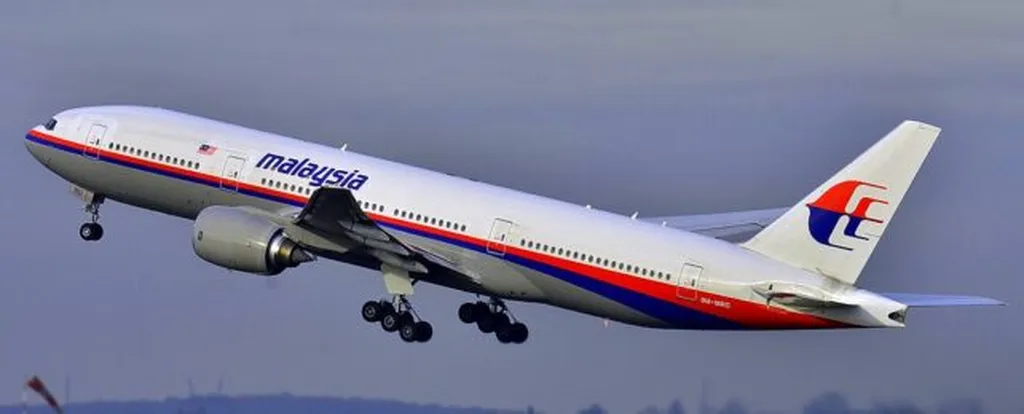
Nearly 12 years after Malaysia Airlines Flight MH370 vanished with 239 people on board, the mystery remains unresolved. The Boeing 777 disappeared on March 8, 2014, while en route from Kuala Lumpur to Beijing. The passengers included more than 150 Chinese nationals, around 50 Malaysians, and citizens from several other countries, including France, Australia, the United States, India, Canada, and Ukraine. Despite one of the most extensive aviation investigations in history, the aircraft has never been found.
The final radio transmission from the cockpit came roughly 40 minutes after takeoff, when the captain signed off with the words, “Good night, Malaysian three seven zero,” as the aircraft entered Vietnamese airspace. Shortly afterward, the plane’s transponder was switched off, making it invisible to civilian air traffic control systems. Military radar later showed the aircraft deviated sharply from its planned route, turning back across northern Malaysia and Penang Island before heading northwest into the Andaman Sea. It then turned south, after which all contact was lost.
Satellite data from Inmarsat suggested the aircraft continued flying for several hours and likely crashed in a remote stretch of the southern Indian Ocean, west of Australia. That analysis guided a multinational underwater search launched by Malaysia, Australia, and China, covering about 120,000 square kilometers of seabed. After two years and an estimated cost of A$200 million, the search was suspended in January 2017 without finding the wreckage.
In 2018, Malaysia approved a follow-up search by U.S.-based marine exploration firm Ocean Infinity under a “no-cure, no-fee” agreement. That effort scanned an additional 112,000 square kilometers north of the original search area but also failed to locate the aircraft. Investigators have recovered more than 30 pieces of debris along the coastlines of Africa and islands in the Indian Ocean. Only three wing fragments were definitively confirmed to be from MH370. While the debris supported drift modeling used to refine search areas, it has not led to a confirmed crash site.
A 495-page official investigation report released in July 2018 concluded that the aircraft’s flight controls were likely deliberately manipulated to divert it from its original route. However, investigators said they could not determine who was responsible or why. The report also identified air traffic control lapses in Kuala Lumpur and Ho Chi Minh City and issued safety recommendations, but stopped short of drawing conclusions about the plane’s fate without physical evidence.
The lack of answers has fueled a wide range of theories over the years, from mechanical failure to deliberate human action, as well as more speculative claims. Authorities have repeatedly stated there was no evidence of suspicious behavior in the backgrounds of the flight crew.
Malaysia’s government announced in late 2024 that it would again partner with Ocean Infinity to resume the search. Under the agreement, the company would receive up to $70 million if significant wreckage is found. An initial attempt earlier this year was cut short due to poor weather.
A new search is now set to begin on December 30, 2025, focusing on a targeted 15,000-square-kilometer area of the southern Indian Ocean believed to have the highest probability of success. Ocean Infinity plans to conduct seabed operations intermittently over a 55-day period.
This renewed effort brings a glimmer of hope to the families of the victims and the global aviation community. The search for MH370 is not just about finding a lost aircraft; it’s about uncovering the truth behind one of the most baffling mysteries in aviation history. As we stand on the brink of this new chapter, the question remains: Will this search finally provide the answers we’ve been waiting for, or will the enigma of MH370 endure?