
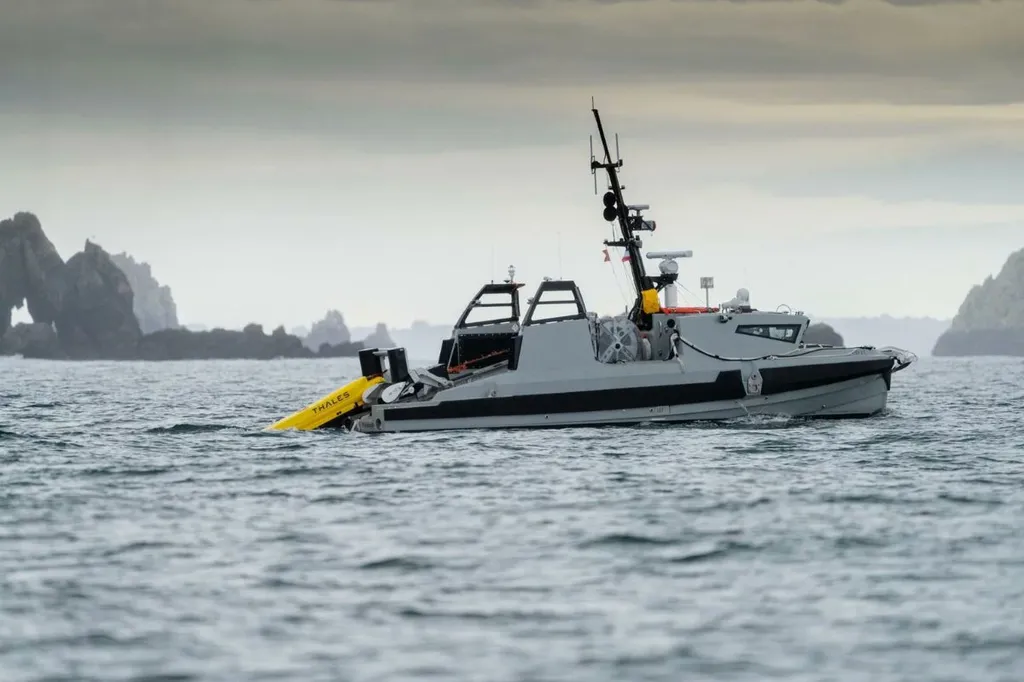
The Royal Navy is stepping into the future of mine countermeasures with a £10 million contract awarded to Thales for AI-powered autonomous command hubs. This isn’t just another procurement—it’s a cornerstone of the Navy’s vision for a hybrid fleet, blending manned and unmanned systems to keep sailors safer in increasingly contested waters.
The contract will fund the development of an AI-driven system that ties together unmanned surface vehicles, autonomous underwater drones, and sensors into a single, cohesive platform. This isn’t just about keeping pace with threats; it’s about setting the standard for maritime defence in an era where undersea warfare is evolving rapidly.
Defence Readiness and Industry Minister Luke Pollard underscored the urgency behind this move, citing growing global instability and Russian aggression. “By embracing autonomous maritime technology, the Royal Navy is pioneering innovation to help keep our sailors safe at sea,” he said. His words reflect a broader shift in defence strategy, one where technology is seen as a force multiplier in the face of escalating threats.
The Royal Navy’s mine-clearing operations have come a long way since the days of crewed minesweepers towing cutting gear through minefields. The introduction of sophisticated mine hunters in the 1980s marked a turning point, using high-resolution sonar and remotely operated vehicles to detect and neutralise mines with greater precision. However, the latest advancements are pushing the boundaries even further.
Earlier this year, the Royal Navy integrated a series of uncrewed drones known as Sweep, designed to hunt and detonate mines autonomously. These drones replicate the acoustic, magnetic, and pressure signatures of real vessels, tricking mines into detonating at a safe distance. This automated approach eliminates the need for direct detection and disposal, significantly reducing the risk to personnel.
The new Remote Control Centres, developed by Thales, will supercharge this capability. Utilising the M-Cube management system, these hubs will provide commanders with real-time situational awareness, from the task force level down to individual units. The system’s AI-powered Mi-Map planning tool will analyse data with a precision that surpasses human capability, identifying targets and optimising responses in real time.
Jon Reed-Beviere, Navy Command Programme director, highlighted the transformative potential of these new command centres. “The new Remote Command Centres will give Royal Navy personnel unprecedented command and control over our autonomous mine hunting systems,” he said. “This integrated approach allows us to operate multiple unmanned platforms simultaneously and integrate new capability in the future, dramatically increasing our effectiveness whilst reducing risk to our sailors. It represents a paradigm shift in how we deliver mine countermeasures capability.”
This development is part of the broader Mine Hunting Capability programme, a stepping stone towards the Royal Navy’s Hybrid Navy vision. The first capabilities are expected to be deployed next year, marking a significant milestone in the Navy’s modernisation journey.
As the Royal Navy continues to innovate, the integration of autonomous systems into its operations will not only enhance its ability to counter evolving threats but also set a precedent for other navies worldwide. The shift towards a hybrid fleet is more than a technological upgrade—it’s a strategic imperative in an era where the undersea domain is becoming increasingly contested.