
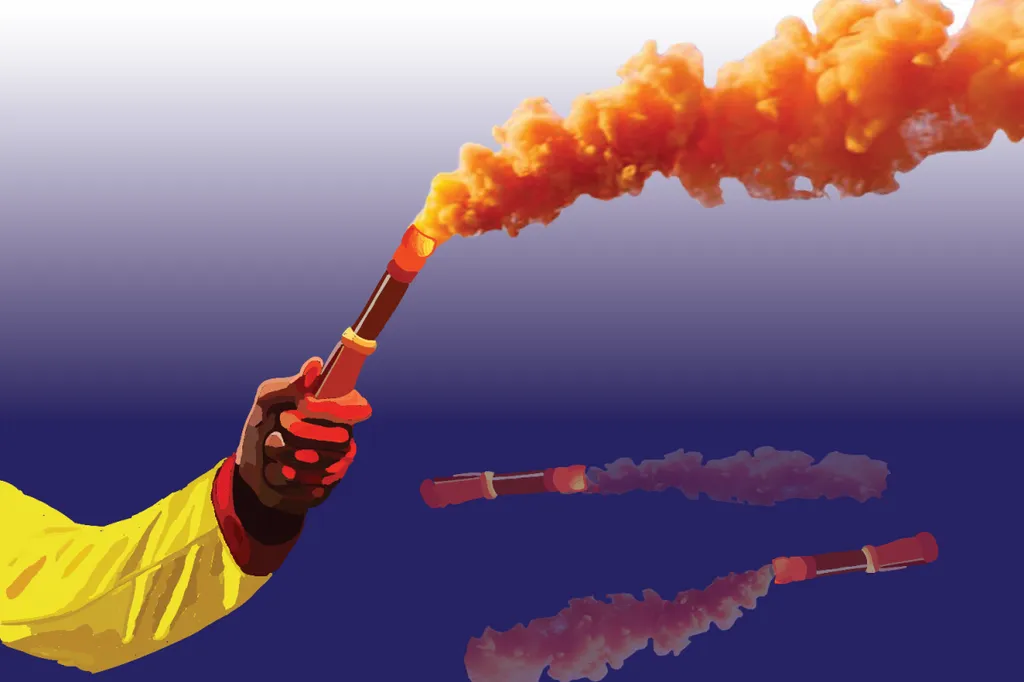
In a significant stride towards enhancing maritime safety, researchers have developed a comprehensive framework for testing maritime pyrotechnic articles, ensuring they meet rigorous international standards. The study, led by Ilie-Ciprian Jitea from the National Institute for Research and Development in Mine Safety and Protection to Explosion – INSEMEX Petroșani, was recently published in the Annals of the University of Petroşani. Mechanical Engineering, which translates to Annals of Petroșani University. Mechanical Engineering.
Maritime pyrotechnic articles, such as hand flares and floating smoke flares, are critical for signaling and safety at sea. However, their effectiveness and reliability under extreme conditions have often been questioned. Jitea and his team addressed this by creating a robust testing infrastructure that aligns with International Maritime Organisation (IMO) and European Union guidelines.
The research involved calibrating and validating test equipment like climate chambers, digital gauges, and timers to measure critical parameters such as ignition delay, burn time, and operational efficiency. “Proper conditioning and testing of marine pyrotechnic products in controlled environments can significantly enhance their reliability and safety,” Jitea emphasized.
The team subjected hand flares and floating smoke flares to extensive cyclic temperature, immersion, and operational stress testing. This rigorous process verified the durability and performance of these safety devices under extreme conditions. The findings underscore the importance of a well-structured testing protocol to minimize risk and ensure high levels of operational safety in maritime applications.
For maritime professionals, this research presents a significant opportunity to improve the safety and reliability of pyrotechnic devices used in emergency situations. By adhering to the developed testing framework, manufacturers can produce more dependable products, ultimately enhancing maritime safety standards.
The commercial impact of this research is substantial. Maritime companies can leverage these findings to develop and market safer, more reliable pyrotechnic devices, gaining a competitive edge in the industry. Additionally, regulatory bodies can use this framework to enforce stricter safety standards, ensuring that only the most reliable products are used at sea.
In essence, this research not only advances safety science but also opens up new avenues for innovation and commercial growth in the maritime sector. As Jitea noted, “A well-structured testing protocol, aligned with international safety standards, is essential to minimise risk and ensure high levels of operational safety in maritime applications.” This development is a step forward for maritime safety, benefiting both industry professionals and the broader maritime community.