
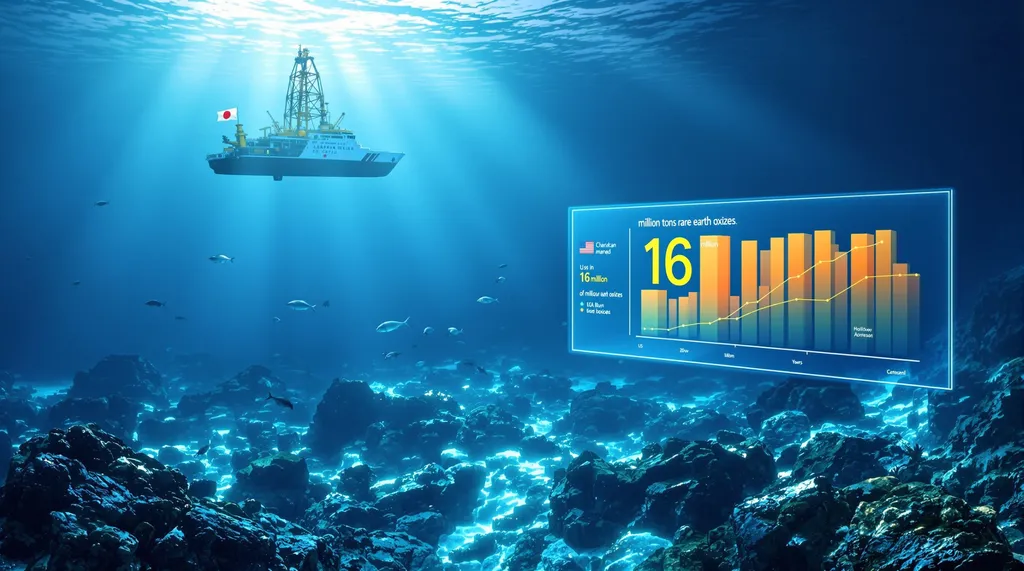
Japan is set to embark on a groundbreaking mission: the world’s first continuous extraction of rare-earth-rich mud from the deep seabed. From January 11 to February 14, a government-backed project will test this ambitious operation off Minamitori Island, approximately 1,900 kilometres southeast of Tokyo. This isn’t just a technological trial—it’s a strategic pivot in global supply chain dynamics.
At the heart of the mission is the quest for stable supplies of critical minerals. Shoichi Ishii, program director of the Cabinet Office’s national platform for innovative ocean developments, underscored the mission’s significance: “One of our missions is to build a supply chain for domestically produced rare earths to ensure stable supply of minerals essential to industry.” This initiative aligns with broader efforts to bolster maritime and economic security, especially as China, the dominant supplier of rare earths, tightens export controls.
The January test will focus on connecting the deep-sea mining system and confirming its ability to lift 350 metric tons of rare-earth mud per day. Environmental impacts will be closely monitored both on board and on the seabed throughout the operation. If successful, this trial could pave the way for a full-scale mining operation by February 2027. The government-funded project has already invested about 40 billion yen ($256 million) since 2018, though estimated reserves remain undisclosed.
The stakes are high, and the geopolitical undertones are palpable. While conducting rare-earth surveys within Japan’s exclusive economic zone (EEZ) around Minamitori Island from May 27 to June 25, a Japanese research vessel encountered a Chinese naval fleet on June 7. Ishii expressed concern over this incident: “We feel a strong sense of crisis that such intimidating actions were taken, despite our activities being limited to seabed resource surveys within our EEZ.” China’s foreign ministry responded by asserting that the activities of its military vessels are in line with international law and international conventions, and called on Japan to “refrain from hyping up threats and provoking confrontation.”
This mission is more than a technological feat—it’s a strategic move in a global chess game of resource security. As Japan pushes the boundaries of deep-sea mining, it sends a clear signal to the world: the race for critical minerals is heating up, and no stone—or seabed—will be left unturned. The outcomes of this trial could reshape the future of rare-earth supply chains and redefine the geopolitical landscape of resource acquisition.