
In the bustling world of maritime transportation, especially for archipelagic nations like Indonesia, the quest for optimal ship speed and fuel efficiency is an ongoing challenge. A recent study, published in the journal ‘Emitor: Jurnal Teknik Elektro’ (which translates to ‘Emitor: Journal of Electrical Engineering’), tackles this very issue, offering a promising solution for hybrid propulsion systems.
Fajar Surya Muhammad Aldoko, a researcher from Politeknik Perkapalan Surabaya, led the charge in designing a ship speed control system based on fuzzy logic. This system is integrated with a hybrid propulsion setup, combining a Brushless DC (BLDC) motor and a diesel engine, specifically for a trimaran vessel.
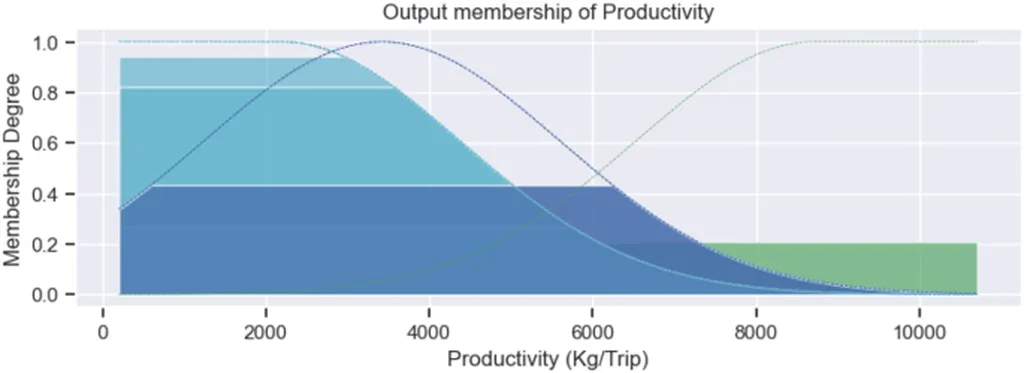
So, what does this mean for the maritime industry? Well, imagine a system that can intelligently distribute power between the BLDC motor and the diesel engine, adapting to environmental conditions like waves and currents. This is exactly what Aldoko’s system does. It uses fuzzy logic, a form of artificial intelligence that can handle uncertainty and imprecision, to make real-time decisions about power distribution.
The results were impressive. The fuzzy logic-based control system significantly improved speed stability and fuel efficiency, particularly at lower speeds. “The system effectively adapted to environmental conditions such as waves and currents, optimising power distribution between the BLDC motor and diesel engine,” Aldoko noted.
But what does this mean for the industry? For starters, it could lead to substantial fuel savings, which is a big deal given the volatile fuel prices. Moreover, it could enhance the operational efficiency of maritime vessels, making them more reliable and cost-effective.
The commercial impacts are substantial. Ship operators could see reduced fuel consumption, leading to lower operational costs. This is particularly relevant for short-sea shipping and coastal transportation, where vessels often operate at lower speeds. Additionally, the system’s ability to adapt to environmental conditions could enhance the safety and reliability of maritime operations.
The opportunities are equally exciting. The system could be adapted for various types of vessels, not just trimarans. It could also pave the way for further research into intelligent control systems for maritime applications. As Aldoko puts it, “This fuzzy logic-based control system offers a promising solution to enhance operational efficiency in hybrid propulsion systems for maritime vessels, ensuring reduced fuel consumption and improved environmental sustainability.”
In the end, Aldoko’s research is a step forward in the quest for more efficient and sustainable maritime transportation. It’s a testament to the power of innovation and the potential of hybrid propulsion systems. And for the maritime industry, it’s an opportunity to embrace the future of shipping.