
In the quiet between Christmas and New Year’s, as most Americans were wrapped up in holiday cheer, a federal vaccine advisory meeting took place that could reshape the relationship between science and power in the United States. Scheduled strategically between the holidays and broken into four brief sessions, this meeting of a little-known committee might have gone unnoticed. Yet, its structure, timing, and institutional role hint at a broader, more troubling trend—one that echoes one of the most damaging episodes in modern scientific history: Lysenkoism.
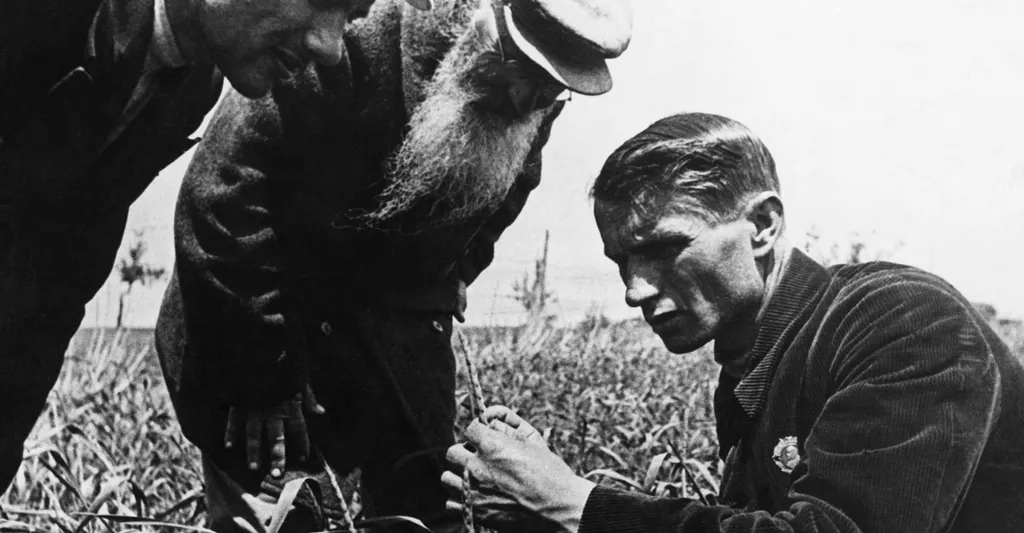
Lysenkoism, the body of ideas promoted by Soviet agronomist Trofim Lysenko, rejected Mendelian genetics and natural selection, arguing instead that traits acquired during a plant’s lifetime could be passed to future generations. Despite lacking experimental support, Lysenko’s theories were adopted by the Soviet state, transforming agricultural science into a tool of political narrative rather than empirical testing. The consequences were catastrophic, contributing to widespread famine and the loss of decades of scientific progress.
The parallels between Lysenkoism and current trends in U.S. science policy are unsettling. In May 2025, the Trump administration’s decision to bar international students from Harvard echoed the Soviet Union’s curtailment of educational exchange with China out of ideological fear. Similarly, moves to sideline climate scientists and reshape federal research institutions resemble the chaos of China’s Cultural Revolution, where political loyalty replaced expertise.
The recent meeting of the Advisory Commission on Childhood Vaccines (ACCV) is a case in point. This body, which feeds directly into the Vaccine Injury Compensation Program and reports to the Secretary of Health and Human Services, saw changes in its membership and meeting cadence in 2025. Long-scheduled sessions were postponed without clear explanation, and members were removed and replaced. These changes occurred alongside shifts in the Advisory Committee on Immunization Practices (ACIP), which sits at the center of the U.S. vaccination system.
ACIP’s recommendations determine which vaccines are included in the national schedule, governing insurance coverage, federal purchasing, liability protection, and eligibility for the Vaccine Injury Compensation Program. Changes to ACIP’s membership, scope, and process signal a willingness to reopen settled questions and blur the line between scientific assessment and political preference. If ACIP recommendations become unstable or are perceived as disconnected from evidence, the consequences could be severe. Manufacturers rely on predictable schedules and liability protections when deciding whether to invest in vaccine production. If confidence erodes, fewer vaccines are developed, and supply becomes fragile.
The institutional capture and collapse of falsifiability seen in the Soviet Union under Lysenko are echoed in the U.S. today. When domestic institutions begin to subordinate evidence and open inquiry to political dictates, the long-term damage to a nation’s scientific capacity and economic prospects can mirror some of the most self-inflicted declines of the last century.
The December 30 meeting of the ACCV is a small but telling example of how the United States is beginning to reorganize the relationship between science and power. It is a slow institutional reconfiguration that makes evidence optional, likely to have significant impacts on Americans’ health, and won’t stay within its borders. The echoes of Lysenkoism serve as a stark warning: when a state breaks the link between evidence and authority, the economic and technological consequences can last for generations.