
Tampa Bay is setting its sights on global leadership, and it’s betting big on three catalytic initiatives: artificial intelligence, digital infrastructure, and blue technology. The Tampa Bay Economic Development Council’s newly released 2026-2028 strategic plan, “Future Ready: Tampa Bay,” outlines a roadmap to capitalize on these emerging trends, ensuring the region’s competitiveness in a rapidly evolving economic landscape.
CEO Craig Richard emphasized the importance of regionalism, noting that from an outsider’s perspective, Tampa Bay is seen as a single market, not a patchwork of cities and counties. “When you’re talking to somebody from London about relocating to the Tampa Bay area, they have no idea where city and county lines are – it’s one market,” Richard said. This regionalism was on full display during a trade mission to London in June 2025, where local leaders, including Mayors Ken Welch, Jane Castor, and Bruce Rector, collectively promoted the area’s strengths.
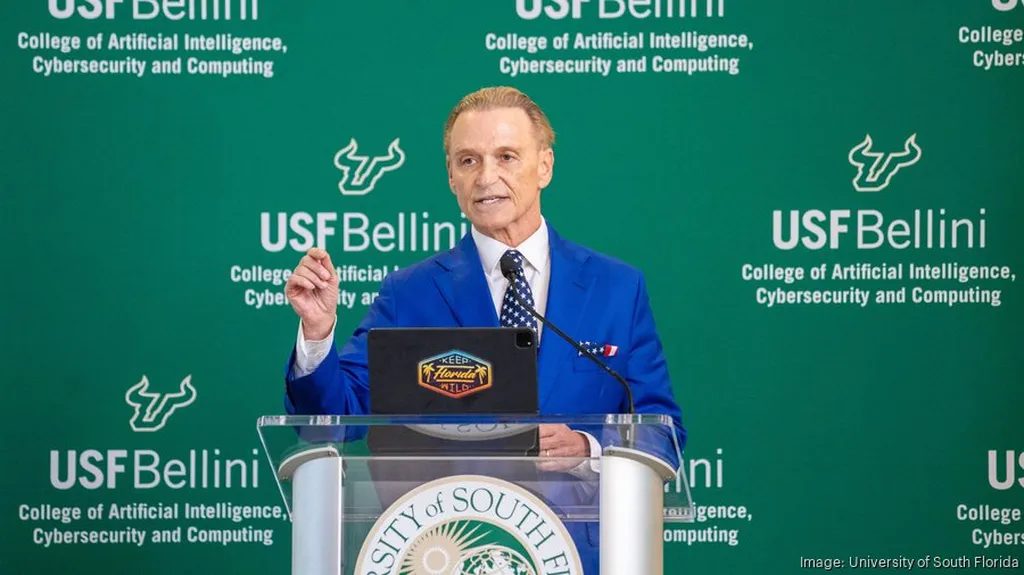
Artificial intelligence (AI) is the first of the three catalyst initiatives highlighted in the plan. Richard described AI as “pervasive in just about everything that comes up now.” A significant asset in this arena is the University of South Florida’s Bellini College of Artificial Intelligence, Cybersecurity, and Computing, the nation’s first college dedicated to unifying these fields. Richard called the college a “beacon” for attracting AI and tech companies seeking specialized talent and partnership opportunities with USF.
MacDill Air Force Base, home to U.S. Central Command (CENTCOM) and U.S. Special Operations Command (SOCOM), also plays a crucial role. These commands require cutting-edge technology to maintain global success and safety, driving demand for specialized tech solutions. Richard noted that defense contractors are increasingly co-locating closer to their end-users, a trend that positions Tampa Bay favorably.
The strategic plan calls for creating a new business development position focused on AI, cybersecurity, and defense sectors. Richard stressed the need for stakeholders to understand industry challenges and opportunities to offer companies a competitive advantage. “A lot of education needs to occur,” he said.
Digital infrastructure is the second catalyst initiative, encompassing data centers that power AI. Richard highlighted the importance of investments in fiber optic networks and the region’s proximity to data centers. Tampa Bay is already home to about 14 data centers, though they may not be as large as those garnering national attention. “Finding the types of data centers that make sense for our region is something that’s going to require more information, more education, to really uncover what those opportunities look like,” Richard added.
The plan encourages partnerships with utility and internet service providers to identify sites and needs for data centers. Despite the high energy demands of these facilities, new technologies are creating efficiencies, positioning Tampa Bay for success.
The third catalyst initiative, blue technology, leverages the region’s abundant maritime assets. The St. Petersburg Innovation District, home to the USF College of Marine Science and the Maritime and Defense Technology Hub, is poised to position Tampa Bay as a global destination for blue tech innovation. Port Tampa Bay and MacDill Air Force Base are also critical to regional and national maritime defense. Richard expressed readiness to collaborate with regional partners to build a globally competitive blue tech ecosystem.
Tampa Bay’s economic diversity is a significant asset, and maintaining this success requires fostering startups, growing established businesses, and attracting major companies. Richard emphasized the importance of a thriving local business community, access to capital, and technology transfer. “If your local business community is growing and thriving, it will attract others,” he said.
Richard also highlighted the benefit of having local elected leaders who understand the importance of regionalism. The collaboration among St. Petersburg Mayor Ken Welch, Tampa Mayor Jane Castor, and Clearwater Mayor Bruce Rector during the London trip was a testament to this unity. “It’s one market, and I think more and more people are starting to understand that,” Richard reiterated. “We are great partners. We know how to work together. We do work together on a lot of different initiatives.”
As Tampa Bay moves forward with its strategic plan, the focus on AI, digital infrastructure, and blue technology will be pivotal. The region’s ability to leverage its unique assets and foster regional collaboration will be key to solidifying its status as a global leader. Richard’s optimism is palpable: “I’m pleased at how far we’ve come, and I’m excited about the future for us.”