
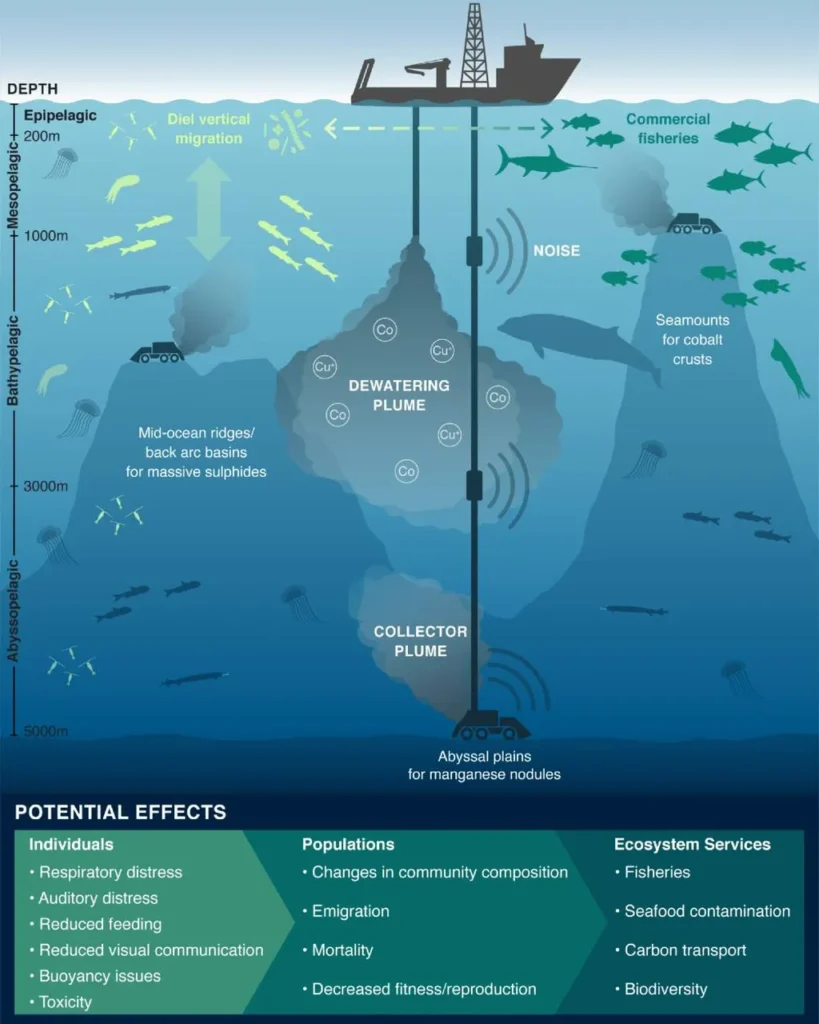
In the vast, unexplored depths of our oceans, a new study is making waves, quite literally, in the world of deep-sea mining. Researchers, led by S. A. Wahab from the Section of Offshore and Dredging Engineering at Delft University of Technology in the Netherlands, have been delving into the dynamics of turbidity currents, those underwater flows of sediment-laden water that can significantly impact the spread of sediment during deep-sea mining activities.
Imagine this: you’re in a lock-exchange setup, a controlled environment where you can observe how turbidity currents behave. Wahab and his team used sediments sampled from the Clarion Clipperton Zone, a hotspot for deep-sea mining, to simulate these currents in saltwater. What they found was quite intriguing. The presence of a bed, a layer of previously deposited sediment, influenced the propagation velocity of these currents. “The flocs, or clusters of sediment particles, were denser and larger when a bed was present,” Wahab explains. This increased the floc settling velocities, meaning the sediment settled out of the water more quickly.
But here’s where it gets even more interesting. The age of the bed played a significant role. Freshly formed beds were more efficient in reducing sediment spread. This is because, as Wahab puts it, “sediment resuspension occurred due to the disturbance of organic matter,” which contributed to flocculation. In other words, the younger the bed, the more it can stir things up, leading to larger, denser flocs that settle out more quickly.
So, what does this mean for the maritime industry? Deep-sea mining is a burgeoning field, with vast resources waiting to be tapped. Understanding how turbidity currents behave is crucial for predicting and managing the spread of sediment during these activities. This research could help companies minimize their environmental impact, a key consideration in an industry facing increasing scrutiny.
Moreover, the findings could open up new opportunities for maritime sectors involved in dredging and sediment management. As Wahab’s study sheds light on the complex dynamics of turbidity currents, it paves the way for more efficient, environmentally friendly practices. It’s a win-win for the industry and the ocean.
Published in the journal ‘Frontiers in Earth Science’ (translated to ‘Frontiers in Earth Science’), this study is a significant step forward in our understanding of deep-sea dynamics. As the maritime industry continues to explore the depths of our oceans, research like this will be invaluable in guiding sustainable, responsible practices. So, as we venture further into the abyss, let’s do so with our eyes wide open, armed with the knowledge to protect and preserve our precious marine environments.