
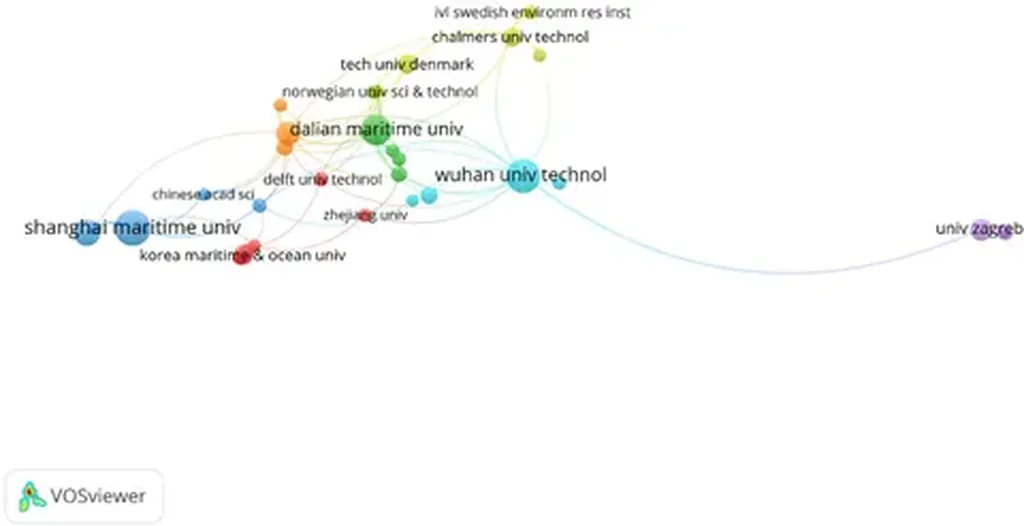
In a bid to understand how ports and shipping companies can work together to cut emissions, a recent study published in ‘Frontiers in Marine Science’ (translated from Chinese as ‘Frontiers in Marine Science’) has shed some light on the matter. Led by DongPing Pu from the China Institute of FTZ Supply Chain at Shanghai Maritime University, the research delves into the long-term effects of collaboration and government subsidies on emission reduction in the maritime industry.
The study, which is a bit of a mouthful to pronounce but straightforward in its approach, uses game theory models to analyze different decision-making scenarios. Think of it like a chess game between ports and shipping companies, with each trying to outmaneuver the other to maximize their benefits while minimizing emissions. The models include Stackelberg games, where one party leads, vertical integration, and Nash bargaining games, where both parties negotiate to reach an agreement.
Pu and his team found that centralized decision-making, where both the port and shipping company work together under a single strategy, yields better decarbonization benefits than decentralized models, where each party acts independently. This is a significant finding, as it suggests that collaboration is key to achieving emission reduction goals in the maritime sector.
However, the study also warns that excessive subsidies can discourage independent innovation. “Subsidies only play a short-term incentive role,” Pu explains, “while collaboration can promote the sustainable development of the port and shipping industry.” This means that while government subsidies can provide a initial boost, long-term emission reduction strategies should focus on fostering collaboration between ports and shipping companies.
So, what does this mean for the maritime industry? For one, it highlights the importance of collaboration in achieving emission reduction targets. Ports and shipping companies that work together can not only reduce emissions but also maximize industry profits. This presents a unique opportunity for maritime sectors to innovate and develop new strategies that benefit both the environment and their bottom line.
Moreover, the study underscores the need for careful consideration of subsidy policies. While subsidies can provide a initial incentive, they should not be relied upon as a long-term solution. Instead, the focus should be on fostering collaboration and encouraging independent innovation.
In conclusion, the study by Pu and his team provides valuable insights into the role of collaboration and subsidies in promoting emission reduction in the maritime industry. By highlighting the benefits of centralized decision-making and the potential pitfalls of excessive subsidies, the research offers a roadmap for maritime sectors to achieve their emission reduction goals while maximizing industry profits. As the maritime industry continues to grapple with the challenges of decarbonization, this study serves as a timely reminder of the power of collaboration and innovation.