
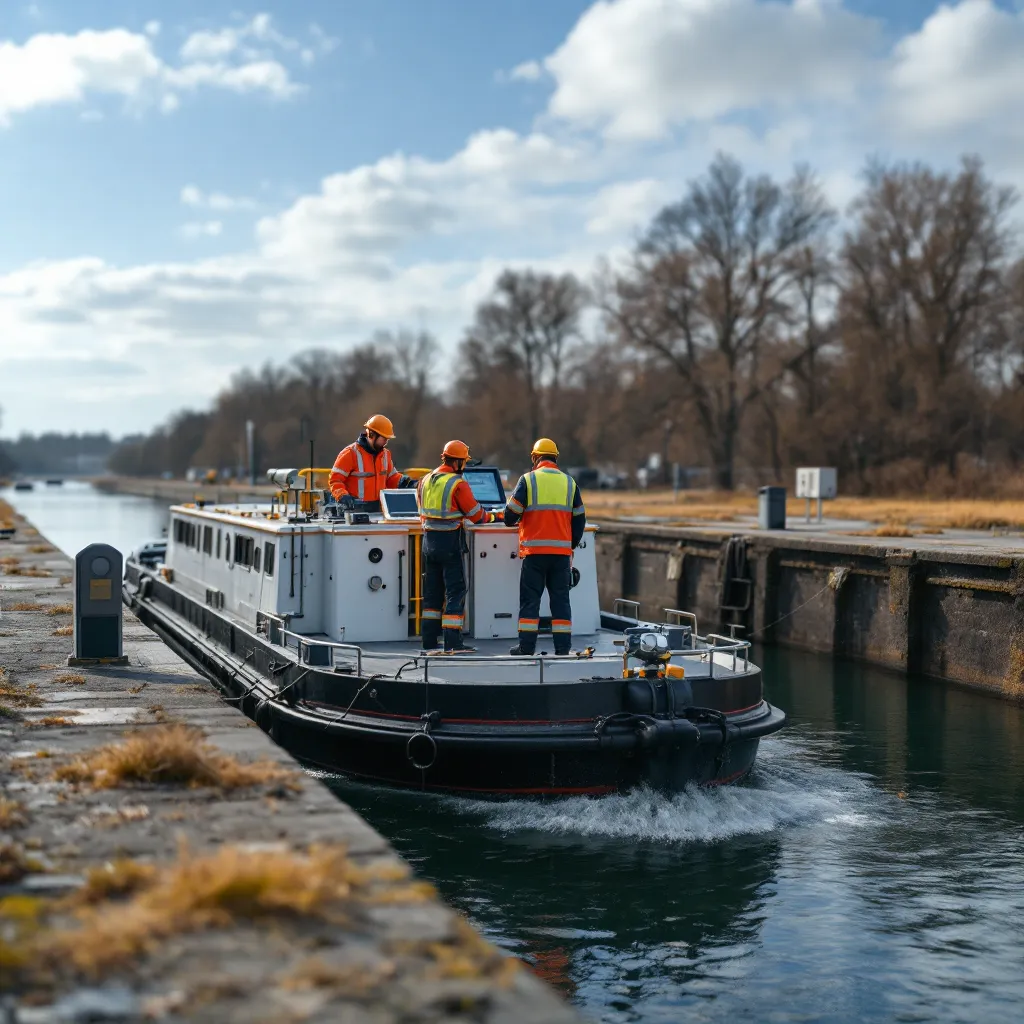
Researchers Bavo Lesy, Ali Anwar, and Siegfried Mercelis, affiliated with a leading institution in maritime technology, have conducted a groundbreaking study on the robustness of reinforcement learning (RL) algorithms for autonomous shipping. Their work, published in a prestigious journal, focuses on the critical challenges of inland waterway transport (IWT) and the potential of advanced AI technologies to enhance maritime efficiency and safety.
The study delves into the unique obstacles presented by IWT, such as crowded waterways and variable environmental conditions. In such dynamic settings, the reliability and robustness of autonomous shipping solutions are paramount for ensuring safe operations. The researchers implemented benchmark deep reinforcement learning algorithms within an autonomous shipping simulator to evaluate their effectiveness in generating motion planning policies.
The findings reveal that a model-free approach can achieve an adequate policy in the simulator, successfully navigating port environments never encountered during training. The researchers focused particularly on the Soft-Actor Critic (SAC) algorithm, demonstrating its inherent robustness to environmental disturbances compared to MuZero, a state-of-the-art model-based RL algorithm. This comparison highlights the potential of SAC to handle unpredictable conditions, making it a promising candidate for real-world applications in autonomous shipping.
The practical implications of this research are significant. By developing robust, applied RL frameworks, the maritime industry can achieve greater efficiency and safety in both port and inland environments. The ability to generalize these frameworks to various vessel types further underscores their potential impact. As the industry moves towards greater autonomy, the insights from this study will be invaluable in guiding the development of reliable and effective autonomous shipping solutions.
The researchers’ work represents a significant step forward in the field of autonomous shipping, offering a robust framework that can be applied to a wide range of maritime challenges. Their findings not only contribute to the academic discourse but also provide actionable insights for industry practitioners seeking to leverage AI technologies for safer and more efficient maritime operations. Read the original research paper here.