
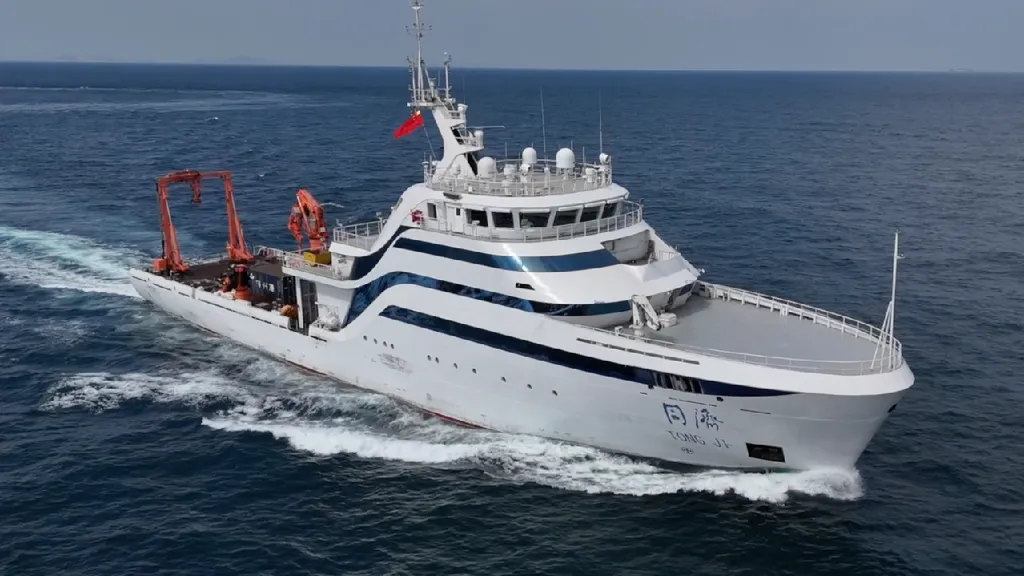
Researchers from the School of Naval Architecture and Ocean Engineering at Shanghai Jiao Tong University have published a comprehensive review of the latest advancements in intelligent optimization techniques for the energy-efficient design of ship hull forms. The team, led by Shuwei Zhu and including Siying Lv, Kaifeng Chen, Wei Fang, and Leilei Cao, explores how these techniques are revolutionizing the maritime industry by enhancing ship performance and reducing energy consumption.
The study delves into the critical role of hydrodynamics theory and simulation-based design (SBD) technologies in optimizing ship hull forms. These technologies focus on improving ship performance and energy efficiency, which are essential for the smart design and manufacturing of green ships. The researchers emphasize the need for multidisciplinary tools to create ships with minimal resistance and energy consumption, highlighting the importance of integrating various expertise to achieve optimal design outcomes.
The paper systematically reviews the progress in energy-efficient design of ship hull forms, focusing on intelligent optimization algorithms and surrogate models. These methods are crucial for enhancing the efficiency and effectiveness of the design process. The researchers discuss the latest developments in intelligent optimization algorithms, which leverage artificial intelligence and machine learning to find the best possible design solutions. Surrogate models, which simulate the behavior of complex systems, are also examined for their role in reducing computational costs and speeding up the optimization process.
Furthermore, the study analyzes the current trends and technical challenges in multidisciplinary design optimization and surrogate-assisted evolutionary algorithms for ship design. The researchers identify gaps in the existing methodologies and explore potential future directions to advance the field. They suggest that addressing these challenges will pave the way for the design of the next generation of energy-efficient ship hull forms, contributing to the broader goals of sustainability and environmental protection in the maritime industry.
By integrating these advanced techniques, the maritime sector can achieve significant improvements in ship design, leading to more efficient and environmentally friendly vessels. The insights provided by this research are invaluable for maritime professionals, engineers, and policymakers aiming to drive innovation and sustainability in shipbuilding. Read the original research paper here.