
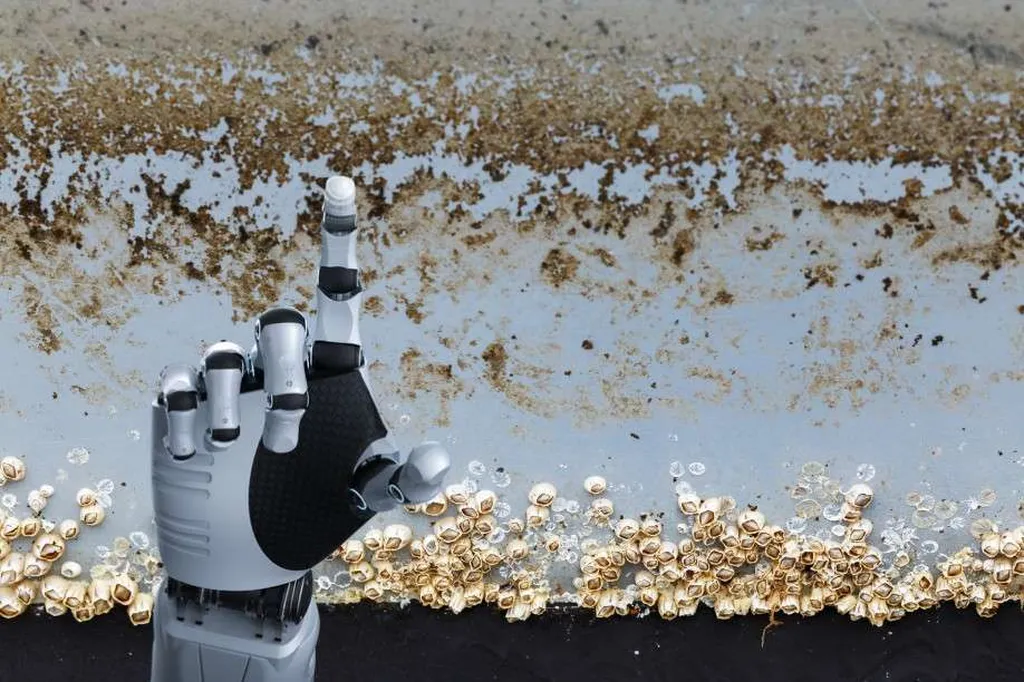
Researchers at the University of Hannover, led by Lutz M. K. Krause and Bodo Rosenhahn, have developed a groundbreaking approach to automating the analysis of macrofouling on coatings exposed to marine environments. This innovative method leverages advanced image processing techniques to address the persistent challenge of biofouling, which significantly impacts industries such as shipping, water filtration, and medical devices.
Biofouling, the accumulation of microorganisms, plants, algae, and small animals on wet surfaces, poses a substantial obstacle to the efficiency and sustainability of maritime operations. Traditional methods of assessing macrofouling rely heavily on manual inspection, which is not only time-consuming but also prone to inaccuracies due to the high variability in the appearance of different fouling organisms. Moreover, manual assessments often lack comprehensive spatial information, limiting the depth of analysis.
To overcome these limitations, the research team created a detailed dataset of field panel images with dense labels, which they used to train a convolutional neural network. Specifically, they adapted the U-Net architecture, a type of deep learning model known for its effectiveness in image segmentation tasks. This approach allows for the precise identification and classification of various macrofouling organisms, providing a more accurate and detailed analysis than manual methods.
The semantic segmentation achieved through this convolutional network enables the generation of a successional model, which tracks the progression of fouling over time. This model is crucial for understanding the dynamics of surface attachment and the interactions between different fouling species. By automating the analysis process, the researchers have developed a tool that can significantly enhance the evaluation of fouling-resistant coatings, leading to more effective and sustainable solutions for industries affected by biofouling.
The practical applications of this research are vast. For the maritime industry, automated macrofouling analysis can lead to the development of more durable and efficient coatings, reducing maintenance costs and improving vessel performance. In the medical field, this technology can help in the design of better medical devices that are less prone to fouling, enhancing their functionality and safety. Additionally, the water treatment industry can benefit from more effective filter membranes and heat exchangers, improving overall system efficiency and longevity.
This innovative approach not only streamlines the evaluation process but also provides deeper insights into the behavior of fouling organisms. By leveraging advanced image processing and machine learning techniques, the researchers have set a new standard for biofouling analysis, paving the way for more sophisticated and effective solutions in various industries. Read the original research paper here.