
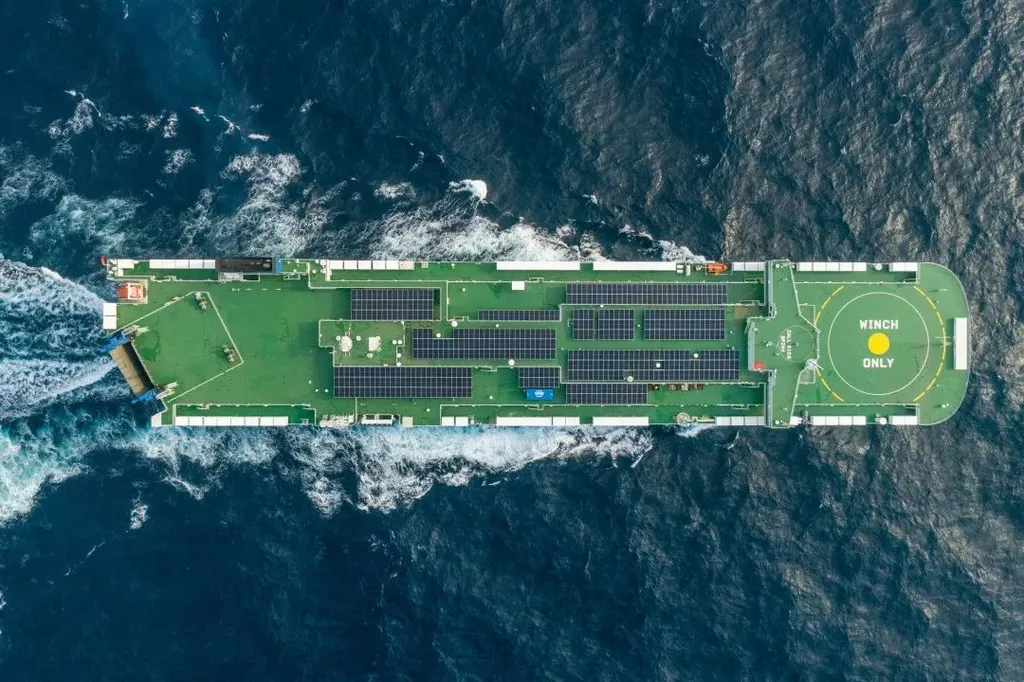
In a significant stride towards greener inland shipping, researchers have developed novel models to optimize operations for LNG-fuelled liner ships, addressing the unique challenges of inland waterways. The study, led by De-Chang Li from the Ship Transportation Technology Center at China Waterborne Transport Research Institute in Beijing, was recently published in the Journal of Marine Science and Engineering, also known as the Journal of Marine Science and Engineering.
Inland waterway transport, particularly in regions like the Yangtze River, is increasingly turning to LNG as a cleaner fuel alternative. However, the limited refueling infrastructure and complex navigational conditions pose substantial operational hurdles. Li and his team tackled these issues by formulating two models that consider various constraints, including water depth, bridge clearance, streamflow velocity, and port time windows. These models aim to maximize voyage profit by optimizing speed adjustments, port selection, and empty container repositioning.
The researchers found that for divisible demand, both models can achieve optimal solutions swiftly. However, for indivisible demand, the node-variable model outperformed the arc-variable model. This finding is crucial for shipping companies looking to streamline their operations and reduce costs. “Tactical strategies should be flexibly adjusted based on seasonal water depth, fuel prices, carbon taxes, speed deviations, and expected lock passage times,” Li emphasized.
The study also revealed that increasing fuel prices and carbon taxes generally lead to fewer port calls and reduced sailing speeds. This insight suggests that stricter fuel price and carbon tax policies could accelerate the transition to greener shipping practices. “Stricter fuel price and carbon tax policies can support the transition to green shipping,” Li noted, highlighting the potential for regulatory measures to drive environmental sustainability.
For maritime professionals, these findings present both challenges and opportunities. The models developed by Li and his team offer a robust framework for optimizing LNG-fuelled liner shipping operations. By leveraging these models, shipping companies can enhance their operational efficiency, reduce costs, and contribute to a more sustainable maritime industry.
The study not only provides theoretical guidance but also offers practical insights for shipping companies aiming to optimize their operations. As the maritime industry continues to evolve, the adoption of LNG as a fuel source is expected to grow, making these findings particularly timely and relevant. The research was published in the Journal of Marine Science and Engineering, underscoring its significance in the field of marine science and engineering.