
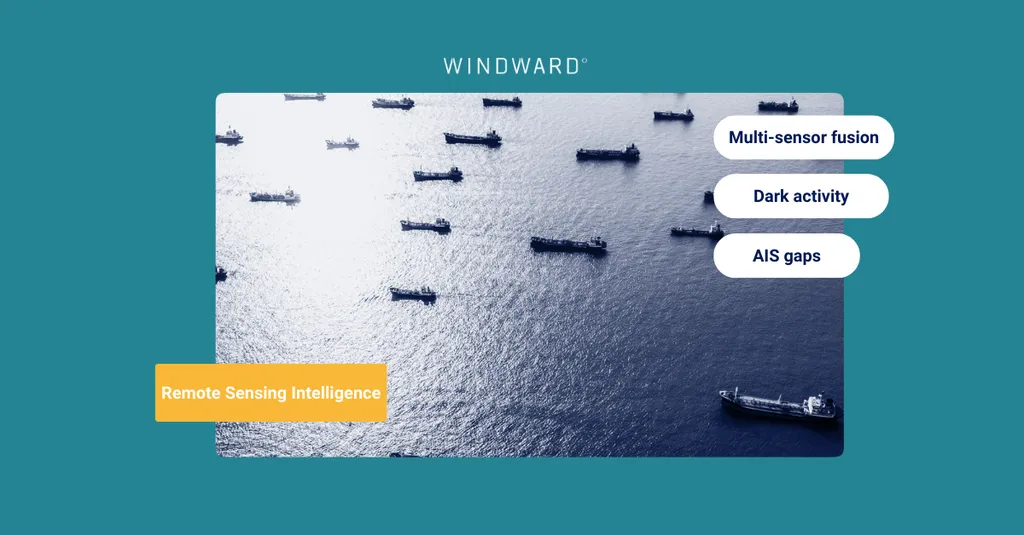
In the ever-evolving world of maritime security and economy, detecting and recognizing ships accurately is becoming more crucial than ever. A recent study published in the journal ‘Remote Sensing’ tackles this challenge head-on, offering a novel approach to ship detection that could revolutionize how we monitor our oceans. Led by Yugao Li from the Research Center for Space Optical Engineering at Harbin Institute of Technology in China, the research introduces an open-world detection framework designed to handle the complexities of remote sensing scenarios.
So, what’s the big deal? Well, imagine you’re trying to spot a specific type of ship in a bustling harbor. The problem is, ships look pretty similar from above, and new types of vessels keep popping up. Traditional methods struggle with this, but Li’s framework takes a different approach. It uses two key modules: the FEUR module, which stands for Fine-Grained Feature and Extreme Value-based Unknown Recognition, and the JOIL module, or Joint Optimization-based Incremental Learning.
The FEUR module is like a super-sleuth, using tail distribution modeling and adaptive thresholding to precisely detect and differentiate unknown ship targets. Meanwhile, the JOIL module is the brain that helps the system learn and adapt without forgetting what it already knows. It employs hierarchical elastic weight constraints to update the system’s knowledge base, allowing it to incorporate new categories with just a few labeled samples.
In simpler terms, this framework is like a smart assistant that can learn on the job. It can spot new types of ships without forgetting the ones it already knows, making it incredibly useful for maritime security and monitoring.
The commercial impacts of this research are substantial. For maritime security, this technology could enhance surveillance capabilities, enabling quicker and more accurate identification of potential threats. In the civilian sector, it could streamline port operations, improve traffic management, and even aid in search and rescue missions.
Li’s research also highlights the practical potential of this framework. “This work provides both theoretical value and practical potential for continuous ship detection and recognition in complex open environments,” Li said. The study’s experiments on the FGSRCS dataset showed that the proposed method not only maintains high accuracy on known categories but also significantly outperforms mainstream open-world detection approaches in unknown recognition and incremental learning.
In essence, this research is a game-changer for the maritime industry. It offers a robust solution to the challenges of ship detection in complex scenarios, paving the way for more efficient and secure maritime operations. As the marine economy continues to grow, technologies like this will be invaluable in ensuring safety and efficiency on the high seas.