
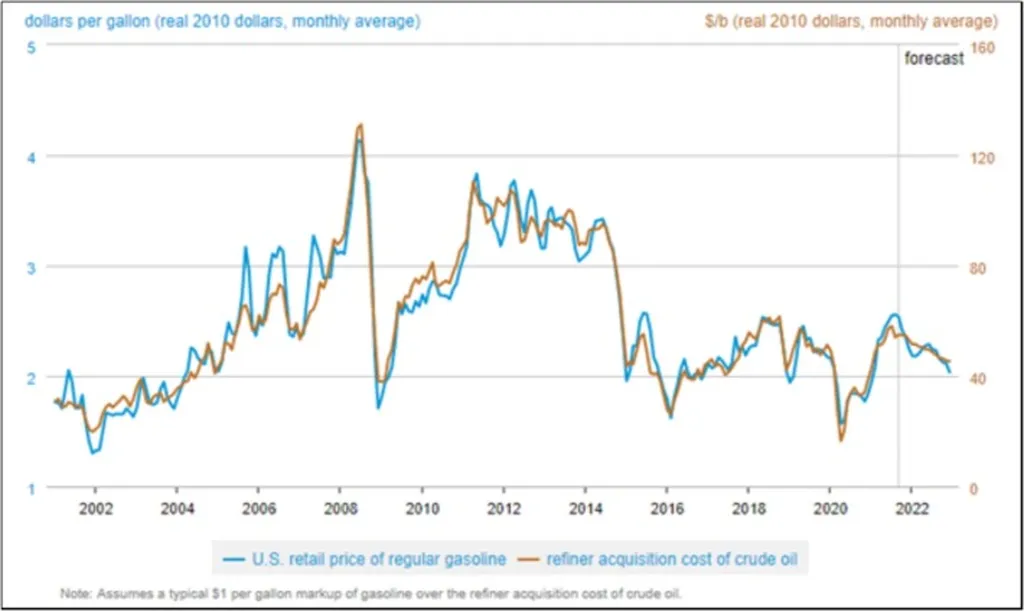
In the ever-fluctuating world of maritime shipping, where fuel prices and carbon taxes can swing like a pendulum, making strategic decisions about fleet deployment and sailing speeds is no easy feat. Enter Weilin Sun, a researcher from the School of Management at Huazhong University of Science and Technology in Wuhan, China, who’s tackled this challenge head-on. Sun’s recent study, published in the journal ‘Mathematics’ (which, funnily enough, is published in English), offers a novel approach to help shipping companies navigate these uncertain waters.
Sun’s research presents a two-stage stochastic programming model that’s designed to optimize both fleet deployment and sailing speed in liner shipping. Think of it as a sophisticated decision-making tool that helps shipping companies plan their fleet composition and operational strategies under volatile fuel prices and uncertain carbon tax scenarios.
Here’s how it works: in the first stage, the model determines the optimal fleet composition. Once that’s set, the second stage kicks in, optimizing operational decisions like vessel assignment to routes and sailing speeds on individual voyage legs, after accounting for the realized stochastic parameters. It’s like having a crystal ball that helps you make the best decisions despite the uncertainty.
But what makes this model stand out is its incorporation of nonlinear fuel consumption functions, which are approximated using piecewise linearization techniques. This, combined with the use of big-M methods to linearize mixed-integer terms and auxiliary variables to handle nonlinear relationships, makes the model computationally tractable. Sun’s team used the Sample Average Approximation (SAA) method to solve the resulting formulation.
So, what does this mean for the maritime industry? Well, it provides a comprehensive decision-support tool that effectively captures the complex interdependencies between long-term strategic fleet planning and short-term operational speed optimization. In simpler terms, it’s a tool that can help shipping companies balance economic objectives with environmental considerations, even when market conditions are volatile.
Sun’s numerical experiments demonstrated the model’s effectiveness in generating optimal solutions. This means that shipping companies can use this model to make more informed decisions, ultimately leading to more resilient shipping operations.
In Sun’s own words, the model “provides shipping companies with a comprehensive decision-support tool that effectively captures the complex interdependencies between long-term strategic fleet planning and short-term operational speed optimization.” It’s a tool that can help the maritime sector navigate the choppy waters of uncertainty, making it a valuable asset in today’s volatile market.
So, whether you’re a ship operator, a fleet manager, or a maritime analyst, this research offers a promising approach to strategic fleet planning under uncertainty. It’s not just about making decisions; it’s about making the right decisions, even when the future is uncertain. And in the world of maritime shipping, that’s a skill worth its weight in gold.