
In a significant stride towards understanding and mitigating the maritime industry’s greenhouse gas (GHG) emissions, a recent study published in ‘Brodogradnja’ (translated to English as ‘Shipbuilding’) offers a comprehensive analysis of the interplay between technology, operations, and policy measures. The research, led by Selen Uygur from Istanbul Technical University’s Institute of Graduate Studies, employs system dynamics modeling to simulate the impact of various decarbonization strategies on container shipping.
The study underscores the urgency of reducing emissions, with the shipping industry currently contributing around 2% of global carbon dioxide (CO₂) emissions. Uygur and her team developed a simulation model aligned with International Maritime Organization (IMO) policies, including the Energy Efficiency Design Index (EEDI), the Ship Energy Efficiency Management Plan (SEEMP), and the Carbon Intensity Indicator (CII). The model provides a dynamic framework to assess the effectiveness of different emission reduction strategies.
One of the key findings highlights the immediate benefits of reducing the average ship speed to 15 knots. “Suggested actions to reduce the average speed of ships have shown significant reduction of CO₂ emissions in the short term,” the study notes. This operational measure is a straightforward yet impactful step that ship operators can implement to achieve quick wins in emission reduction.
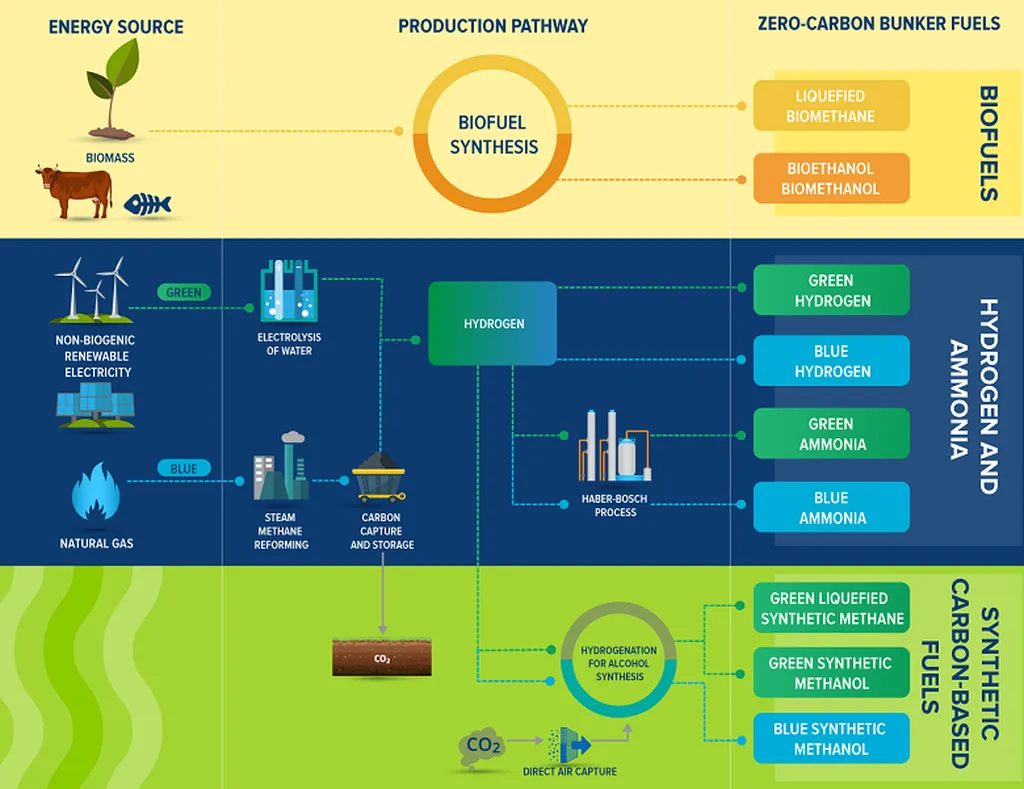
Looking further ahead, the study explores the potential of a complete phase-out of High Fuel Oil (HFO) and a rapid adoption of alternative fuels like Liquefied Natural Gas (LNG), methanol, and ammonia. Under an aggressive fuel transition scenario, the model predicts a substantial decrease in emissions by 2050. This transition is not just about environmental benefits but also opens up new commercial opportunities for fuel suppliers, shipbuilders, and technology providers.
Market-based instruments, such as fuel price mechanisms and carbon taxes, are identified as complementary tools to drive the transition to cleaner fuels. These instruments create economic incentives for shipowners to invest in more sustainable technologies and practices. The study emphasizes the need for policy harmonization to ensure long-term sustainability in the shipping industry.
For maritime professionals, the study offers valuable insights into the potential pathways for decarbonization. It highlights the importance of a multi-faceted approach that combines technological innovation, operational adjustments, and supportive policies. The findings also underscore the need for continuous research and adaptation to meet the IMO’s 2050 net-zero target.
As the industry navigates the complex landscape of decarbonization, this research provides a robust framework for evaluating the impact of various strategies. It serves as a call to action for stakeholders to collaborate and implement effective measures to reduce GHG emissions and ensure the long-term sustainability of the maritime sector.