
In the ever-evolving world of maritime operations, predicting anchorage occupancy has always been a bit of a dark art. Traditional methods, relying on historical averages and static assumptions, often fall short in dynamic port conditions. But now, a study led by Dae-han Lee from the Graduate School of Maritime Transportation System at Mokpo National Maritime University in Korea is shaking things up. Published in the journal ‘Brodogradnja’ (which translates to ‘Shipbuilding’), this research is set to revolutionize how we manage anchorage areas, making operations safer and more efficient.
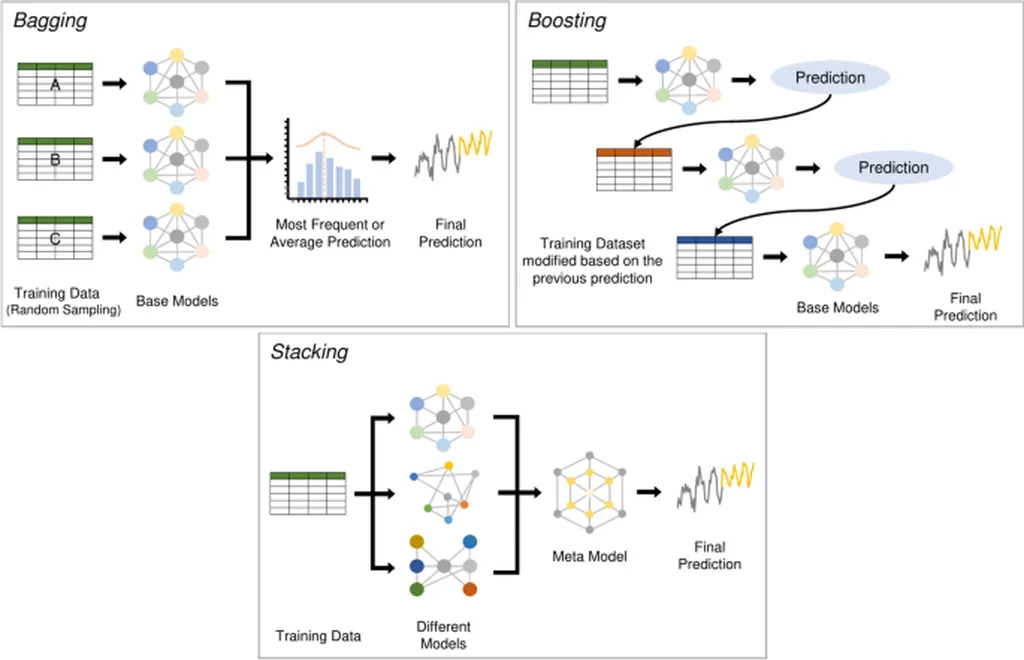
So, what’s the big deal? Well, Lee and his team have developed a forecasting framework that uses something called stacked ensemble learning. Think of it as a team of experts, each with their own strengths, working together to make the best possible prediction. This approach combines both statistical and machine learning models, capturing complex, non-linear patterns in vessel traffic that traditional methods might miss.
The team put their framework to the test using data from the E1 anchorage at Ulsan Port. They found that their stacking ensemble model significantly improved forecasting performance. But they didn’t stop there. They also introduced a hexagon-based occupancy estimation method, which assesses spatial efficiency and safety, giving it a leg up on the traditional anchor circle method.
So, what does this mean for the maritime industry? Well, improved forecasting means better management of anchorage areas. This can lead to reduced congestion, enhanced safety, and more efficient maritime operations. As Lee puts it, “These findings highlight the practical potential of stacking ensemble techniques and spatial modeling innovations in enabling proactive anchorage management.”
In simpler terms, this research could help ports around the world manage their anchorage areas more effectively. This could mean less waiting time for vessels, reduced risk of accidents, and ultimately, more efficient and safer maritime operations. It’s a win-win for everyone involved.
For maritime professionals, this research opens up new opportunities. It’s a chance to embrace innovative technologies and methods, to stay ahead of the curve, and to make a real difference in the way we manage our ports and anchorage areas. So, it’s time to dive in, explore the potential of stacked ensemble learning, and see how it can benefit your operations. After all, in the dynamic world of maritime operations, every advantage counts.