
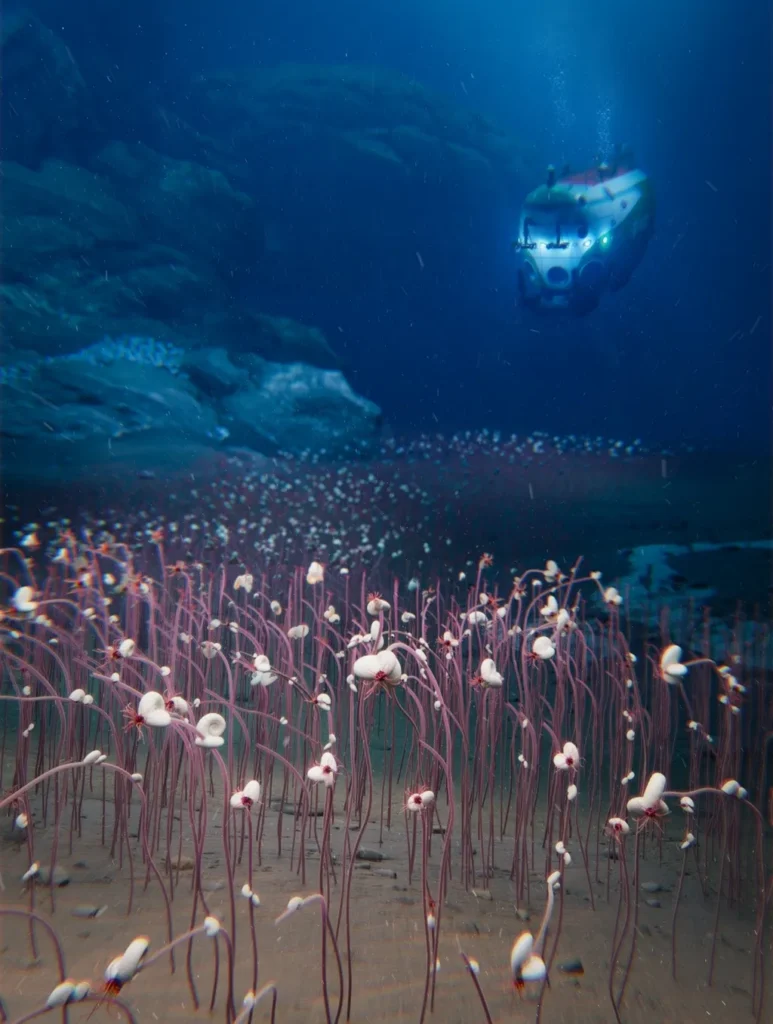
In the murky depths of the ocean, where sunlight barely reaches, a complex web of chemical communication is unfolding, and it’s changing how we understand the deep sea. Researchers, led by Jiaxue Peng from the Key Laboratory of Marine Genetic Resources at the Third Institute of Oceanography, Ministry of Natural Resources, have uncovered the intricate world of quorum sensing in deep-sea cold seeps. Their findings, published in the journal ‘Microbiome’ (which translates to ‘Microbiome’ in English), shed light on how microorganisms coordinate their behavior and influence biogeochemical processes in these unique ecosystems.
So, what’s quorum sensing? Imagine it as a microbial version of a town hall meeting. Microbes release chemical signals to communicate with each other. When the concentration of these signals reaches a certain threshold, it triggers a collective response. This could be anything from producing bioluminescence to forming biofilms, or even altering metabolic processes. In the case of deep-sea cold seeps, these processes can have significant impacts on the cycling of elements like carbon, nitrogen, and sulfur.
Peng and her team analyzed a staggering 170 metagenomes and 33 metatranscriptomes from 17 global cold seep sites. They identified a whopping 299,355 quorum sensing genes, representing 34 types across six quorum sensing systems. These genes were found in 3576 metagenome-assembled genomes from 12 archaeal and 108 bacterial phyla. That’s a lot of microbes talking to each other!
The researchers found that quorum sensing is not just about intraspecies communication. It’s a complex network of interspecies dialogue, with microbial groups involved in key metabolic processes, like sulfate-reducing bacteria and anaerobic methanotrophic archaea, extensively regulated by these chemical signals. As Peng puts it, “Quorum sensing is a fundamental chemical communication mechanism that enables microorganisms to coordinate behavior and adapt to environmental conditions.”
But why should the maritime industry care about microbial chatter in the deep sea? Well, understanding these processes can have significant commercial implications. For instance, the oil and gas industry could potentially harness this knowledge to develop more effective strategies for managing microbial corrosion in deep-sea infrastructure. Similarly, the biotechnology sector could explore the potential of quorum sensing inhibitors, which the researchers found evidence of in cold seep sediments, for developing new antimicrobial agents.
Moreover, the insights gained from this research could aid in the development of more accurate models for predicting biogeochemical cycles in the deep sea. This, in turn, could inform policy decisions related to deep-sea mining, carbon sequestration, and other activities that impact these unique ecosystems.
In the words of the researchers, their findings “highlight the complexity and significance of quorum sensing in microbial interactions, ecological adaptation, and biogeochemical cycling within cold seep ecosystems.” As we continue to explore and exploit the deep sea, understanding these processes will be crucial for ensuring the sustainable management of these resources.
So, the next time you think about the deep sea, remember that it’s not just a dark, silent world. It’s a bustling metropolis of microbes, communicating and coordinating their activities in ways that shape the very fabric of our planet. And who knows? The secrets they hold could hold the key to unlocking new opportunities for the maritime industry.