
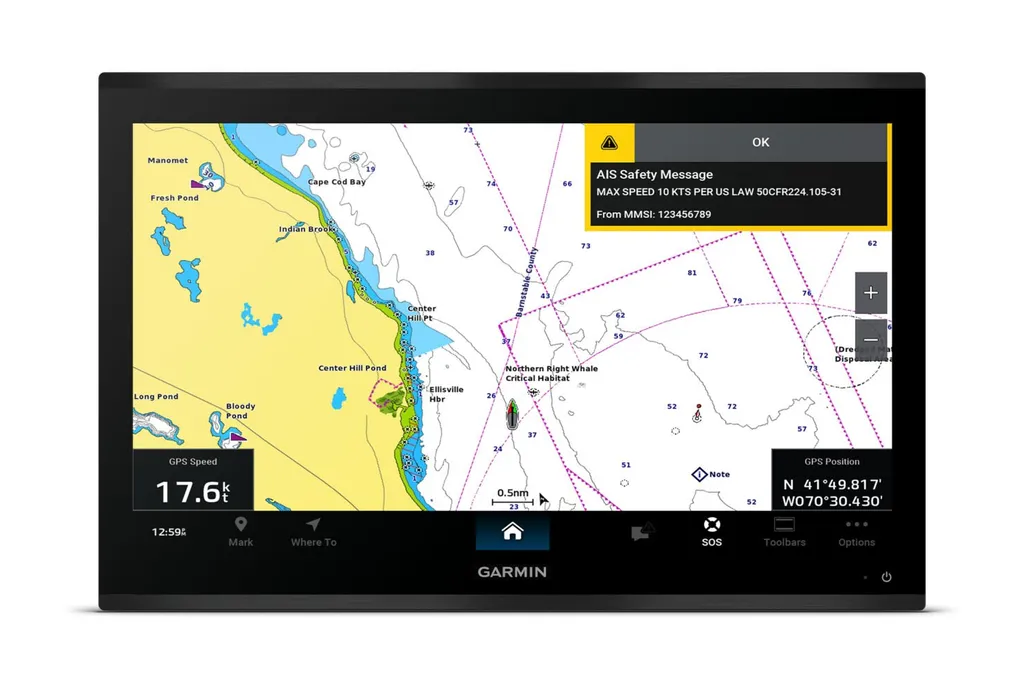
Researchers from the Tokyo University of Marine Science and Technology, led by William Nguyen and An Phan, have introduced Llamarine, the first open-source Large Language Model (LLM) tailored specifically for the maritime industry. This innovative model is designed to address the unique challenges of maritime navigation, offering enhanced capabilities in areas such as navigational principles, collision avoidance, route optimization, and regulatory compliance.
Llamarine 1.0 has been developed through a rigorous process of continued pretraining and fine-tuning on a high-quality corpus. This corpus includes maritime textbooks, research publications, and web text from Wikipedia, ensuring that the model acquires expert-level knowledge in its specialized domain. The researchers’ key contributions include the curation of a comprehensive maritime dataset from authoritative sources, the development of a foundational model capable of reasoning about complex navigational challenges, and the establishment of a benchmark to evaluate performance in maritime-specific decision-making tasks.
The experimental results demonstrate that Llamarine outperforms both general-purpose and commercial LLMs in critical navigation-related tasks. These tasks include trajectory planning, risk assessment, and compliance with maritime regulations. By providing an open-source foundation model trained exclusively on high-quality maritime literature, Llamarine paves the way for AI-driven advancements in maritime safety, efficiency, and operational decision-making.
The implications of this research are significant for the maritime industry. With Llamarine, maritime professionals have access to a powerful tool that can enhance their decision-making processes. The model’s ability to reason about complex navigational challenges with greater accuracy than general-purpose LLMs can lead to improved safety and efficiency in maritime operations. Furthermore, the open-source nature of Llamarine encourages collaboration and further development within the maritime community, fostering innovation and continuous improvement in AI-driven solutions for the industry.
In summary, Llamarine represents a significant step forward in the application of AI to maritime navigation. Its specialized training and superior performance in critical navigation tasks make it a valuable tool for maritime professionals. As the maritime industry continues to evolve, the advancements brought by Llamarine are poised to play a crucial role in shaping the future of maritime safety and efficiency. Read the original research paper here.