
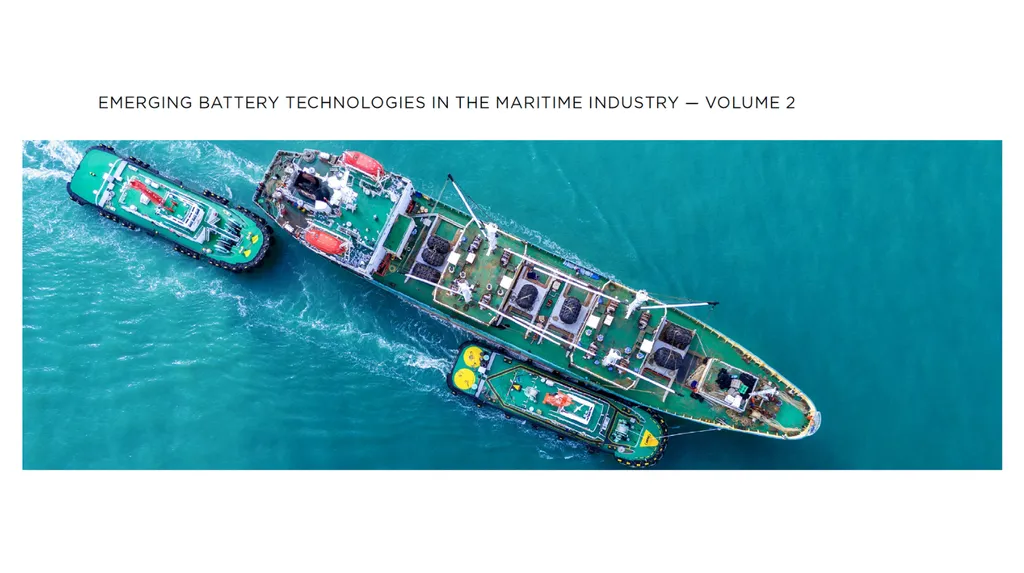
ABS and Siemens Energy have embarked on a joint development project (JDP) to tackle a critical challenge in the marine and offshore energy storage landscape: thermal runaway in lithium-ion batteries. This collaboration isn’t just about crunching data—it’s about unlocking safer, more reliable systems for next-generation applications.
The JDP marries ABS’s deep expertise in classification, verification, and standards development with Siemens Energy’s prowess in digital simulation and industrial innovation. Together, they’re diving into the behavior of lithium-ion battery systems under extreme conditions, aiming to enhance design verification, safety assurance, and risk mitigation.
“Safety and technical assurance are at the core of what we do,” said Michael Kei, ABS Vice President, Technology. “By combining ABS’s experience in safety standards with Siemens Energy’s advanced modeling capabilities, we are helping the marine and offshore industries move forward with greater confidence in the design and operation of next-generation energy storage technologies.”
This isn’t just about running simulations—it’s about translating insights into action. By leveraging simulation-based validation, ABS and Siemens Energy will evaluate battery pack behavior, pinpoint design improvements, and bolster safety assurance throughout the energy storage lifecycle.
“Introducing advanced modeling and simulation of battery solutions is an important step toward a safer and cleaner future,” said Lars Barstad, Siemens Energy, Technology Manager Battery Systems. “It will help us in optimizing design and operational requirements for battery systems used in marine and offshore applications.”
The implications of this collaboration are significant. As the marine and offshore industries increasingly turn to lithium-ion batteries for energy storage, understanding and mitigating risks like thermal runaway become paramount. This JDP could set a new benchmark for safety and reliability, paving the way for broader adoption of advanced energy storage solutions.
The project’s focus on simulation-based validation is particularly noteworthy. By virtually testing battery systems under extreme conditions, ABS and Siemens Energy can identify potential failures and optimize designs before physical prototypes are built. This approach not only saves time and resources but also significantly reduces the risk of real-world incidents.
As the project unfolds, the insights gained could influence industry standards and regulations, further solidifying the role of simulation in the development of energy storage technologies. For the marine and offshore sectors, this means greater confidence in deploying battery systems that are not only efficient but also safe and reliable.
In essence, this collaboration between ABS and Siemens Energy is more than a technical endeavor—it’s a step toward a safer, more sustainable future for marine and offshore energy storage. By harnessing the power of modeling and simulation, they are setting a new course for innovation and safety in the industry.