
In the vast ocean of data analysis, researchers are constantly battling waves of challenges, particularly when dealing with data bounded between 0 and 1. This is where beta regression models (BRM) come into play, a popular approach used in various fields, including environmental science and medicine. However, like any model, BRM has its kryptonite: multicollinearity and outliers. These can distort estimates, lead to misleading conclusions, and generally make life difficult for analysts. Enter Ali T. Hammad, a mathematician from Tanta University in Egypt, who’s proposed a novel solution to these problems.
Hammad, along with his team, has developed new robust estimators for BRM that incorporate robust modified ridge-type estimators. These estimators are designed to reduce the adverse effects of multicollinearity and outliers. In simpler terms, they’re like a sturdy lighthouse beam cutting through the fog of messy data, helping analysts navigate towards more accurate and reliable conclusions.
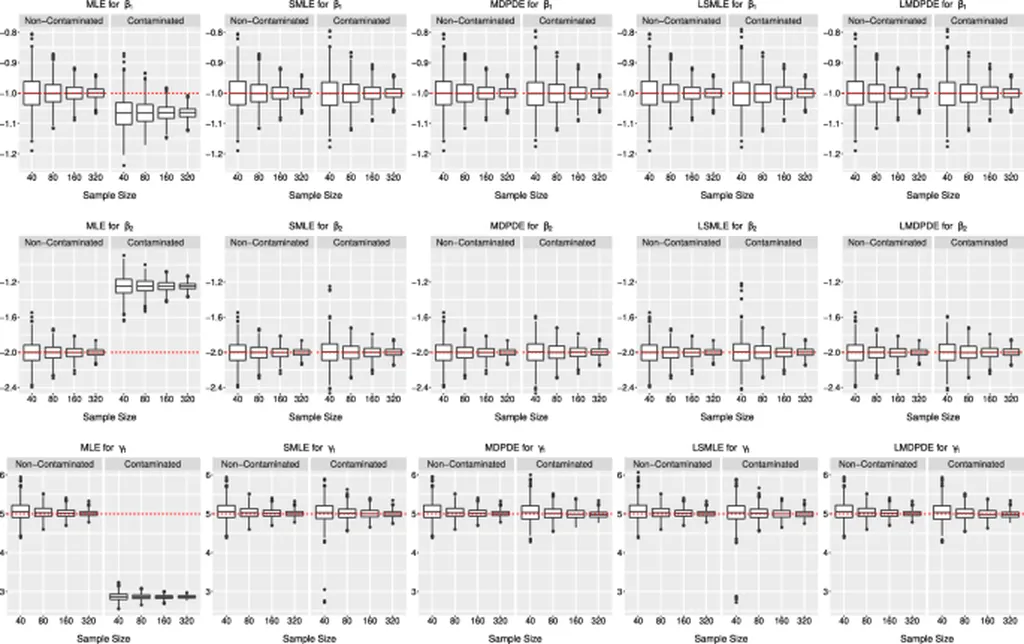
The team’s research, published in the journal ‘AIMS Mathematics’ (which stands for African Institute for Mathematical Sciences), involved a theoretical comparison of their proposed estimators with traditional maximum likelihood estimators (MLE) and robust ridge estimators. They also conducted an extensive simulation study to evaluate the effectiveness of their estimators in various scenarios.
The results were promising. Both theoretical comparisons and simulation results demonstrated the clear advantages of the proposed robust estimators in managing multicollinearity and handling outliers. To further validate their findings, the estimators were applied to real-world data from breast cancer patients. The results confirmed that the proposed robust estimators offer greater robustness and reliability compared to MLE and robust ridge methods.
So, what does this mean for the maritime sector? Well, data analysis is a crucial part of maritime operations, from predicting weather patterns to optimizing shipping routes. Multicollinearity and outliers can skew these analyses, leading to inefficiencies and potential safety risks. Hammad’s robust estimators could help maritime analysts cut through the noise, leading to more accurate predictions and better decision-making.
As Hammad puts it, “These findings highlight the practical importance of using robust estimation techniques to improve the accuracy and dependability of BRMs, particularly in empirical research involving highly multicollinear and outlier data.” In other words, it’s time for the maritime sector to batten down the hatches and prepare for a new wave of robust data analysis.
The commercial impacts could be significant. More accurate data analysis could lead to fuel savings, reduced emissions, and improved safety. It could also open up new opportunities for predictive maintenance, helping ship operators prevent costly breakdowns before they happen. So, while Hammad’s research may not have been specifically designed with the maritime sector in mind, its potential applications are vast and exciting. As the old saying goes, “A rising tide lifts all boats.” And in this case, that tide is a wave of robust data analysis.