
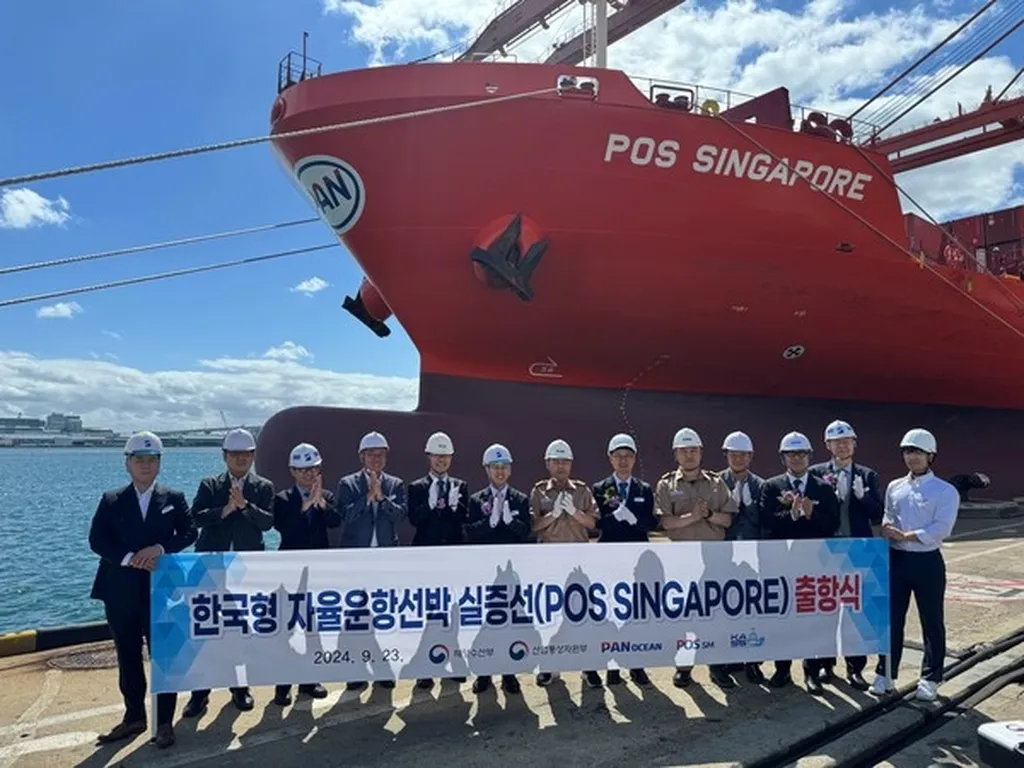
In a significant stride towards modernizing maritime regulations, a recent study published in the *Journal of International Maritime Safety, Environmental Affairs, and Shipping* (formerly known as *Journal of International Maritime Safety, Environmental Affairs, and Shipping*) sheds light on the need for Korea to update its legal framework to accommodate Maritime Autonomous Surface Ships (MASS). Led by Jiyeon Shin of the Maritime Safety Team at the Korea Maritime Cooperation Center in Sejong, the research underscores the global shift towards autonomous shipping and the imperative for Korea to align its domestic laws with emerging international standards.
The study comes at a critical juncture as the International Maritime Organization (IMO) works towards establishing a non-mandatory framework for MASS by 2026, with mandatory regulations slated for 2032. Shin’s research highlights that Korea’s current legal instruments, primarily the Act on the Promotion of Development and Commercialization of MASS, focus largely on technology development and pilot operations. However, these instruments fall short in addressing several regulatory elements outlined in the forthcoming MASS Code.
“While Korea has made commendable progress in fostering MASS technology, our current legal framework is not fully equipped to handle the comprehensive regulatory requirements that the IMO’s MASS Code will introduce,” Shin explains. This gap could pose challenges for Korea in achieving safe and internationally recognized commercialization of MASS.
The commercial implications of this regulatory overhaul are substantial. As MASS technology advances, shipping companies stand to benefit from increased operational efficiency, reduced labor costs, and enhanced safety. However, these benefits hinge on a robust legal framework that ensures compliance with international standards and fosters investor confidence.
Shin proposes a phased legislative strategy to bridge this gap. This approach would involve incremental updates to Korea’s legal system, ensuring that it remains adaptable to the evolving technological landscape while meeting the IMO’s regulatory benchmarks. By doing so, Korea can position itself as a leader in the MASS industry, attracting investment and driving innovation.
The study also emphasizes the need for international collaboration. As MASS technology transcends national borders, a harmonized regulatory approach will be crucial for ensuring seamless operations and safety standards across the globe. Shin’s research serves as a timely reminder for maritime professionals and policymakers to proactively engage in this transformative process.
In conclusion, Shin’s research published in the *Journal of International Maritime Safety, Environmental Affairs, and Shipping* provides a clear roadmap for Korea to navigate the complexities of MASS regulation. By addressing the identified gaps and adopting a proactive legislative strategy, Korea can pave the way for a future where autonomous shipping is not only technologically advanced but also legally sound and commercially viable.