
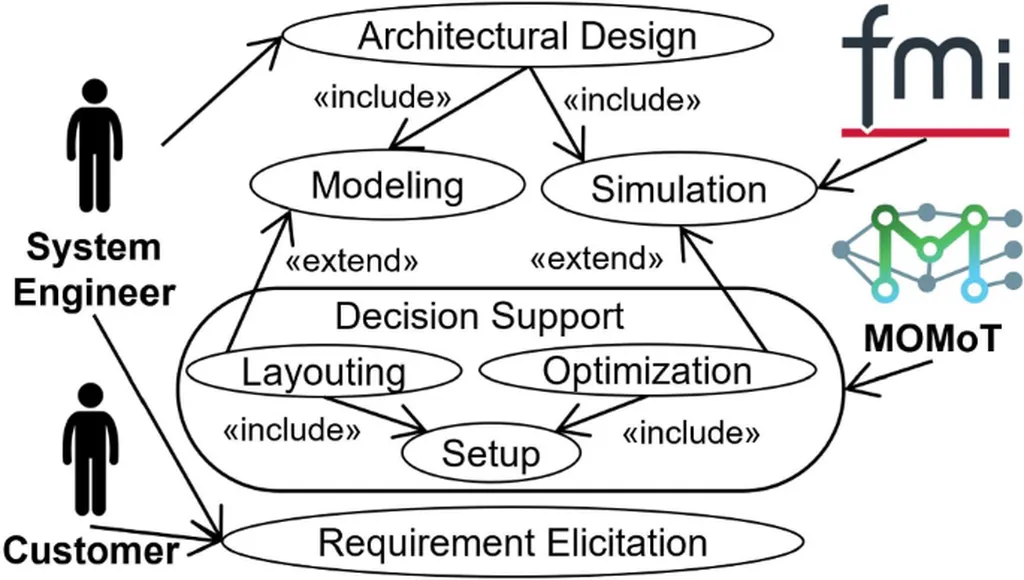
Researchers Nidhal Selmi, Jean-Michel Bruel, Sébastien Mosser, Matthieu Crespo, and Alain Kerbrat, affiliated with the University of Toulouse and the Institute of Research in Computer Science and Random Systems (IRISA), have published a study on integrating decision capture into Model-Based Systems Engineering (MBSE) workflows. Their work aims to enhance engineering design processes by embedding decisions directly within system models, reducing the effort required for decision capture while maintaining essential context for reuse.
The study highlights the critical role of decision-making in engineering design, where engineers translate their knowledge into actionable courses of action. Traditional methods of capturing these decisions often demand considerable effort and frequently fail to capture the necessary context for future reuse. This gap can hinder the efficiency and effectiveness of engineering teams. The researchers propose that MBSE offers a promising solution to these challenges by integrating decisions into system models, thereby creating explicit links to requirements, behaviors, and architectural elements.
The researchers introduce a lightweight framework designed to streamline the integration of decision capture into MBSE workflows. This framework represents decision alternatives as system model slices, which are subsets of the overall system model that focus on specific decision points. By doing so, the framework aims to reduce the workload associated with decision capture while ensuring that the decisions remain contextually rich and reusable.
To illustrate the practical application of their framework, the researchers use a simplified industry example from aircraft architecture. This example demonstrates how decision capture can be effectively integrated into MBSE workflows, highlighting the main challenges associated with decision capture and proposing preliminary solutions to address these issues. The study underscores the potential benefits of this approach, including improved decision traceability, enhanced collaboration among engineering teams, and increased efficiency in the development process.
The researchers’ work provides valuable insights into the development of a decision capture framework within the context of MBSE. By embedding decisions directly into system models, they aim to create a more robust and reusable knowledge base for engineering teams. This approach not only reduces the effort required for decision capture but also ensures that the decisions are contextually relevant and easily accessible for future projects. The study’s findings contribute to the ongoing efforts to enhance the efficiency and effectiveness of engineering design processes through advanced modeling and decision capture techniques. Read the original research paper here.