
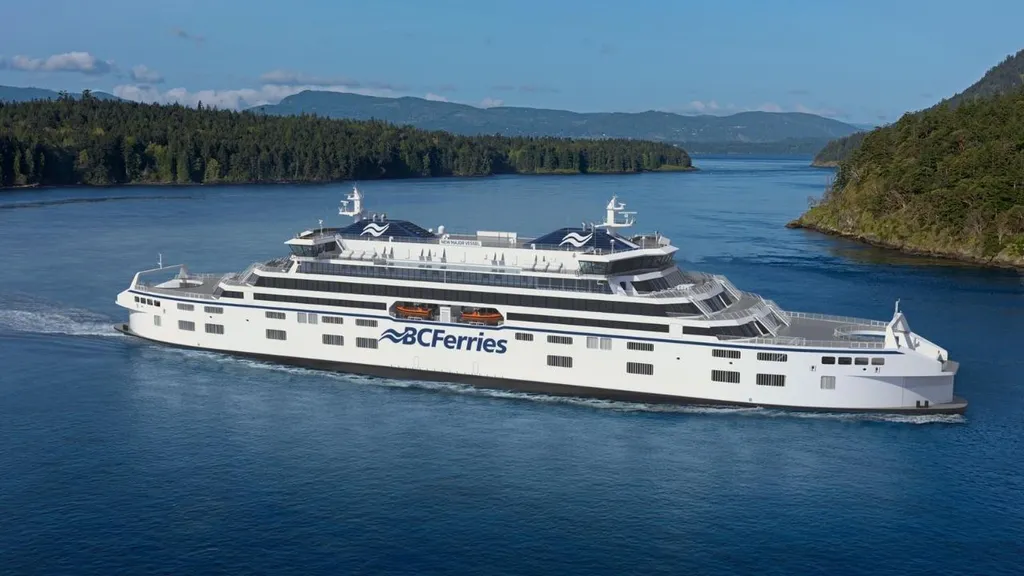
BC Ferries is doubling down on sustainability with a major leap into hybrid-electric propulsion. The company has selected ABB’s integrated power, propulsion, and control solution for its four new hybrid-electric vessels, part of the ‘New Major Vessels’ program. This initiative aims to slash emissions and underwater radiated noise (URN) in the Strait of Georgia, a critical marine ecosystem. The vessels, set to replace end-of-life ships, will be equipped with ABB’s Azipod® electric propulsion, Onboard DC Grid™ power distribution, and up to 70 MWh of battery storage. This setup allows for hybrid operations today and paves the way for full electrification in the future.
The hybrid configuration uses biofuel or renewable diesel, balancing energy between generators and batteries. Each vessel can also connect to a high-capacity shore charging system rated above 60 megawatts (MW), enabling fast turnaround and zero-emission operations. ABB’s digital solutions will provide crews with a clear overview of ship operations, supporting safe and efficient journeys while improving the passenger experience.
“BC Ferries’ New Major Vessels represent the largest capital investment in our history and are essential to renewing our fleet, increasing capacity on our busiest routes, and strengthening system resilience,” said Nicolas Jimenez, President & CEO, BC Ferries. “Their design reflects what our customers value most: comfort, accessibility and environmental stewardship. With diesel-battery hybrid technology that can operate on bio and renewable diesel today and transition to full electrification as infrastructure evolves, these ships are a critical part of building a cleaner, quieter, and more reliable ferry system for the future.”
The vessels, scheduled for delivery beginning in 2029 from China Merchants Industry Weihai (CMI Weihai) Shipyard, will feature ABB’s gearless, steerable Azipod® electric propulsion. This system offers proven reliability with fewer moving parts than mechanical thrusters, and its special propeller design helps reduce underwater radiated noise (URN). This is crucial for safeguarding at-risk species, such as the Southern Resident killer whale, and preserving one of the world’s most biologically rich marine ecosystems.
“ABB’s deep roots in Canada make it possible to support generational infrastructure projects like the New Major Vessels,” said Rune Braastad, President, ABB’s Marine & Ports division. “We proudly support BC Ferries’ goals to reduce greenhouse gas emissions from their operations, striving to meet British Columbia’s 2030 greenhouse gas emissions reduction target for the transportation sector by at least 27 percent by 2030, from 2008 levels, in support of a cleaner future for British Columbia, and its ambitions to transition to all-electric operation.”
The order, booked in the fourth quarter of 2025, underscores BC Ferries’ commitment to environmental stewardship and operational efficiency. As one of the world’s largest ferry operators, BC Ferries provides year-round service on 25 routes to 47 terminals, carrying approximately 9.7 million vehicles and 22.7 million passengers annually. With the province’s population expected to grow 44 percent by 2046, demand on the ferry system is set to increase, making this investment timely and strategic.
This move by BC Ferries is not just about upgrading vessels—it’s about redefining maritime operations. By integrating advanced hybrid-electric technology, BC Ferries is setting a new standard for sustainability and efficiency in the ferry industry. The focus on reducing URN and emissions aligns with broader environmental goals, showcasing how technological innovation can drive meaningful change. As the maritime industry faces increasing pressure to reduce its environmental footprint, BC Ferries’ initiative serves as a model for others to follow. The collaboration with ABB highlights the potential of strategic partnerships in achieving ambitious sustainability targets. This project could spark a wave of similar initiatives across the sector, accelerating the transition to cleaner, quieter, and more efficient maritime operations.