
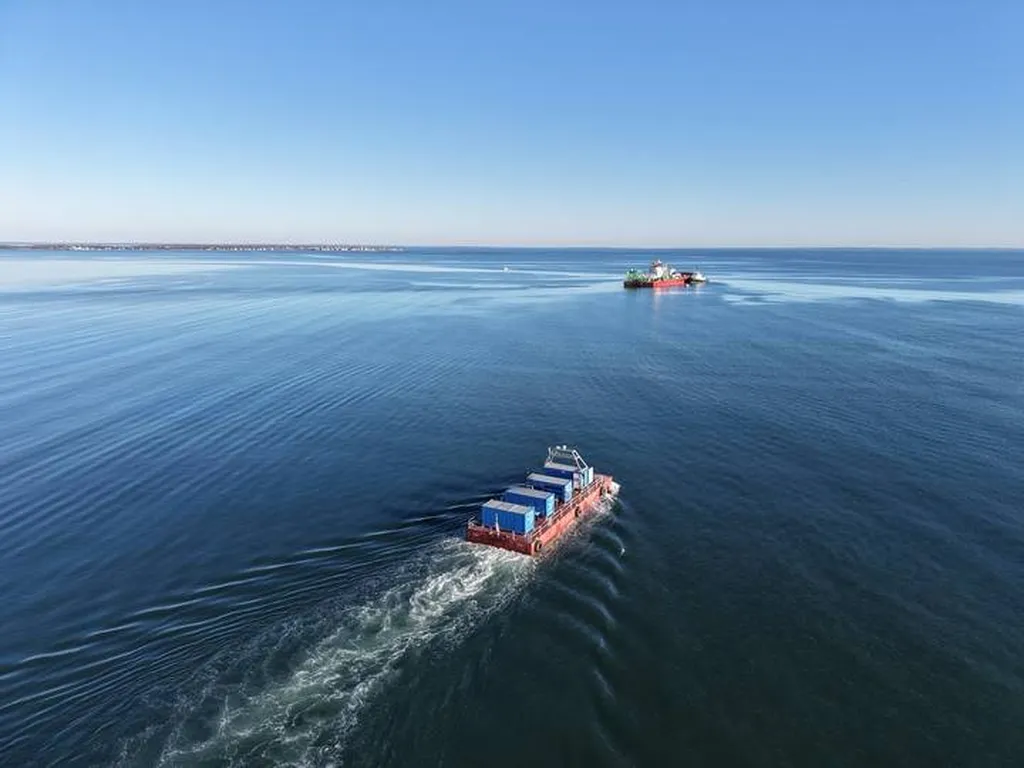
The Blue Water team has just hit a significant milestone in their quest to revolutionise autonomous maritime operations: over 1,000 hours of rigorous ocean-based testing of their proprietary propulsion system. This isn’t just a numerical achievement—it’s a leapfrog over the Navy’s original 720-hour land-based test requirement, and it includes the addition of fuel polishing, electric power generation, and a full sensor suite.
As the Navy eyes expansion of its uncrewed fleet for transoceanic missions, the need for robust engine and propulsion systems becomes non-negotiable. “If a ship can’t make way, nothing else matters,” underscores the criticality of this milestone. Blue Water didn’t just meet the 720-hour baseline mandated by Congress in 2021—they blew past it, validating their systems under more demanding and realistic maritime conditions.
The testing was conducted on a 165-ton, 100-foot vessel based in New Bedford, MA, integrating components essential for the Navy’s Modular Attack Surface Craft (MASC) program. This included propulsion, fuel management, power electronics, engines, electric motors, and autonomy sensors. By opting for ocean-based testing over a controlled lab environment, Blue Water aimed to tackle the full spectrum of challenges ships face in the offshore maritime environment.
This approach involved continuous operations, running seven days a week across three shifts daily. The vessel faced harsh conditions, including saltwater corrosion, biofouling, UV radiation, vessel motion, and temperature extremes. The testing also covered varied load profiles, ensuring the system could operate both inside and outside the engine’s optimal power rating.
Blue Water sees this 1,000-hour milestone as just the beginning. “Early decisions cast long shadows,” and the company is committed to extending autonomous operations at sea. This milestone isn’t just a testament to Blue Water’s engineering prowess—it’s a signal to the maritime industry that the future of autonomous operations is being tested, refined, and brought closer to reality.
As the Navy and other stakeholders watch closely, Blue Water’s work could set new benchmarks for what’s possible in uncrewed maritime systems. The lessons learned from these ocean trials will be invaluable, shaping the development of future autonomous vessels and influencing industry standards. This isn’t just about one company’s success—it’s about advancing the entire sector toward a new era of maritime autonomy.