
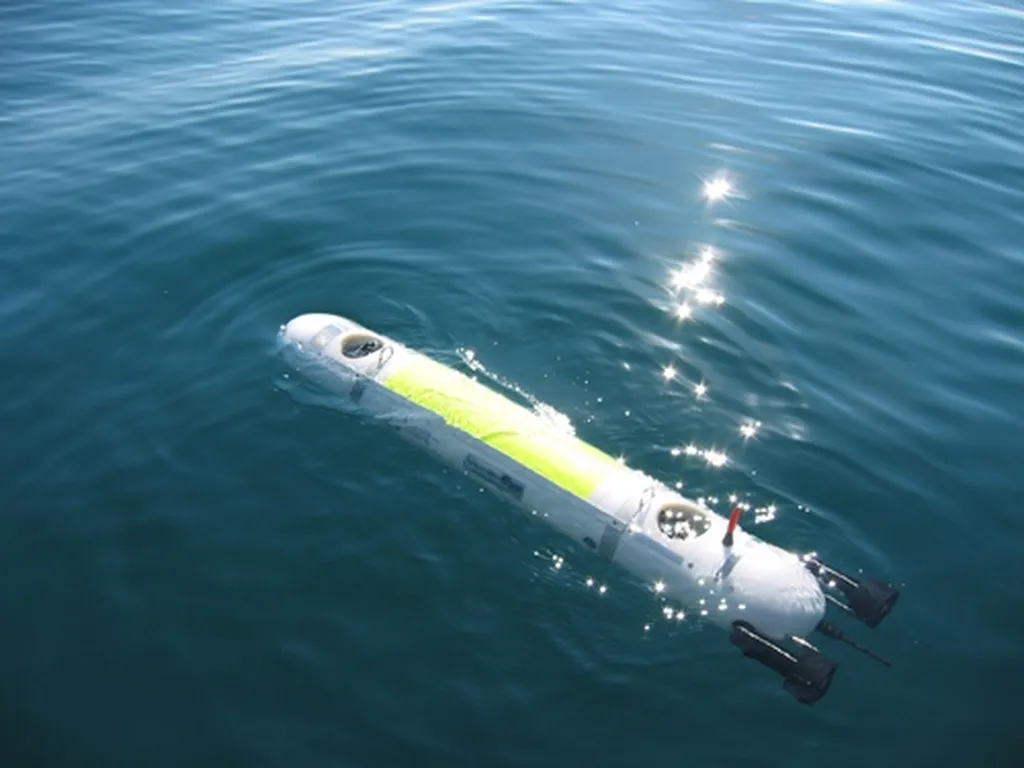
Researchers from the Federal University of Pelotas in Brazil have developed a groundbreaking method to enhance underwater vision for robotic applications. The team, led by Emanuel da Costa Silva and Tatiana Taís Schein, presents AquaFeat+, a plug-and-play pipeline designed to improve the performance of automated vision tasks in challenging underwater environments. This innovative approach addresses the unique difficulties posed by low lighting, color distortion, and turbidity, which often degrade visual data quality and hinder robotic perception.
AquaFeat+ is engineered to enhance features specifically for automated vision tasks, rather than focusing on human perceptual quality. The architecture comprises several key modules: color correction, hierarchical feature enhancement, and an adaptive residual output. These components are trained end-to-end and are directly guided by the loss function of the final application. This targeted approach ensures that the enhancements are optimized for the specific needs of underwater robotic systems, leading to more accurate and reliable performance.
The researchers trained and evaluated AquaFeat+ using the FishTrack23 dataset, a comprehensive collection of underwater imagery. The results were impressive, with significant improvements in object detection, classification, and tracking metrics. These enhancements validate the effectiveness of AquaFeat+ in boosting perception tasks for underwater robotic applications. The method’s ability to adapt and optimize for specific tasks makes it a valuable tool for advancing underwater robotics and autonomous systems.
The practical applications of AquaFeat+ are vast. In the marine sector, improved underwater vision can enhance the capabilities of autonomous underwater vehicles (AUVs) and remotely operated vehicles (ROVs). These enhancements enable more precise and efficient underwater inspections, environmental monitoring, and scientific research. For example, AUVs equipped with AquaFeat+ could better navigate and map underwater environments, identify marine life, and monitor the health of coral reefs. Similarly, ROVs could perform more accurate inspections of underwater infrastructure, such as pipelines and offshore wind farms, ensuring their integrity and safety.
Furthermore, AquaFeat+ can contribute to the development of autonomous underwater drones for search and rescue operations. In scenarios where visibility is severely compromised, the enhanced vision provided by AquaFeat+ could be crucial in locating and identifying objects or individuals in distress. This technology could also support underwater archaeology, enabling more detailed and accurate documentation of historical sites and artifacts.
The development of AquaFeat+ represents a significant step forward in the field of underwater robotics. By addressing the unique challenges of underwater environments, this method paves the way for more advanced and reliable autonomous systems. The researchers’ focus on optimizing for specific tasks ensures that AquaFeat+ is not just a general enhancement tool but a specialized solution tailored to the needs of underwater applications. As the marine sector continues to embrace autonomous technologies, innovations like AquaFeat+ will be instrumental in unlocking new capabilities and improving operational efficiency. Read the original research paper here.